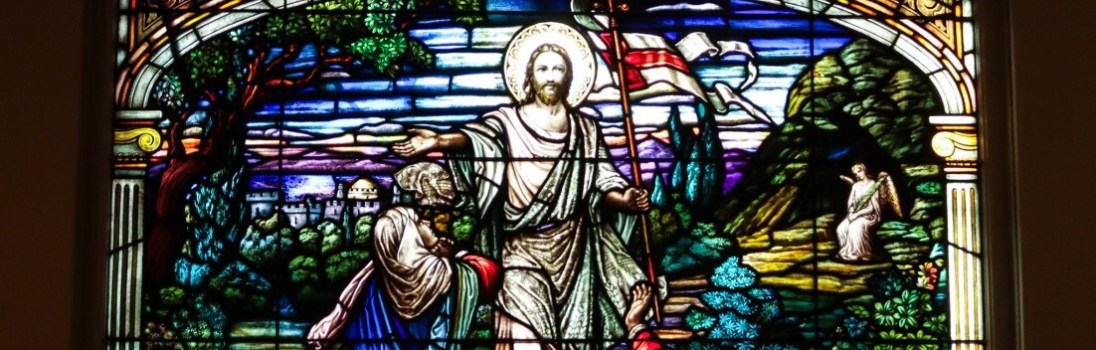
Most people are familiar with the two most famous churches in Boston: Old North Church (for history, where two illuminated lanterns prompted Paul Revere to make his midnight ride in 1775) and Trinity Church (for architecture, which appeared on a 15¢ U.S. postage stamp in 1980). But the city holds an abundance of other churches that surprised and impressed me with their own histories and architecture. These are my favorites.
#1 Trinity Church
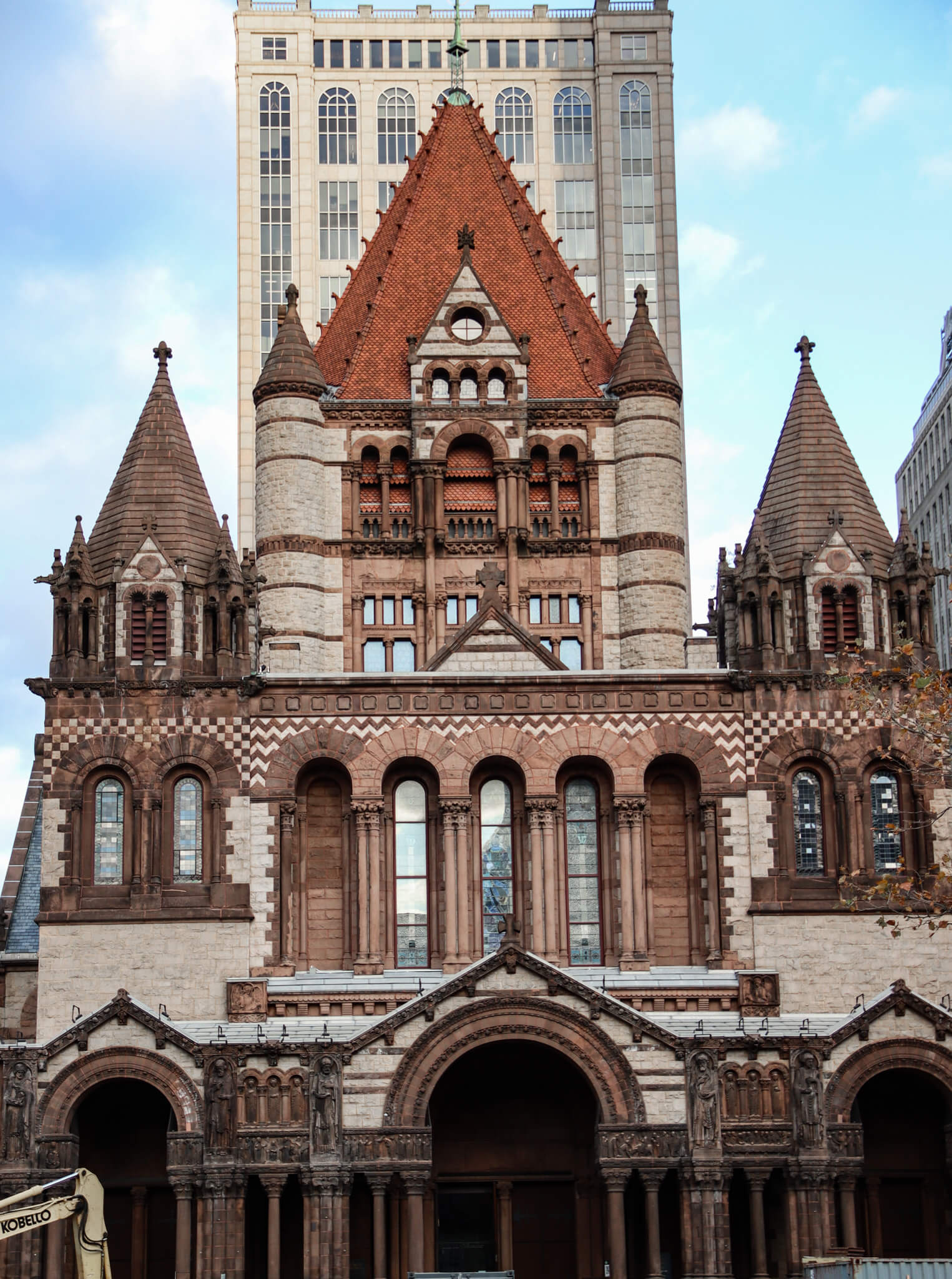
Since 1877, Trinity Church has anchored the open space of Copley Square. The brilliant architect Henry Hobson Richardson was tapped to design the third version of this Episcopal church (with great input from the Reverend Phillips Brooks). Construction lasted from 1872 to its completion five years later. I was excited to explore “one of the ten most important buildings in America,” according to the American Institute of Architects.
It all begins outside, where you can marvel for a very long time at what Richardson created. The free-standing structure enables you to stroll around the entire building in a complete circle. This substantial building rests on 4,500 wooden piles driven 30’ into gravel fill, silt, and clay that replaced the original mud flat of the city’s Back Bay. The front façade is a typical Richardsonian Romanesque design, featuring massive proportions, rounded arches, and rough rock-faced, multicolored stone. The perfect symmetry includes three entrance portals, two towers flanking a taller central tower, columns, and pinnacles and finials. It’s awash in statues and sculptures of key Christian figures and events—the Last Supper; a grouping of the Virgin Mary, Martha, and Mary Magdalene; an abundance of saints; the Four Evangelists; Palm Sunday; Jesus’ baptism; Moses; heads of lions, eagles, and putti; and Reverend Brooks himself.
Heading counterclockwise, I approached the columned arcade that leads up to the exterior staircase and made my way to the rear of the church, where the arcade continues to the wonderful curve of the apse. Now I was ready to enter the building that solidified Richardson’s reputation that he maintained throughout his prolific career.
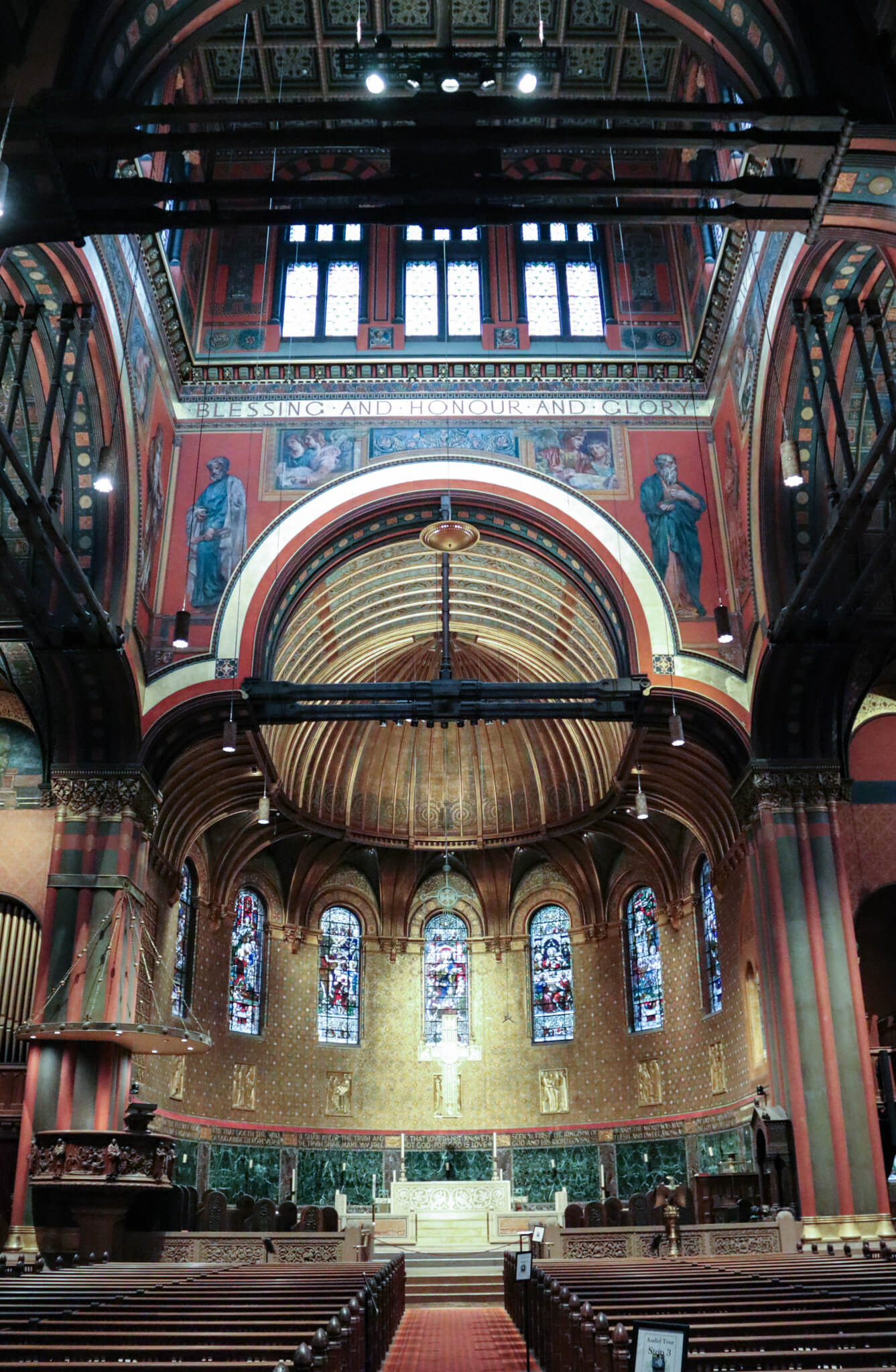
The dramatic and vibrant soaring interior feels Byzantine. It’s airy, colorful, and golden, an enchanting mix of materials. Murals, all completed by American artists, cover more than 21,500 square feet. Bible quotes surmount the greenish marble behind the altar. The carved wood pulpit and pew ends, marble baptismal font, needlepoint kneelers, and stone carvings of the symbols of the Four Evangelists, peacocks, and grapevines are noteworthy elements. Originally, the windows were clear glass, but they were soon replaced with stained glass, including four by John La Farge, which launched his career as the main rival to Louis Comfort Tiffany. Among the images in stained glass are the Last Supper (note the unusual inclusion of a pineapple in the center plate), Jesus walking on water, and St. Stephen being stoned to death.
Trinity Church was designated a National Historic Landmark in 1971, which makes perfect sense (if not overdue). What did not make sense to me was the fact that only about 70,000 people visit the church annually—that number should be much higher.
#2 St. Leonard of Port Maurice Catholic Church
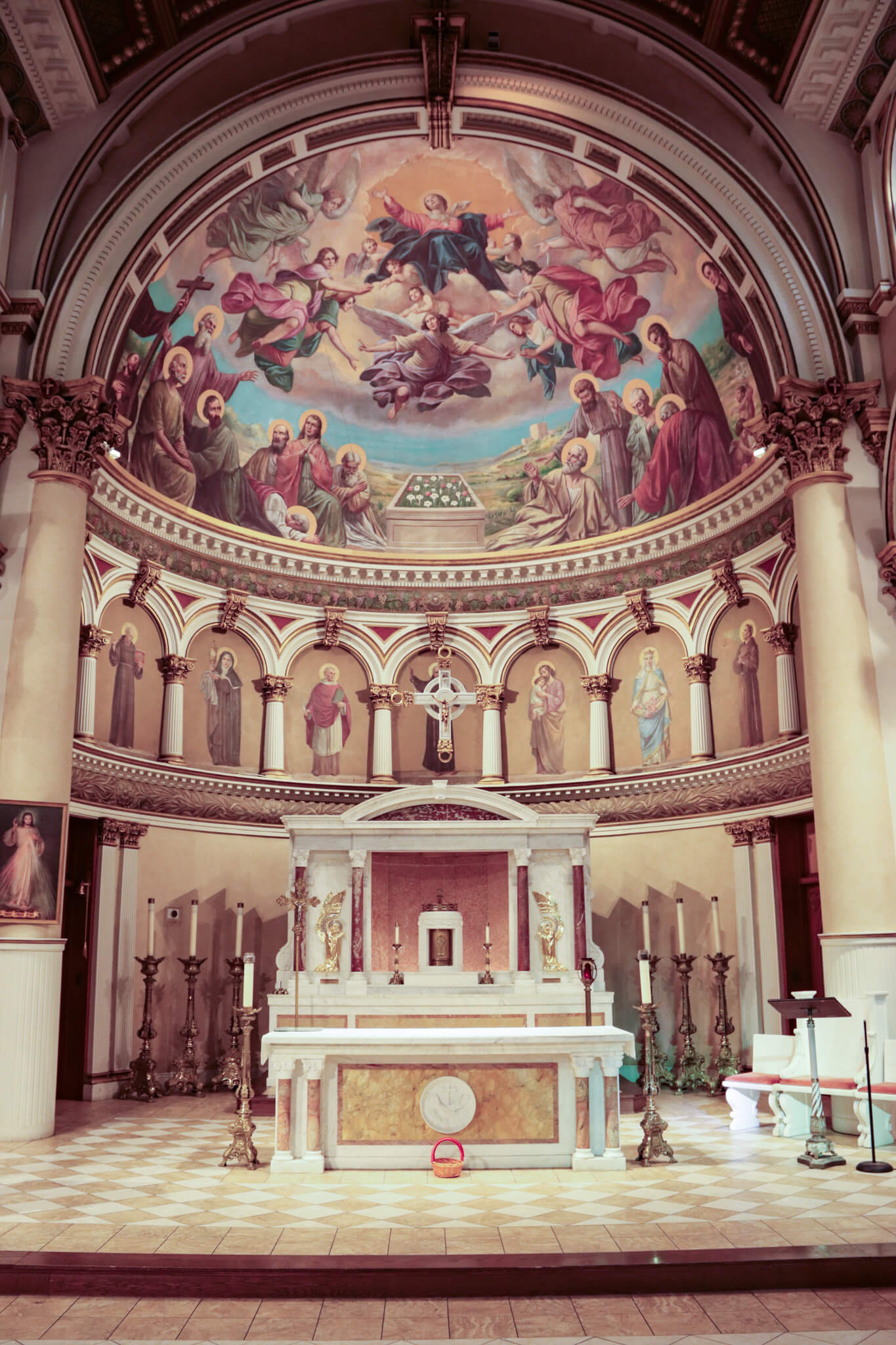
After an excellent lunch at Carmelina’s in Boston’s Little Italy, I made my way to St. Leonard of Port Maurice Catholic Church. Named for the Italian Franciscan preacher and ascetic writer who was born in 1676 in Porto Maurizio in the Republic of Genoa, the church is one of the oldest churches—and the first one in New England—to be built by Italian immigrants in the United States. Construction began in 1885 and continued until 1899. The Romanesque-style church abuts the peaceful St. Leonard’s Peace Garden. The brick exterior features a couple of towers and a plain dome, topped by a golden cross. The ornate, colorful interior is truly spectacular. Corinthian columns with gilded capitals supporting curved arches march down to the altar, where murals of saints occupy the panels between stubby columns behind the reredos. Above, a single mural depicting the Assumption of Mary into heaven occupies the entire hemispherical semi-dome. The Four Evangelists are depicted in the pendentives of the main dome. There’s also a lovely baptismal font, fine barrel ceiling, and impressive organ. A statue of St. Lucy has her holding her eyes in a plate, and the Stations of the Cross are beautifully painted reliefs.
#3 Cathedral of the Holy Cross
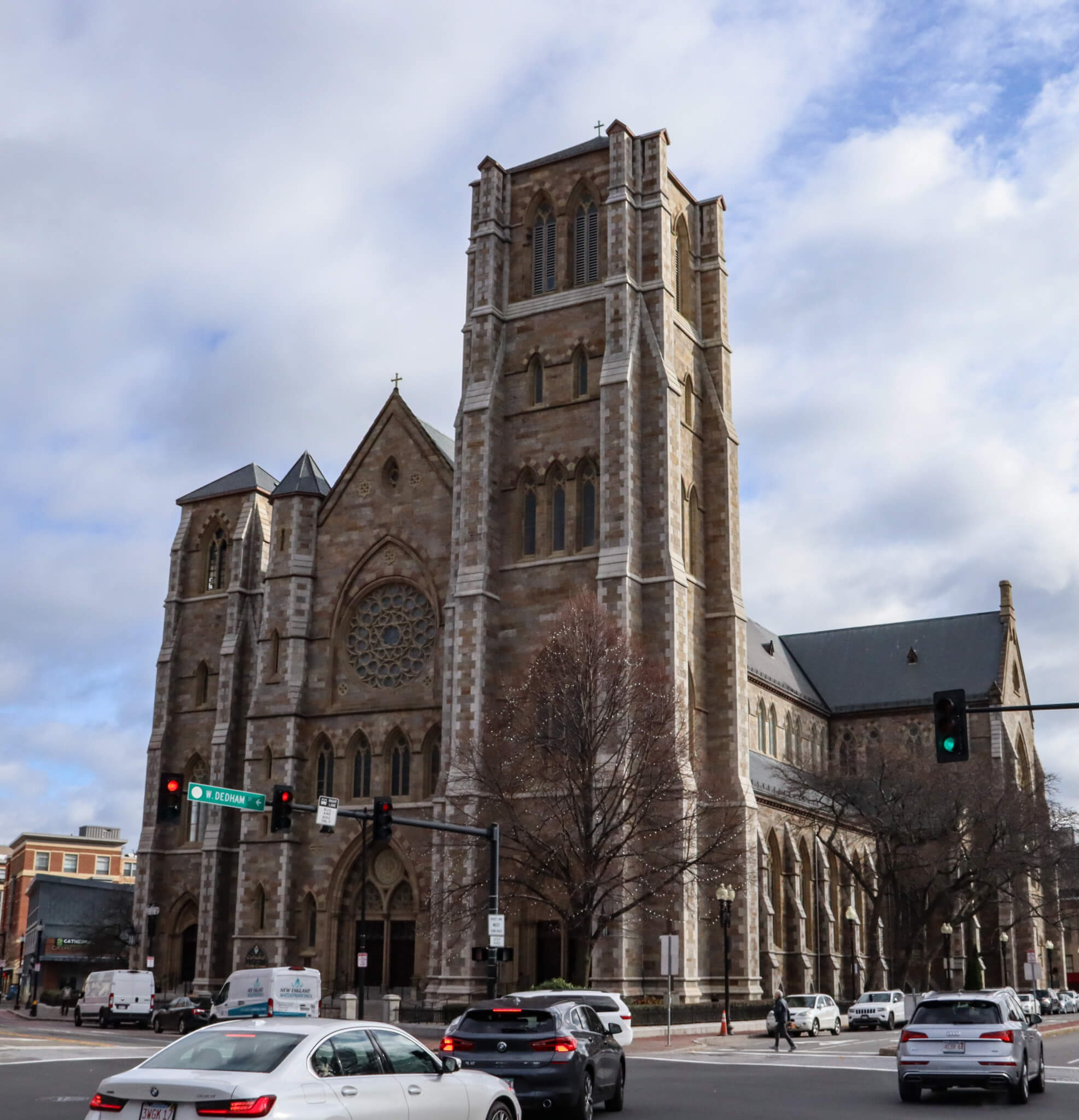
One of the largest Catholic churches in New England is a bit removed from Boston’s key attractions, so I hopped on the city’s efficient subway to visit this masterpiece. Designed by the incomparable Patrick Keely and completed in 1875 (and partially funded by monthly 50¢ donations from members of the Church Debt Society), the Gothic Revival–style Cathedral of the Holy Cross covers 50,000 square feet and can seat 2,000 people. It remained the largest cathedral in New England until 1957. The formidable corner bell tower anchors the cathedral, which measures 364’ in length, 90’ in width, and 120’ in height. I entered through the doors underneath the fine rose window and was immediately struck by the strong verticality—clustered columns supporting Gothic arches that carry your eye up to the clerestory and vaulted ceiling. Behind the altar rises a fine reredos. The marble baptismal font includes inlaid quatrefoils. Painted Stations of the Cross line the walls, and gorgeous stained-glass windows depict, among other scenes, St. Michael slaying the dragon, St. Cecilia playing a pianoforte, and the flight into Egypt. I turned back to admire the wonderful organ in the impressive choir loft as I walked in the footsteps of Pope John Paul II, Mother Teresa, and President Obama. I finished my visit in the side chapel, which contains simpler Stations of the Cross, and, most importantly, a piece of the True Cross.
#4 Old South Church
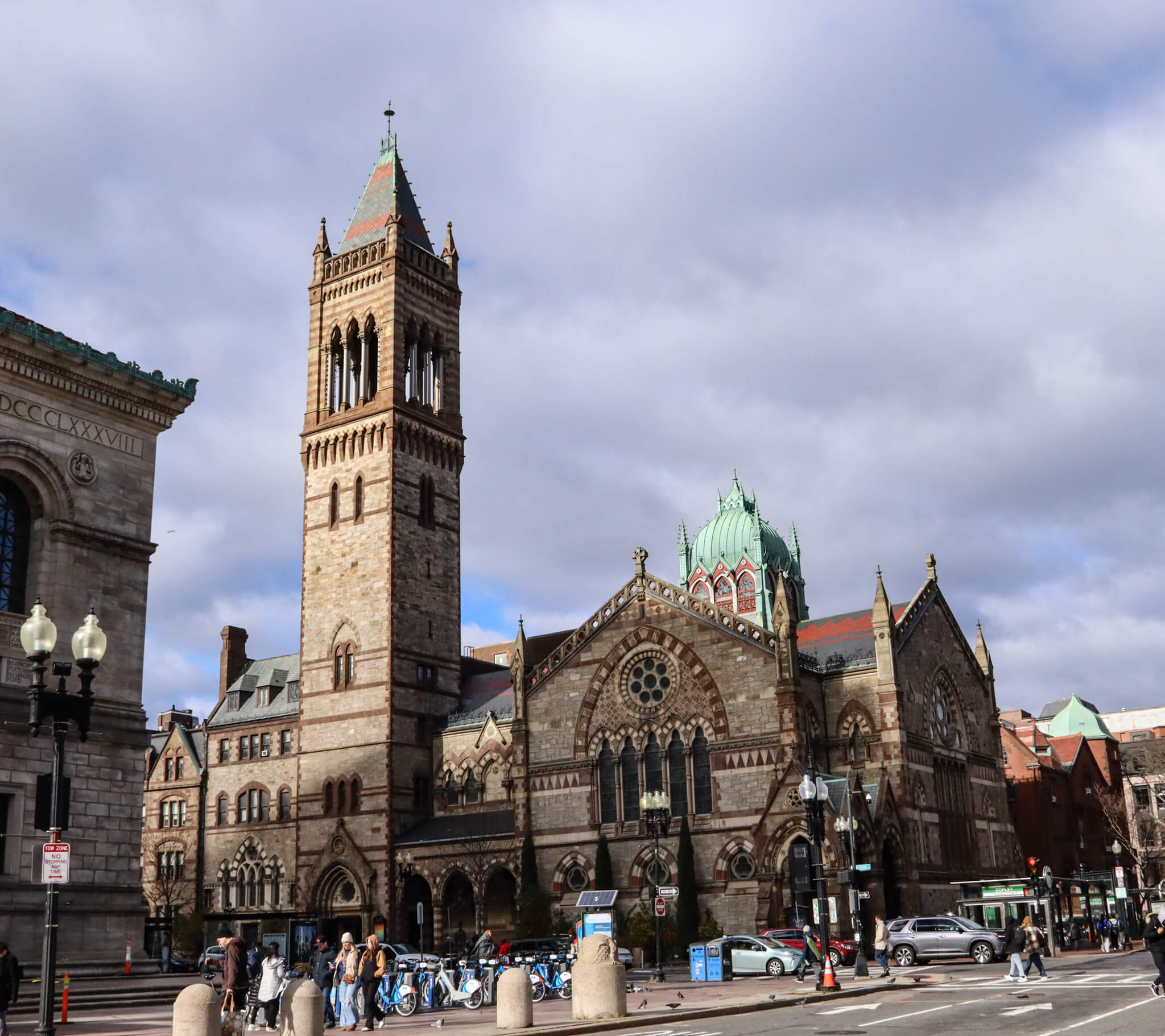
Situated across the street from the handsome Boston Public Library and diagonally across from Copley Square and Trinity Church, Old South Church presents an exotic face to passersby. Completed in 1873, with a gorgeous campanile added in 1937, the church, built for the United Church of Christ congregation, was done in a Venetian Gothic Revival style. The façade is a panoply of stone, circles, gables, arches, columns, triangles, pinnacles, and a large copper lantern turned verdigris green. The vast interior boasts fine mosaics, carved cherry wood (look for oak leaves and acorns), Caen stone, a limestone narthex screen, and stained-glass windows (some by Tiffany) depicting everything from sunflowers to the wedding at Cana to St. Mark. The underside of the lantern is painted a deep blue with white stars, illuminated by the dozen windows around it. When I went back outside, I made sure to head to the triple-arch arcade, where the architects, who apparently so admired their work, had both their faces carved onto the stone just above the column capitals.
#5 Sacred Heart Catholic Church
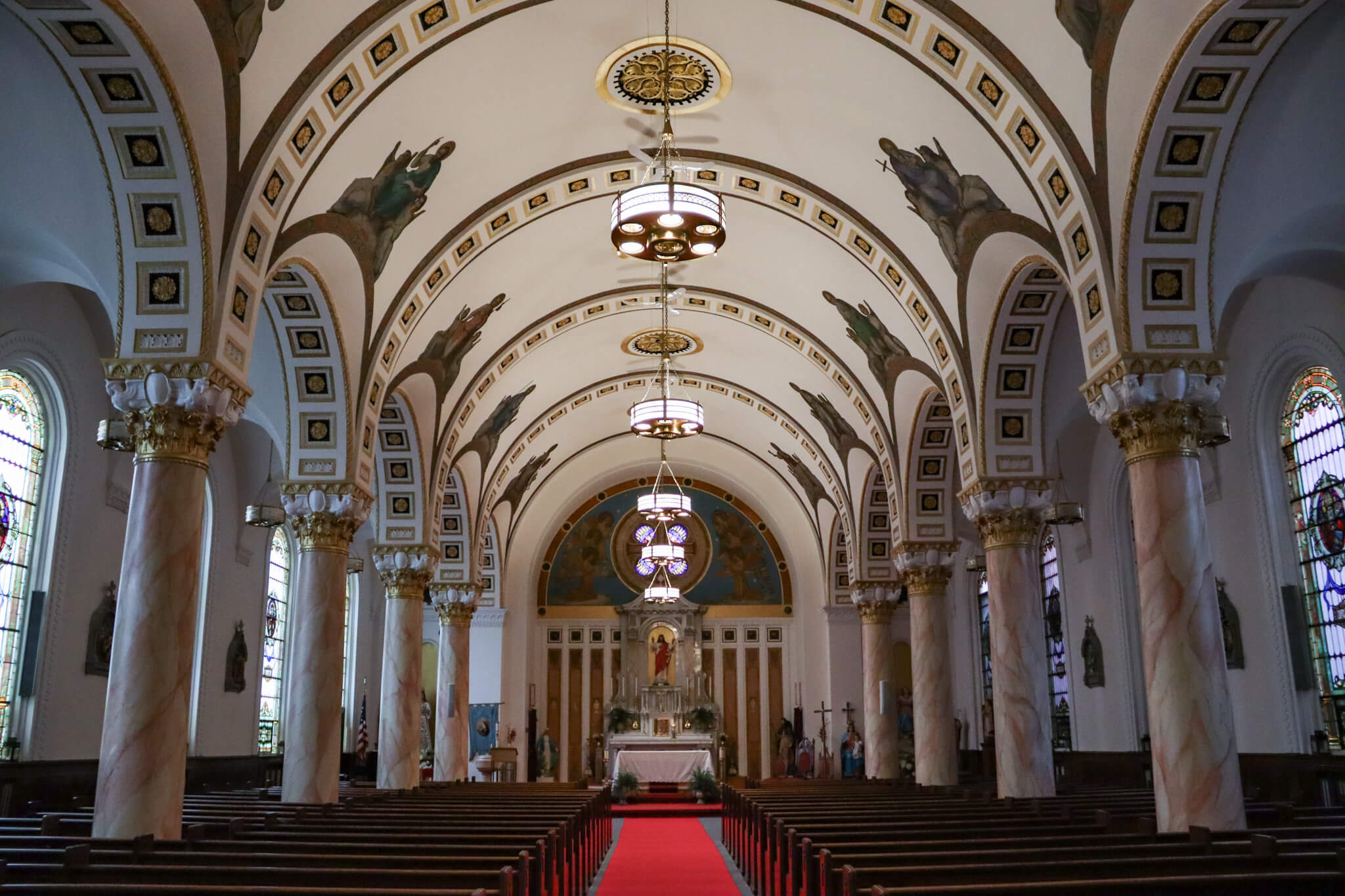
On my second venture into Little Italy, before a fine dinner at Monica’s Trattoria, I approached Sacred Heart Catholic Church, just steps from Paul Revere’s house. Built in 1833 as Seamen’s Bethel for a Methodist congregation, the church was purchased in 1884 by a group of Italian immigrants called the Saint Mark Society, which gave the church its new name in 1888. The brick exterior with curved gables looks onto the triangular North Square. I stepped inside to find I had the entire church all to myself. The bright interior features a barrel ceiling with murals of the Apostles, supported by columns with florets running along their soffits. The fine sculpted Stations of the Cross bear their titles in Italian (e.g., “Gesú Deposto dalla Croce”), and the stained-glass windows portray such Biblical heavyweights as St. Joseph and St. Anne. After exploring the main church, I headed downstairs to the lower chapel to see the Last Supper, carved and painted in the altar; statues of St. Mark with his lion and St. Lucy with her removed eyes; and another set of the Stations of the Cross, sculpted and painted in quatrefoils—and with English titles.
Five Runners-Up
- Arlington Street Church (1861)
- First Church of Christ, Scientist (1894)
- Park Street Church (1809)
- Old North Church (1723)
- Former Central Congregational Church (1867)
I’d Love to Hear From You!
Have you been here? Have I inspired you to go? Let me know!


