I was standing amid the devastated automotive factory ruins in Detroit, Michigan, about four miles from downtown. A covered overpass above the street, connecting two massive, seemingly endless and rotting buildings, announced that I was entering Motor City Industrial Park, except that the sign, after decades of decay, actually read, “Mo or Cit In u tr l Park.” This was the site of the Packard Plant, a sprawling 3.5-million-square-foot complex that employed up to 40,000 workers turning out luxury automobiles from 1903 until 1956. The factories closed in 1958, and subsequent businesses that operated there or used the facilities as storage hung around until the 1990s, when it was finally and completely abandoned. Today, the buildings were crumbling around me, all the windows shattered, falling façade materials fragmented on the ground, a rusting water tower standing tall above it all, keeping guard over what had once been a U.S. industrial powerhouse.
Amid all my peregrinations, it’s ruins like this that fascinate me. They’re often sorrowful snapshots of what had once been, and I usually find myself quite alone when visiting them, which only adds to their mystique. Questions inevitably race through my mind: What was this place? What was it like? What was the genesis of its ultimate fate?
Occasionally, some ruins are rescued, resuscitated, and repurposed, perhaps none so famously as Detroit’s Michigan Central Station—a fantastic rail depot that had been built in 1913, was completely abandoned after 1988, was a ravaged shell when I visited back in 2009 and under constant threat of demolition, and now, as of 2024, a thriving tech and cultural hub after a multi-year restoration project by Ford Motor Company.
Most ruins, however, don’t share that happy destiny and still stand as wondrous wrecks. These are my favorites.
#1 Bodie, California
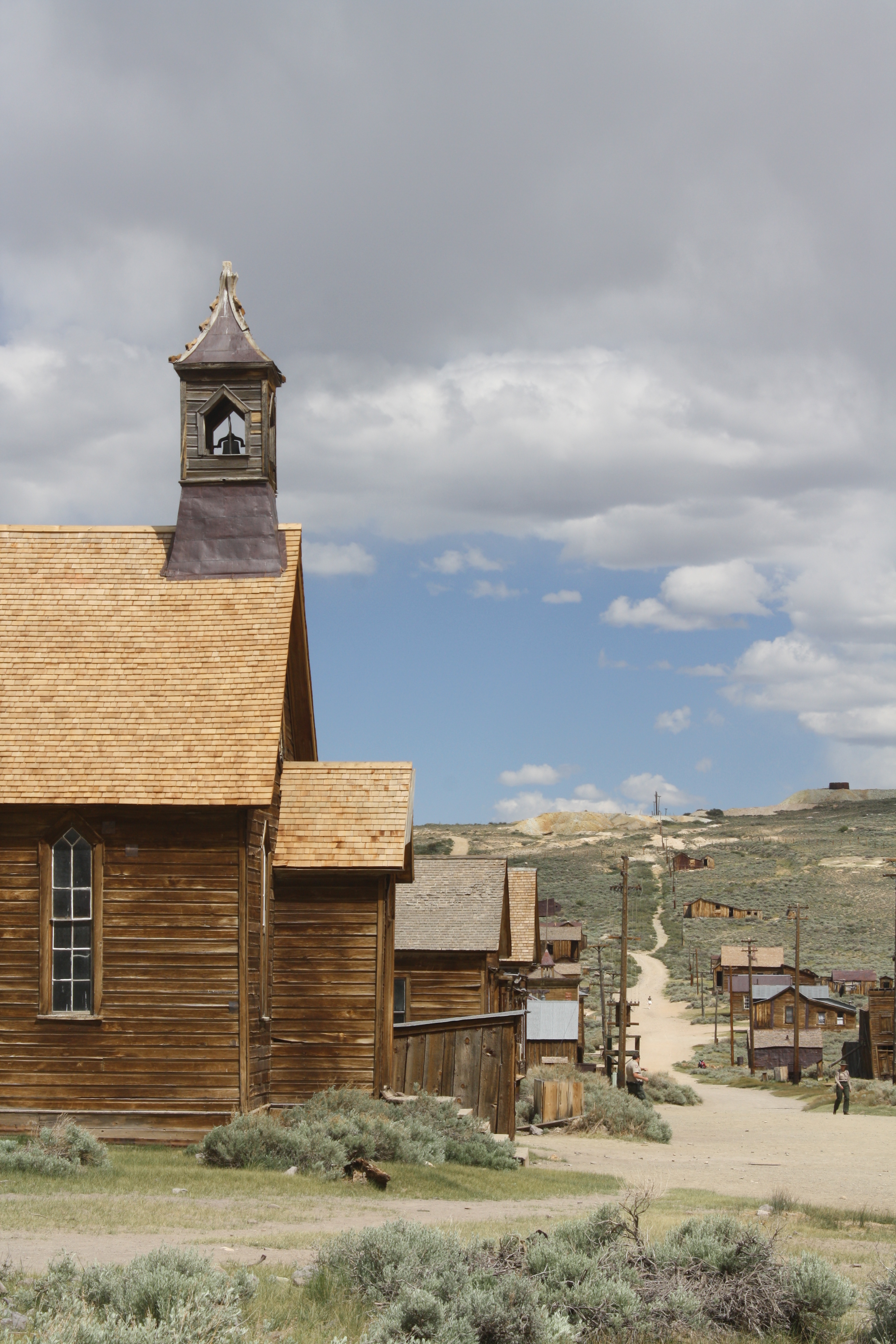
Once one of California’s largest cities, founded in 1876 and boasting a population that topped 10,000 in 1880, Bodie today is home to no one. At the end of a bumpy 13-mile road, the vast remains of Bodie appear, strewn across a barren, unforgiving, treeless landscape. The largest, best-preserved ghost town in the United States—and one of the top five things to see in California—evokes countless images of America’s Wild West. As I roamed around the dusty streets of this former gold-mining town, exploring its 100 collapsing buildings, rusting equipment and automobiles, and teetering utility poles that still stand in a “state of arrested decay,” I tried to imagine life in this harsh environment and its inherent asperities. Bodie’s piacular reputation stemmed from its inventory of nearly 70 saloons, a red-light district of bagnios with eager prostitutes, opium dens, and gambling halls, and its history of frequent stagecoach holdups, robberies, and killings. But there was a more sedate, workaday side to this town, too, a typical Western boom town of its time, with a general store, firehouse, churches, bank, hotel, barber shop, school house, post office, Odd Fellows Lodge, Masonic and Miners’ Union halls, stables, morgue, bowling alley, horse racetrack, and county courthouse—many of which are still standing, although often lopsided and deteriorating.
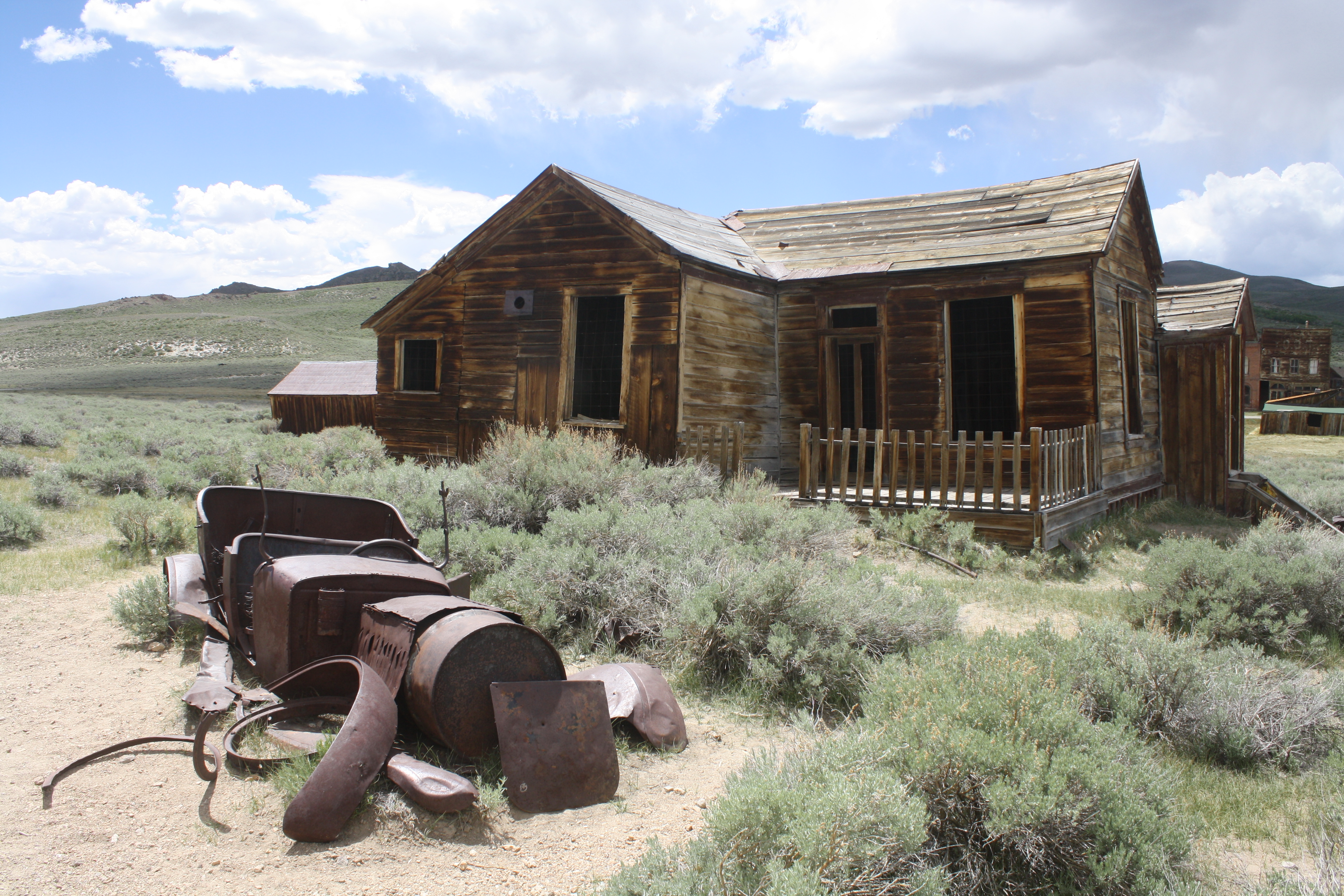
Dwindling gold reserves obnubilated the palmy city’s boom days. When this precious metal ran out, the residents fled, leaving behind a treasure trove of personal items in their homes and businesses that you can still observe through spotty windows—coffee presses, unopened boxes of Ghirardelli chocolates, sofas, roulette tables, cast-iron stoves, primers, baby carriages, and maps of the United States before there were 50. Completely abandoned by 1950, Bodie was established as a California State Historic Park in 1962 and attracts about 200,000 visitors annually. Wrap up your time here by wandering around the hilltop cemetery and the graves of Bodie’s former residents, including the city’s founder, European and Chinese immigrants, and children who never made it to their first birthday, all buried in a desolate place that you will never forget.
#2 Kolamnskop, Namibia

Sand dunes rise inside living rooms, bedrooms, hallways, and kitchens, blown in by formidable winds through broken windows and empty doorways, rippled by nature and trod upon by humans. Here in the fascinating ghost town of Kolmanskop, Namibia, the desert is reclaiming what man started building in the early 1900s and completely abandoned in the 1950s. Founded as a diamond-mining town after the discovery of that glittering gem in 1908, Kolmanskop (or, as the German colonizers christened it, Kolmanskuppe) sprung up as an affluent town in the middle of nothing, about 10 miles from the Atlantic coast. Complete with a hospital (and the first X-ray machine in the Southern Hemisphere), ballroom and music hall, power station, ice factory, theater, sports hall, school, and the first tram in Africa, Kolmanskop prospered for less than two decades, maxing out at about 1,600 residents, and pulling about one million carats (or nearly 12 percent of the world’s diamonds) from the ground in 1912 alone. Given its small size, Kolmanskop was the town with the highest per capita wealth in the world for a short time. Richer diamond deposits that were easier to excavate were found elsewhere in 1928, effectively surceasing the town’s growth and ushering in the exodus. Since 1954, not a soul has lived here—just some stunted shrubs and desert succulents.
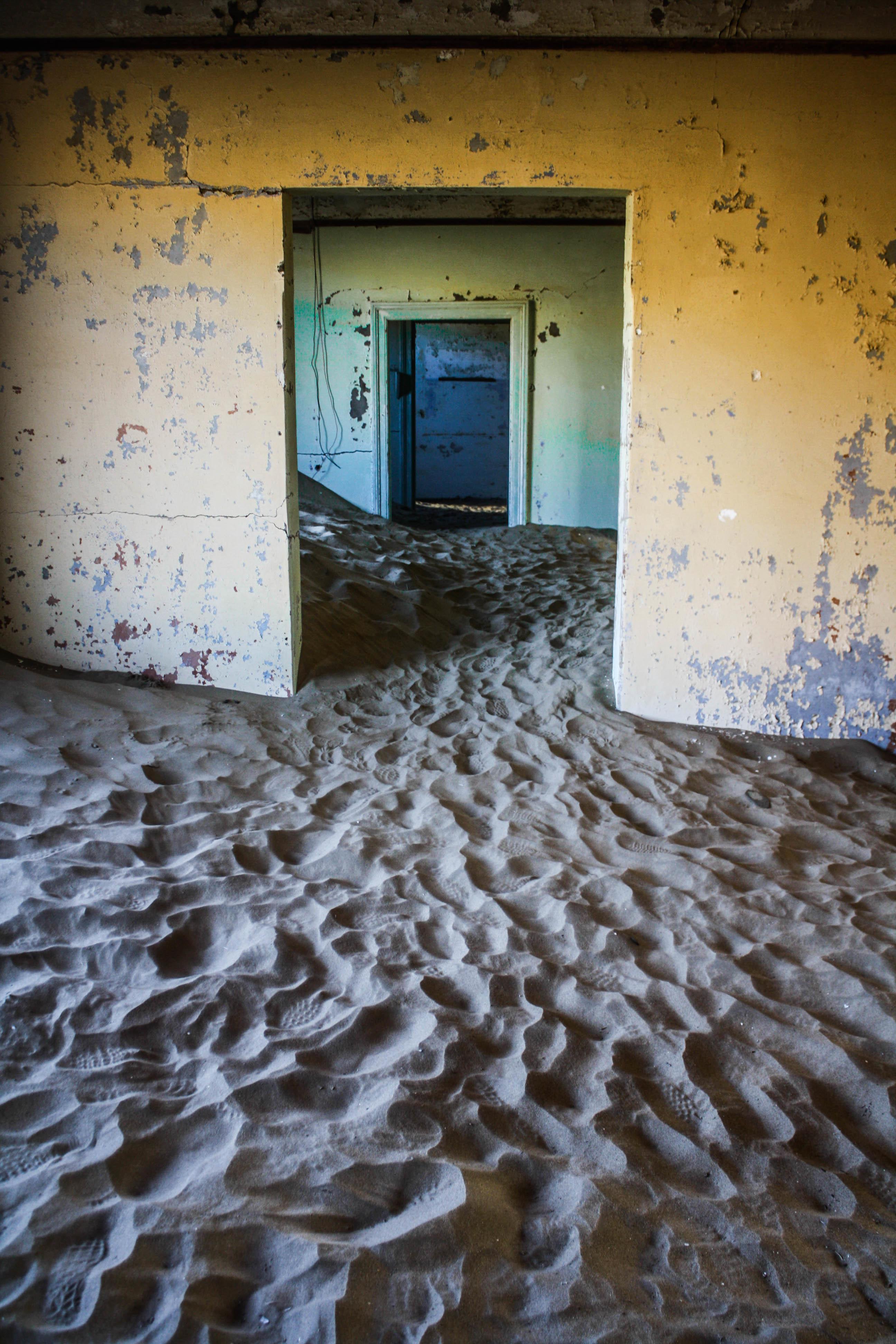
Strolling around the town and its German architecture today is a fascinating experience and easily one of the best things to see in Namibia. The lush gardens with manicured lawns, rose beds, and eucalyptus trees that assuaged the severe environment have long vanished, and the rail tracks, save for isolated stretches of what look like parallel snakes, are now almost completely hidden under the sand, but the remains of once handsome structures still stand in defiant beauty. I explored the homes of the town’s architect, teacher, doctors, and mining managers, noting the occasional fireplace, built-in bookcase, and concrete bathtub. A flash of glazed cobalt-blue tile appears just above the top of a hill of sand that has infiltrated an interior space. Staircases lead up to second stories becoming increasingly vulnerable to the elements as roofs slowly decay. Cracking paint and fading wallpaper and stenciling flake from the walls. Early morning and late afternoon, when the sun is at its lowest angles, are particularly wonderful times to visit, when this ghost town comes to life in an amber glow.
#3 Brush Park (Detroit, Michigan)
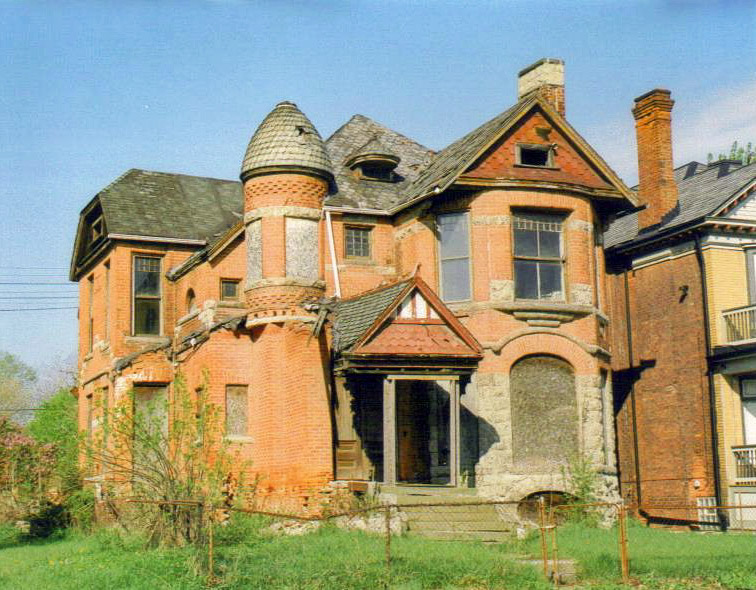
I was staying about a mile north of the Brush Park neighborhood in Detroit at the Inn at Ferry Street, a collection of four restored brick and stone Victorian mansions and two carriage houses from the late 1800s that were converted to one of the best bed and breakfasts in the 1990s. I was lured into Brush Park by its glorious past and its ignoble present. Brush Park was developed in the 1850s as an upscale residential neighborhood for Detroit’s elite citizens. In the late 1800s, substantial churches and dozens of Victorian mansions were built, earning the neighborhood the nickname “Little Paris” due to its elegant architecture. Its glory days didn’t last very long—by the early 20th century, its elect residents started moving to more modern, quieter districts, and Detroit’s fast-growing, less-affluent working class moved in. The 1970s and 1980s saw a massive depopulation and an explosion of blight and crime in one of America’s most tumultuous demographic shifts. When I was here in 2009, it was sad and hopeless—and positively spellbinding. Gorgeous homes were going to seed, literally collapsing around me. Sagging balconies, boarded-up windows, collapsed roofs, crumbling bricks, untamed vegetation, feral animals—the entire neighborhood was a mournful wasteland.
Now, however, there’s substantial hope here. Despite the city’s stop-and-go recovery, steps forward and steps back, progress has been made in Brush Park since I was there. New residents have poured millions of dollars into restoring these houses to their former glory. New developments have gone up, and vacant lots are being filled in. Brush Park’s renaissance is quite remarkable, but it’s the memory of all those ruins, their stories, their rise and fall, that hauntingly stays with me.
#4 Roman Forum (Rome, Italy)
I first saw the ruins of the Roman Forum, or, in Latin, Forum Romanum, as a teenager on a high school trip. I was so riveted by it that I returned about 30 years later for a much more extensive exploration. Walking around these ruins, following in the footsteps of Julius Caesar, Marcus Aurelius, and Augustus, is a truly remarkable experience. For centuries, the Forum was the hub of daily life in Rome. Here, in what is sometimes referred to as the most celebrated meeting place in the history of world, Romans witnessed the spectacles of triumphal processions, elections, public oratories, criminal trials, lavish banquets, gladiatorial matches, and commercial and legal affairs, all set amid spectacular structures, statues, and monuments. Today, the sprawling ruins attract more than four million visitors annually.
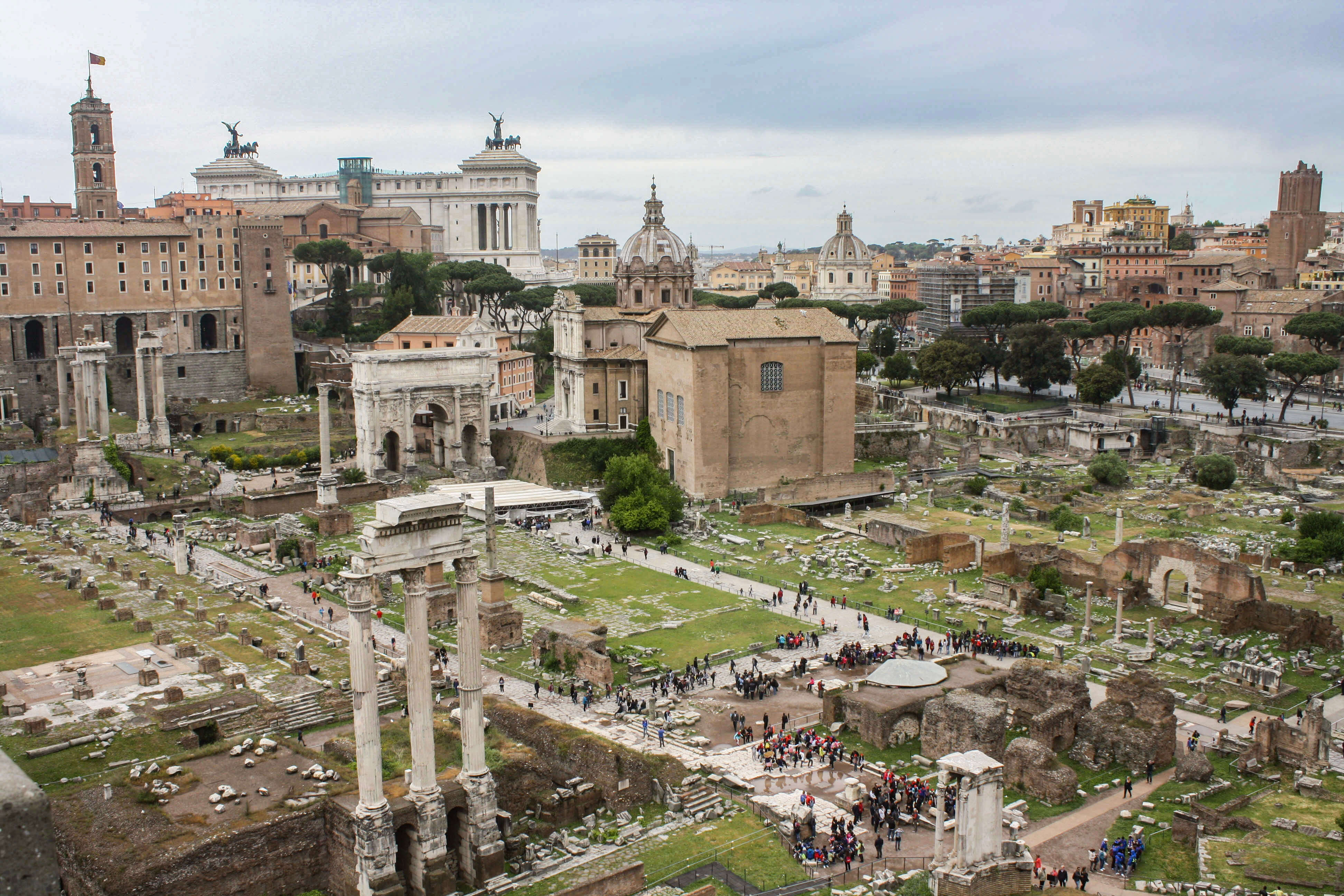
The rectangular-shaped Forum was constructed on a marshy lake that was drained, ushering in centuries of expansive growth. As I trod on grass and stone, I was surrounded by ancient Rome in all its ruined majesty. The Temple of Antoninus and Faustina was constructed by the Emperor Antoninus Pius, beginning in 141, who dedicated it to his deceased wife, Faustina—the first Roman empress with a permanent presence in the Forum. The Temple of Romulus, completed sometime in the 300s, is believed to be the library of an imperial forum and became a church in 527. I could only imagine how massive the Basilica of Maxentius was when it was completed as the Forum’s largest building and the last Roman Empire basilica built in the city, completed in 312—the only remaining section is the northern aisle, with its vast, soaring arches. The Arch of Titus (the inspiration for Paris’ Arc de Triomphe), completed in 81, still has the crumbling depiction of the triumphal procession following the Roman victory that led to the fall of Jerusalem a decade before, and the Arch of Septimius Severus, dedicated in 203, still bears very clear Latin inscriptions. Columns from temples dedicated to Castor and Pollux, to Vesta, and to Saturn (which served as the city treasury, at one time containing 13 tons of gold and 114 tons of silver) support nothing more than partial entablatures. Only fragments of the floorplan and colonnade of the civil Basilica Aemilia remain, while crumbling remains of the Flavian Palace surround the extremely long grassy field once used as a strolling garden. I walked under a series of remarkably durable brick arches—long, narrow bricks in exceptionally good shape—past flowering bushes and statues missing heads or limbs or entire torsos, one of nothing more than a sandaled foot with a visible pinkie toe that suggests the original statue was positively monumental.
So, how did it fall into ruin? Although there are a few causes, including the shift of political and economic activity to larger structures north of the Forum and the move of the Roman capital to Constantinople in 330, the major juggernaut was, obviously, the fall of the Western Roman Empire, a long, painful collapse that began around 400. Invading Visigoths demolished many of the buildings in the fifth century, and the Goths destroyed the aqueducts in the next century, leading to the collapse of the Forum’s fountains, baths, and sewers. By the 800s, the devastated Forum had become a pasture for grazing animals, and buildings were stripped of their stone and marble for other construction projects. Floods, earthquakes, and centuries of neglect further contributed to what the Forum looks like today.
Just a very short walk from another colossal ruin, the Colosseum, the Roman Forum is bound to capture the imagination of archaeologists, historians, architects, anthropologists, urban planners, and every other person who makes a visit to these incomparable ruins.
#5 Rock of Cashel (Cashel, Ireland)
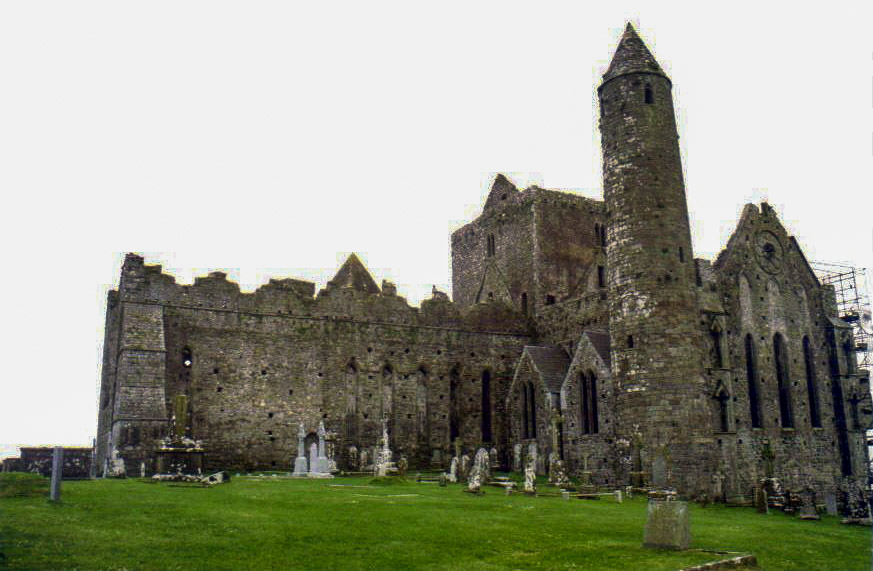
From my base in Kilkenny, I successfully drove on the opposite side of the road to the Rock of Cashel, whose presence atop a dramatic outcrop of limestone in County Tipperary was visible from miles away. The ruins of this fortress are positively gargantuan, and that’s not an exaggeration. Heading up to the ruins through bright green fields, with bleats of sheep accompanying me, I felt my own smallness the closer I got. Reputed to be the site of the conversion of the King of Munster by St. Patrick in the fifth century, the Rock of Cashel was the traditional seat of the Munster kings from as early as the fourth century. The fortress was constructed in the fifth century and remained so for a half a millennium, until the King of Munster donated it to the Church. It continued on for centuries more, until 1647, when the fortress was sacked by the English, who massacred the Irish Confederate troops, as well as the Catholic clergy, who were there before looting and destroying religious objects. Nearly a century later, the Anglican Archbishop of Cashel destroyed the roof of the fortress’ cathedral.
The majority of the surviving buildings date from the 12th and 13th centuries. I walked around the circumference of the complex—the most impressive cluster of medieval buildings in Ireland—through a graveyard with tombstones and Celtic crosses. Then I made my way inside to see the Chapel of King Cormac Mac Carthaigh, consecrated in 1134 as the finest and most complete Romanesque church in the country, complete with Ireland’s only surviving Romanesque frescoes made with rare and expensive pigments as well as a carved tympanum over the north door depicting a centaur hunting a lion. The now roofless Gothic cathedral, from 1270, features soaring windowless Gothic arches and, from my standpoint so far below it, a small rose window. The oldest building, the Round Tower, made from limestone and sandstone, was completed around 1101 and rises nearly 92’ to the top of its conical stone-capped roof. Declared a National Monument in 1874, the Rock of Cashel will overwhelm you with its vast size and height—I’ve never felt so small, and it didn’t bother me one bit.
Five Runners-Up
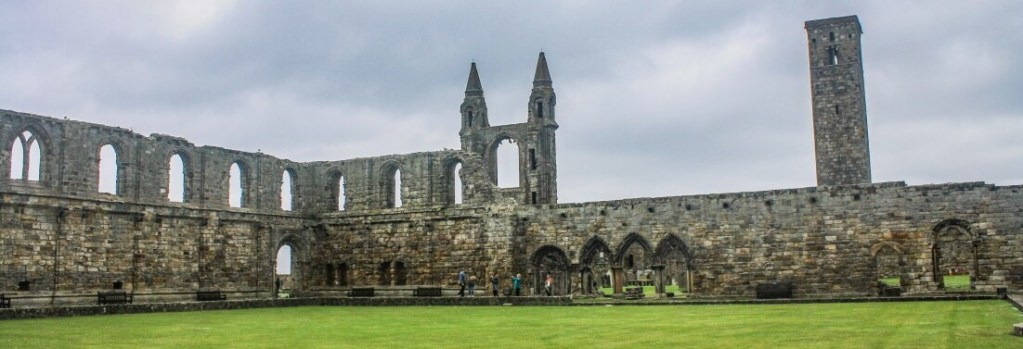
- St. Andrews Cathedral (1158–1561, St. Andrews, Scotland)
- Linlithgow Palace (1424–1746, Linlithgow, Scotland)
- Baths of Caracalla (217–537, Rome, Italy)
- Pompeii, Italy (740 BC–79 AD)
- Jerpoint Abbey (1180–1540, Thomastown, Ireland)
Leave a Comment
Have you been here? Have I inspired you to go? Let me know!


