A bridge, a mausoleum, a castle, an arch, a trades hall, a college. When one man can do it all, he deserves to be remembered.
The son of an architect, Robert Adam was born in Scotland in 1728. When he was 26, he embarked on the Grand Tour of Europe, with stays in Brussels, Rome, Lille, and Paris, before he returned to London in 1758. Before long, this Neoclassical architect and interior designer was becoming one of the most important Georgian architects in the British Isles.
I first saw his work in Bath, England, but I didn’t become more aware of his influence until I went to Scotland, where he was more prolific. He created his own style, the Adam Style, in which he employed a light, fanciful style that repeated simple ornamentations inspired by decorations used by the ancient Greeks and Romans. One of his hallmarks was unity. The sedulous Adam not only designed a building, he also designed the rooms within, including furnishings, fireplaces, carpets, and fittings, establishing a distinctive and harmonious fingerprint that served him well until his death in 1792 and beyond—his brothers completed a few of his projects posthumously.
His portrait, painted about 20 years before his death, hangs in London’s National Portrait Gallery. Adam was buried among other revered figures in Westminster Abbey, leaving behind a fine legacy of completed structures as well as nearly 9,000 drawings of buildings, chairs and furniture, and interior designs. These are my favorites.
#1 Trades Hall (Glasgow, Scotland)
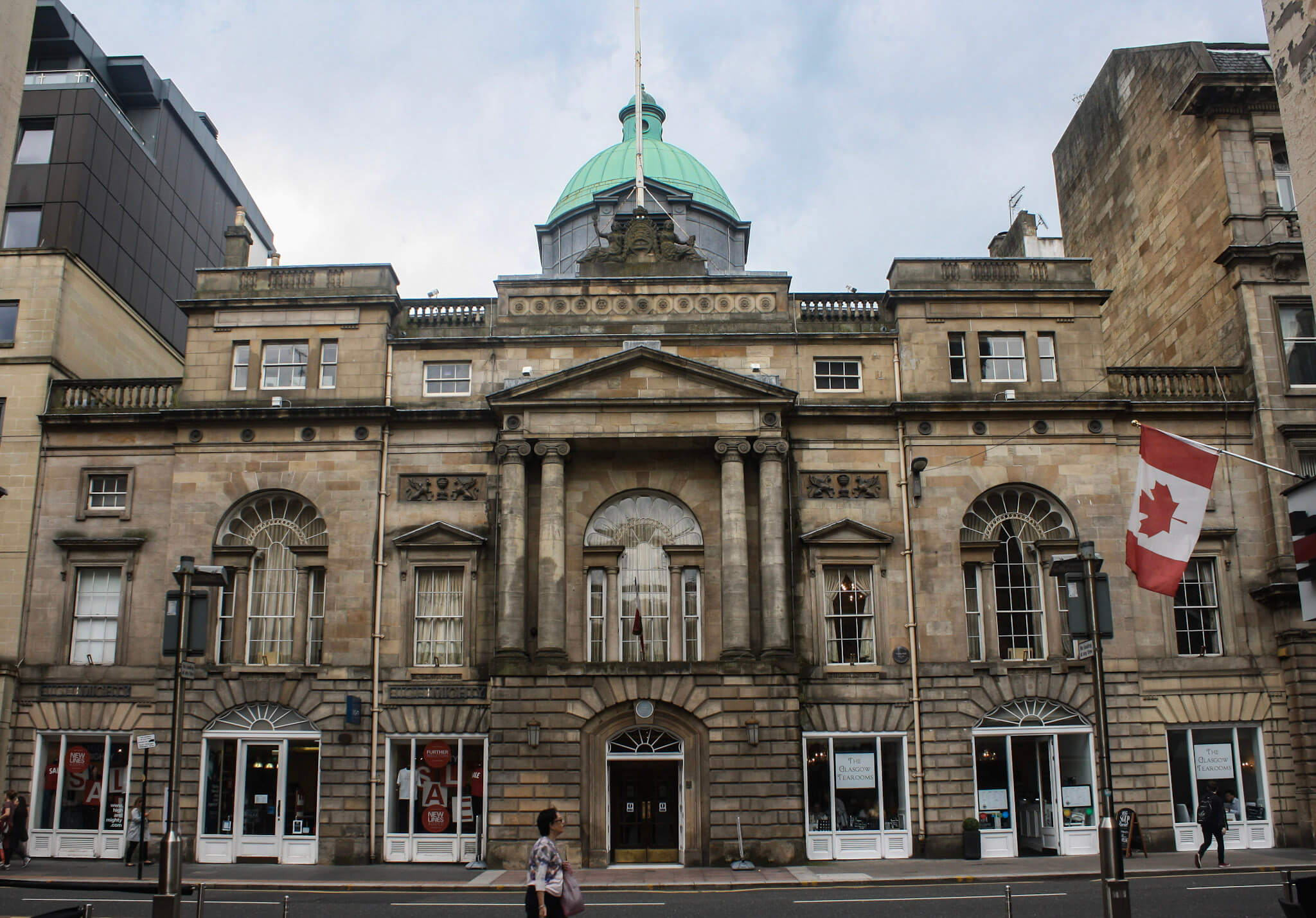
Now a popular wedding venue, Trades Hall began its life under Adam’s design and supervision but was completed in 1794, a couple of years after he died, by his architect brothers. The broad façade features seven bays built in the Palladian style. Adam gave the building variety and movement by utilizing different heights for the windows and roofline as well as slightly recessing and projecting the bays. Above the ground floor in the central bay, four Ionic columns support a plain pediment. On either side of that, the bays feature panels with griffins; the next two bays out feature lovely Palladian windows. Set back from the façade, a verdigris-green dome with a lantern with oculi looks over the entire scene. Impressive as all that is, I made sure to head inside to get the real feel of this building. The Trades Hall was built as the home of the city’s 14 incorporated trades and consisted of ground-floor shops with cellars below as well as several meeting rooms above, particularly the gorgeous Grand Hall. This spectacular space is situated directly under the dome. Five ornate chandeliers hang from the ceiling (made of rare West African avodire wood) with hexagon panels, the center one from the inside of the dome. The dome’s intrados features the coats of arms of the 14 trades—Bakers, Barbers, Bonnetmakers and Dyers, Coopers, Cordiners (shoemakers), Fleshers, Gardeners, Hammermen, Maltmen, Masons, Skinners, Tailors, Weavers, and Wrights. Even more breathtaking is the golden frieze encircling the entire room that features those same 14 tradesmen in action. The Barbers, for instance, are shown trimming hair and providing shaves. The Bakers tote baskets of bread. The Masons are engaged with bricks, plans, and the tools of their trade. Trades Hall is the oldest building (apart from the city’s cathedral) in Glasgow still used for its original purpose as a public hall, and one that should not be missed.
#2 West Register House (Edinburgh, Scotland)
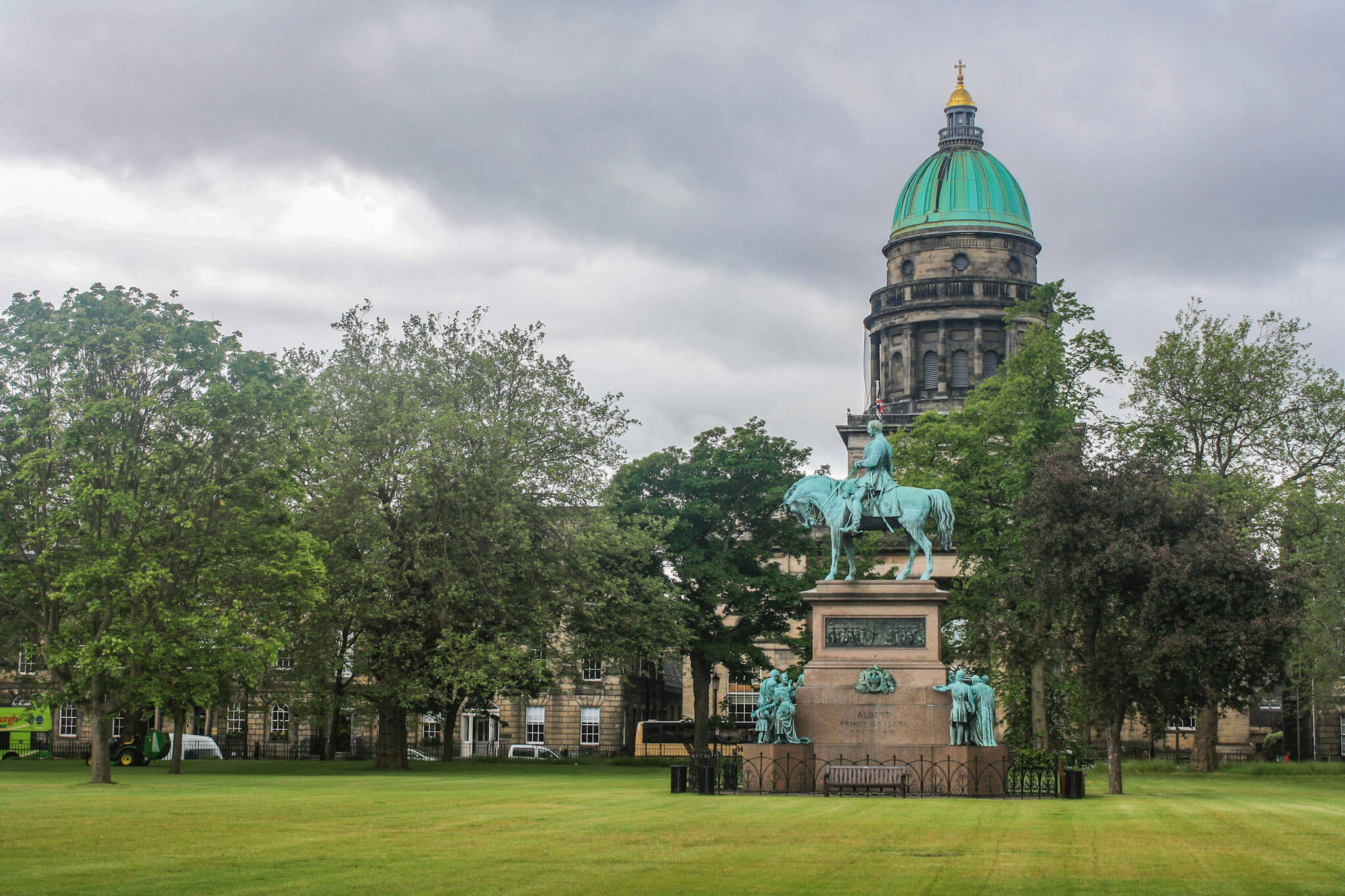
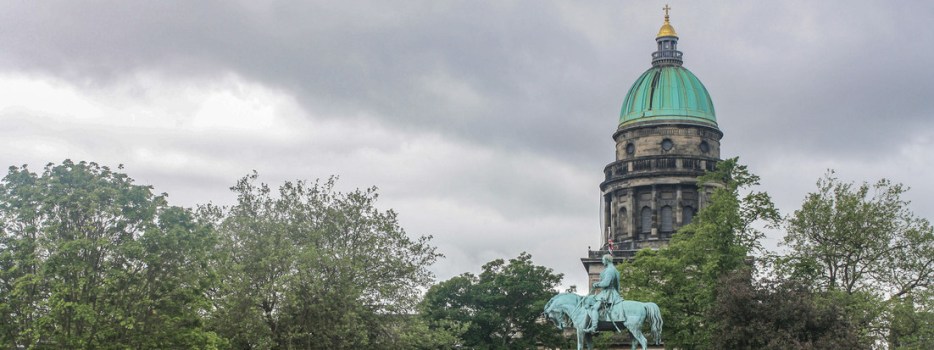
On the west side of Adam’s Charlotte Square stands West Register House. Piggybacking on Adam’s plan for the building—originally St. George’s Church—another architect stripped down Adam’s more elaborate design for the final product. The church lasted until 1964, when it was converted to the West Register House. This handsome building is approached via a flight of shallow steps, leading up to the balustraded portico with four Ionic columns. Two rectangular entrances flank the main arched entrance. On either side of the entrance, a pavilion features a rectangular window, below an oculus, below an empty frieze panel, below paneled attic stories, with what look like wavy mushroom gills, that align with the portico’s balustrade. The building’s most attractive feature, best viewed from the middle of Charlotte Square, is the prominent copper dome, turned verdigris green. A two-part drum supports the dome, the lower with niches and blank panels, the upper with louvred oculi. A lantern with a gilded cupola tops the dome. Despite its new use as a public record office, there’s still a throwback reminder to when it was a church—the gold cross capping the dome remains.
#3 Old Royal Exchange (Edinburgh, Scotland)
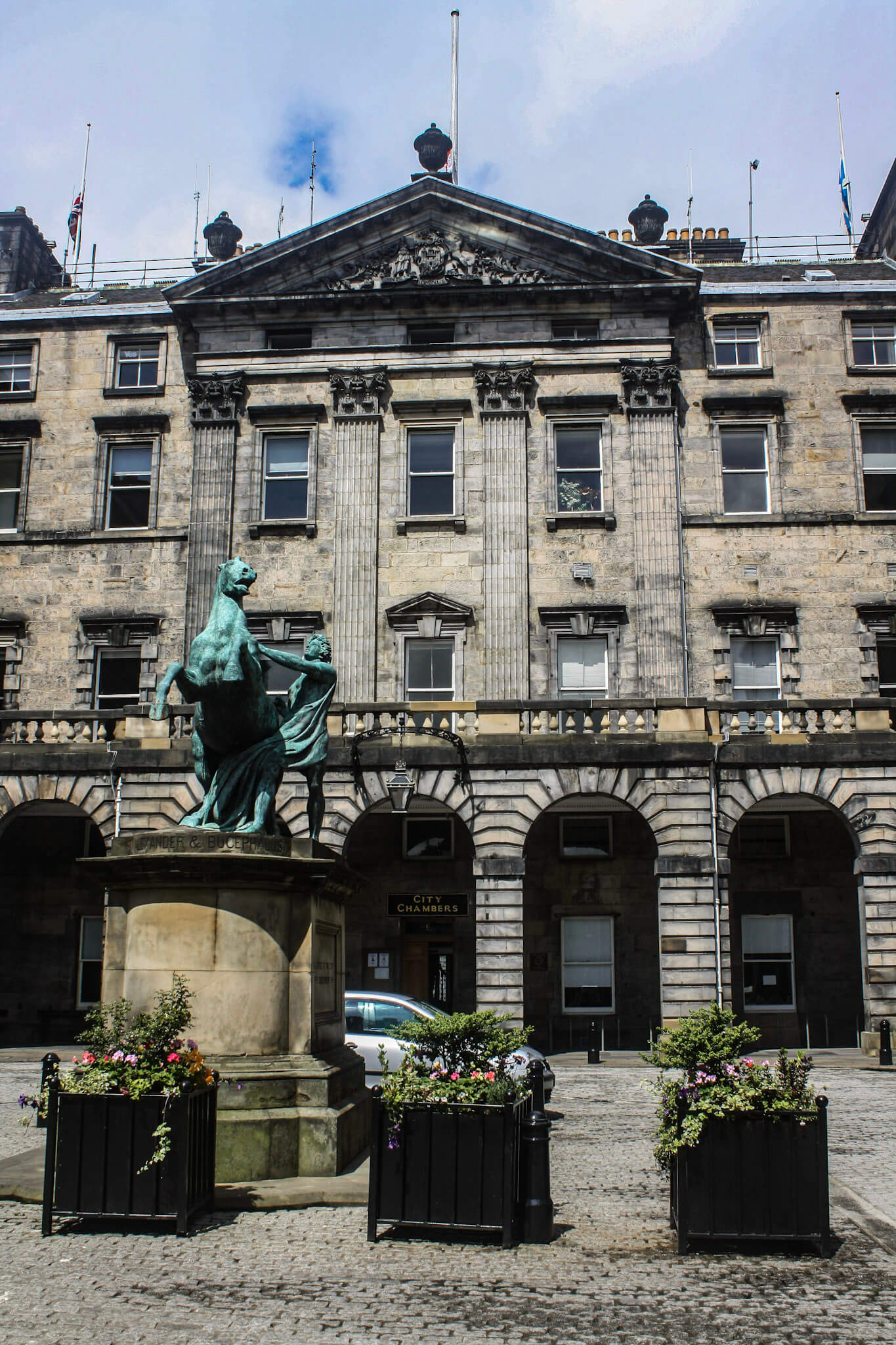
Along the Royal Mile, across the cobblestone street from St. Giles’ Cathedral, one of the most beautiful churches in Scotland, stands the Edinburgh City Chambers, originally called the Royal Exchange when it was built in 1753. Alas, the Exchange, which included stores and a coffee shop, proved unsuccessful—the merchants for whom it was built preferred meeting elsewhere. The Town Council took over part of the building in 1811, renamed it City Chambers, and bought the rest of the building in 1893. Although its purpose failed, Adam’s work did not. I was attracted by the seven arches of the open arcade facing the street, topped by a stone carving of the city’s coat of arms. Passing through the arcade, I entered the cobblestone quadrangle and looked at the fanlights above the first-story windows and then up at the abundant chimney stacks. In front of me, Corinthian pilasters and a sculpted pediment indicate the main entrance. In the center of the quad stands a bronze statue, turned verdigris green, of Alexander the Great taming his horse, Bucephalus. It’s an impressive, attractive space, leaving me to wonder how much better the merchants’ favored location could have been.
#4 Old College (Edinburgh, Scotland)
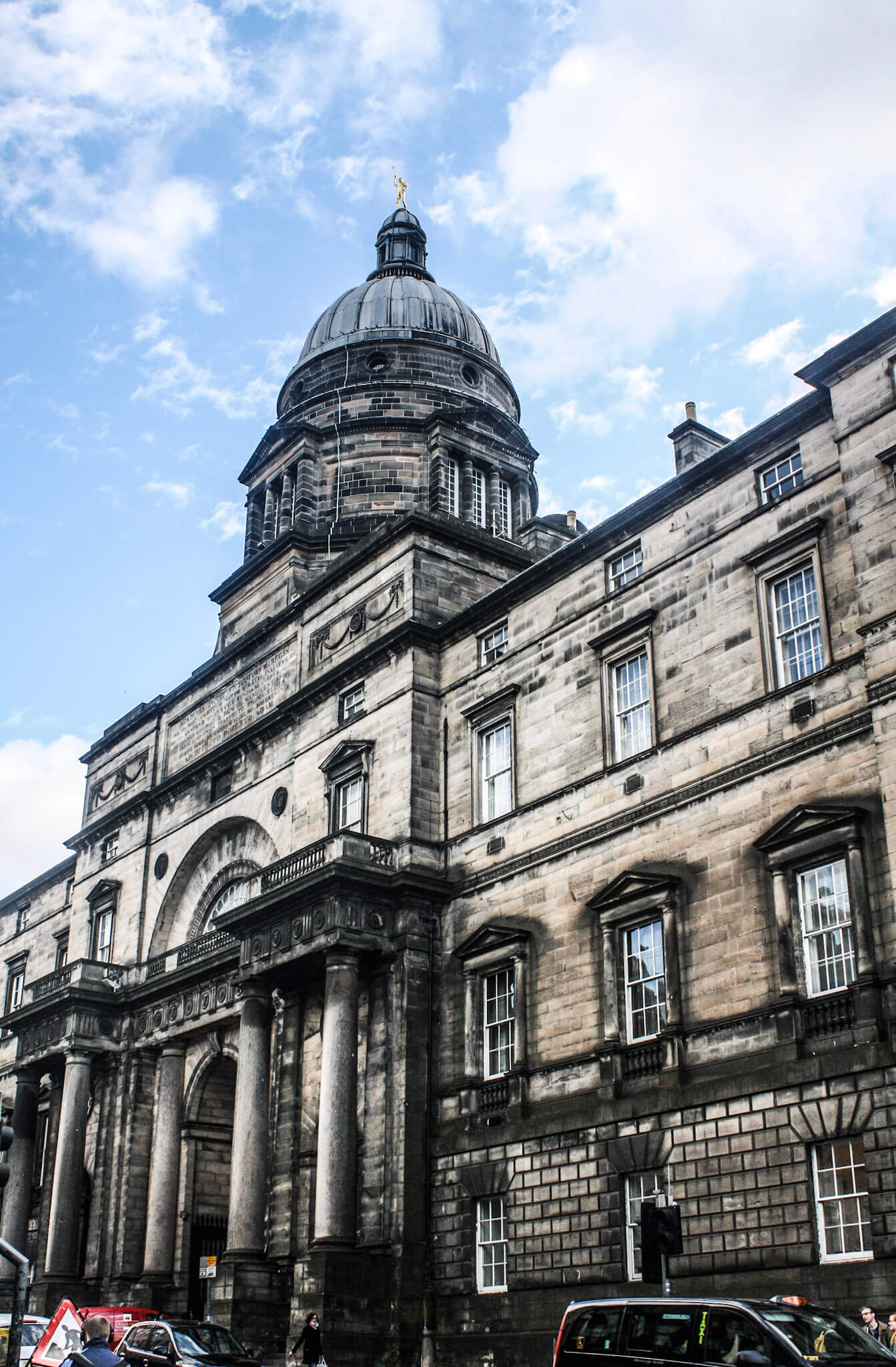
Although he didn’t live to see the completion of Old College, University of Edinburgh, Adam would be proud of this behemoth building that he designed. Construction started in 1789 but wasn’t completed until 1827. Occupying an entire city block and arranged around a central courtyard, the college was built on the grounds of a former church and was called “New College.” Once the Free Church College was subsequently built, New College became Old College. The imposing entrance portico features a series of Doric columns flanking three arched entrances and supporting the balconets with fine balustrades. A rusticated raised ashlar basement features arched windows at the corners of the building. The iconic dome’s darker stone is a clear indication that it was constructed long after the rest of the building. The drum features a set of three bay windows on each of its four sides, separated by Ionic columns and topped with a dentil pediment. Above it, ocular windows ring the base of the dome, which itself it topped with a figure of Youth holding the torch of Enlightenment, the two principles on which the university was founded. It’s an impressive sight, made even more so by its roster of students that included Charles Darwin and Sir Arthur Conan Doyle.
#5 McLennan Arch (Glasgow, Scotland)
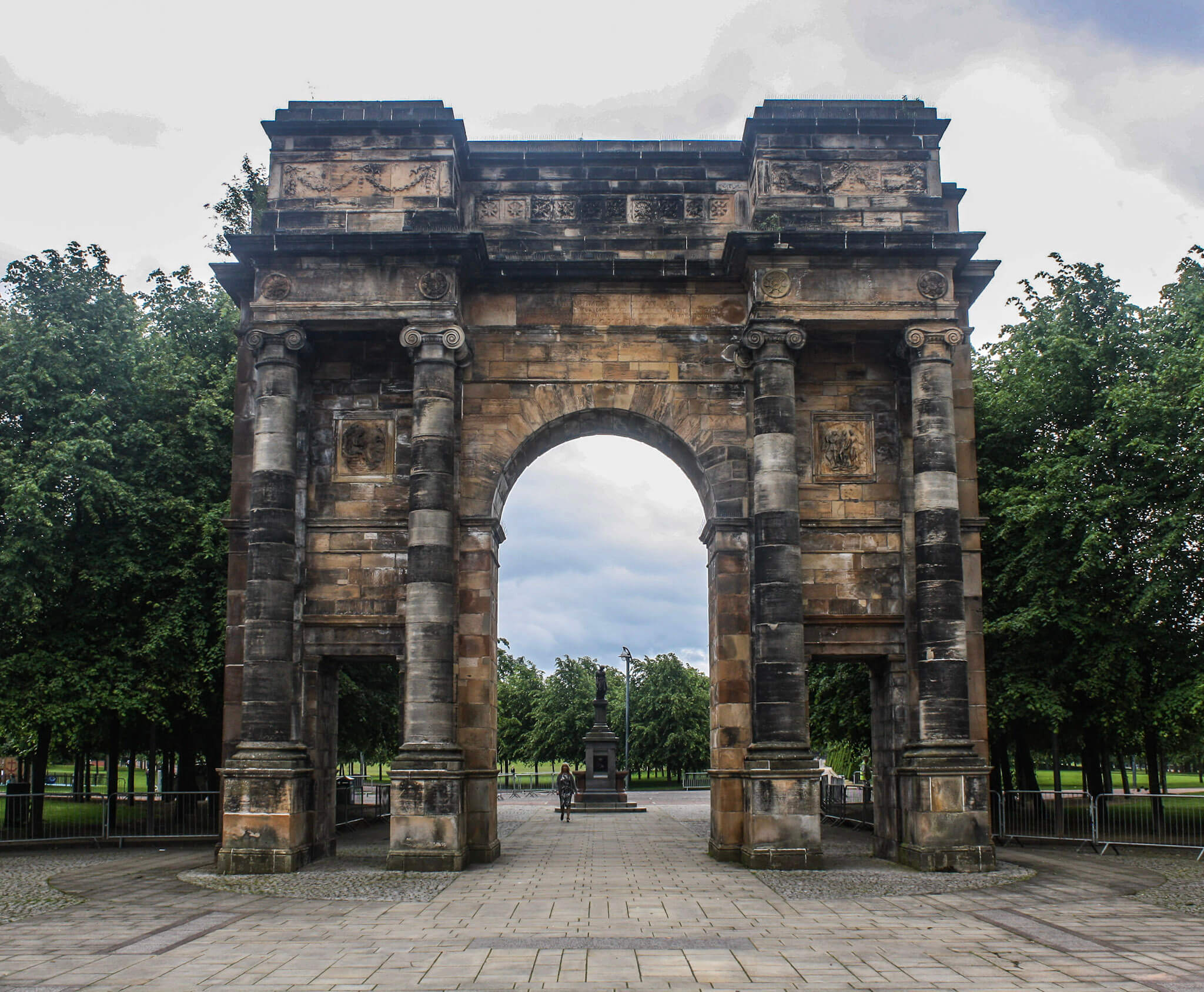
Marking the entrance to Glasgow Green, which houses People’s Palace, one of Scotland’s top museums, McLennan Arch has been pretty mobile for such an inanimate structure during its lifetime. Originally part of the Assembly Rooms building constructed by Adam and his brother James, the arch that was the building’s centerpiece fell victim to its demolition in 1890. Reconstructed with funding by its eponymous patron (James McLennan, a wine and spirits merchant), the resurrected stone arch was placed along Monteith Row, one of the best addresses in the city, in 1893. The arch was moved in 1922 to the edge of Glasgow Green, but over the years, the leaning arch of Glasgow began to sink on one side due to faulty foundations. It was on the move again, in 1991, to its present site. Greco-Roman in style, the arch features three bays through which pedestrians can walk. Ionic columns support an ornate entablature with medallions and festoons. Two sculptural panels above the side openings depict Apollo playing the lyre and the Three Graces dancing. And in case anyone should forget who was responsible for the whole thing, an inscription reads, “This arch was presented to his fellow citizens by Bailie James McLennan J.P. 1893.” Only later on did I learn that the central bay through which I passed on my way onto the green was actually the recreated frame of a massive window in the original Assembly Rooms building. That little factoid made me appreciate Adam’s triumphal arch, and his enduring legacy, even more.
Five Runners-Up
- Pulteney Bridge (1774; Bath, England)
- David Hume Mausoleum (1778; Old Calton Burial Ground, Edinburgh, Scotland)
- Georgian House (1796; Edinburgh, Scotland)
- Charlotte Square (1820; Edinburgh, Scotland)
- Bute House (1792; Edinburgh, Scotland)
I’d Love to Hear From You!
Have you been here? Have I inspired you to go? Let me know!


