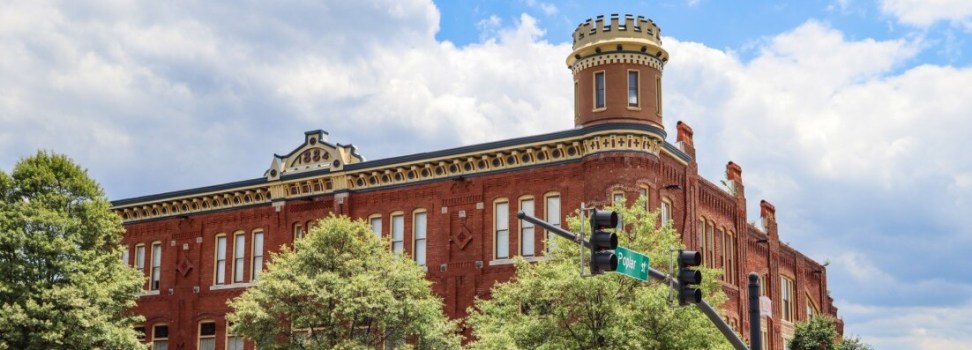
Just one armory would suggest enough munitions to last an entire war. An abundance of them proves that the threat of destruction was never that remote. With the initial functions of many of them now defunct, these behemoths have been repurposed to a wide variety of uses—police station, roller derby rink, homeless shelter, athletic center, concert hall, and art gallery, among others. Their presence in their original exterior form, however, not only reminds us of the enormity of military operations but also provides some striking streetscapes. These are my favorites.
#1 7th Regiment Armory, New York National Guard (New York, New York)
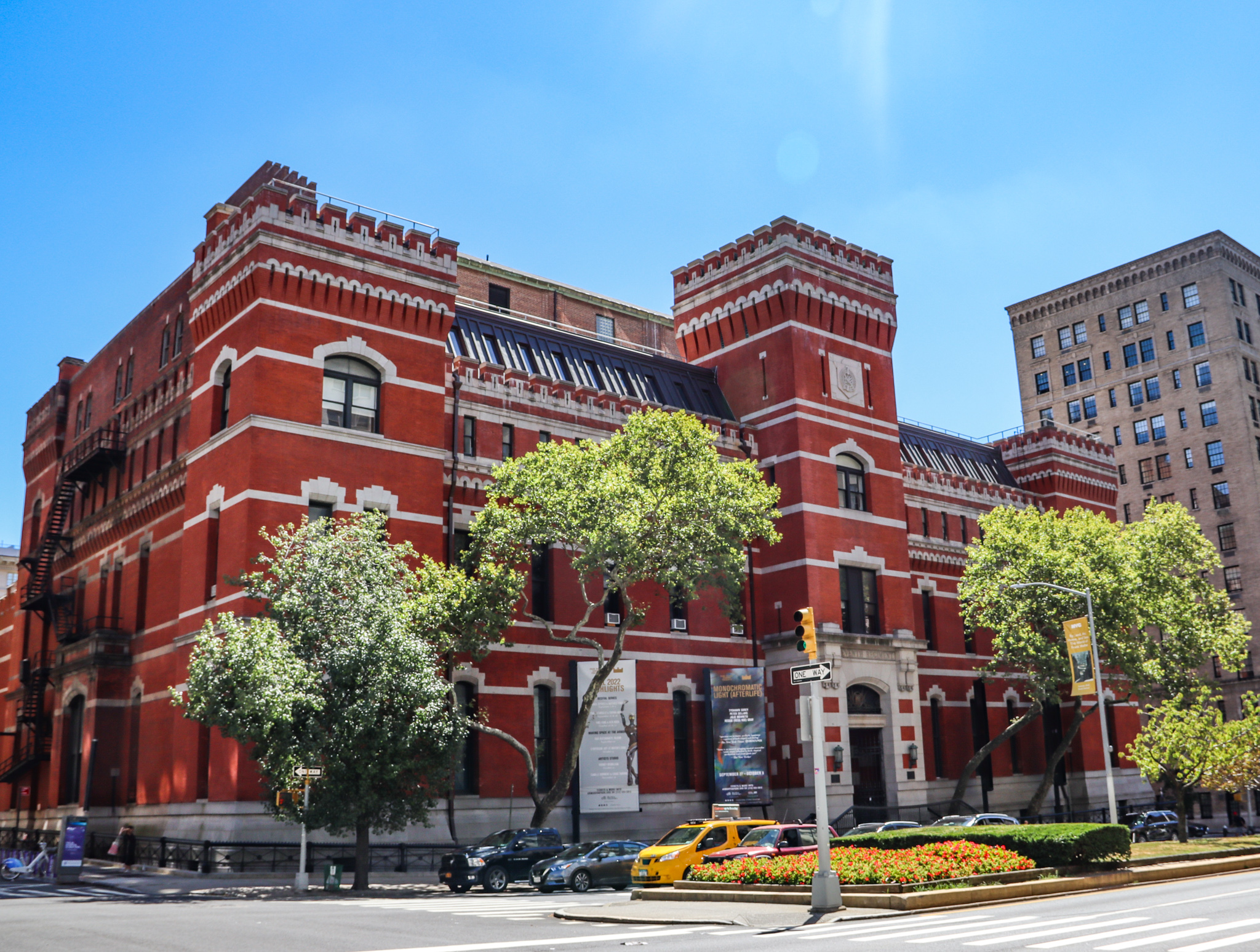
When I think of Park Avenue, I conjure up images of grand apartment buildings and glass and steel office buildings. War never entered my mind, until I stumbled upon the 7th Regiment Armory, New York National Guard, more commonly referred to as the Park Avenue Armory. Designed in the Gothic Revival style, this massive structure was completed in 1880 and saw two expansions in the early 1900s. Looking very much like a fortress, the façade was constructed of red brick, with granite trim, quoins, and arches. The entrance, in the projecting central tower, was designed to be wide enough to fit four soldiers walking side by side. Cornices at the tops of all the towers are decorated with corbeled bricks and capped with crenellated parapets.
After World War I, which killed off scores of the armory’s men, and the federalization of localized armories that had operated more or less independently, the building suffered and became one of the most endangered historic structures in the country, on the verge of collapse (the ceilings actually did) and headed for the wrecking ball. Saved by a preservation effort spearheaded by the wealthy couple who lived across the street, the armory was saved and was designated a New York City Landmark in 1967 and a National Historic Landmark in 1986.
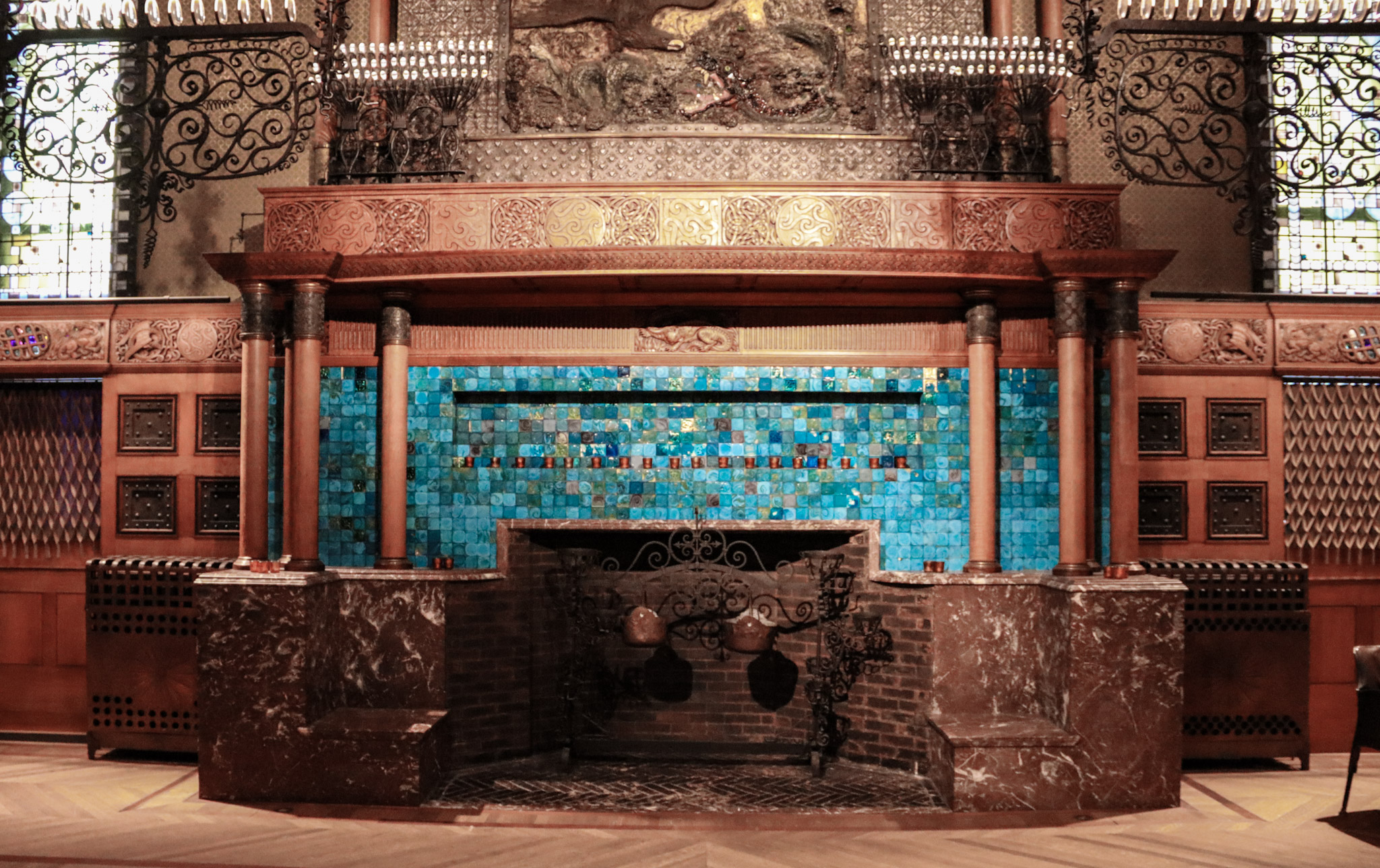
I made sure to purchase a ticket for a tour, which starts with one of the largest unobstructed indoor spaces in New York. The 55,000-square-foot drill hall measures 200’ by 300’, with a height of 80′. Resembling a great train shed, it was built not only for military drills but also for formal balls, fundraising events, tennis matches, and carnivals that included a Ferris wheel. Throughout the building, I was charmed by the carved mahogany wainscoting, pocket doors, and unique chandeliers. The lounge, an early work by Louis Comfort Tiffany, features a terrific fireplace (with each blue tile individually painted by Tiffany) and an international mindset—Japanese dragons, Celtic knots, Moroccan balcony. Upstairs, individual companies that composed the 7th Regiment were given free rein to create their own rooms, each unique and built by their own hired architects, as long as they contained three items—cabinets for changes of clothes, a fireplace, and space for a piano.
#2 First Battery Armory (New York, New York)
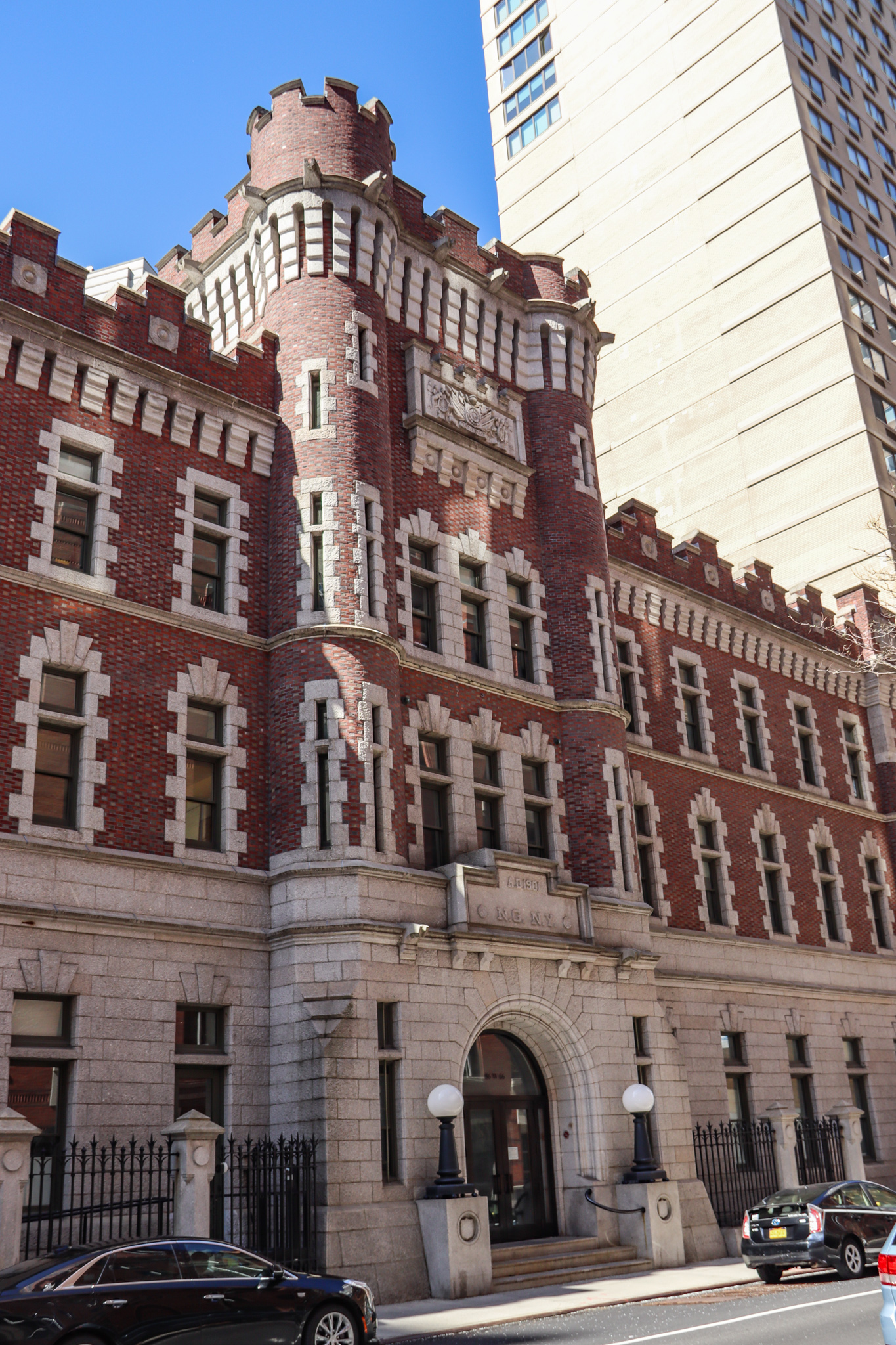
Another Manhattan armory, First Battery Armory is a giant castle-like structure half a block from Central Park with a long history. Construction began in 1901 on former farmland and was completed three years later, tapping Beaux-Arts, Georgian Revival, Medieval Revival, and Romanesque Revival styles. Built for the First Battery of the New York National Guard (look for the panel above the entrance doors that reads “A.D. 1901 N.G. N.Y.”), it passed on to the First Sanitary Train of the New York National Guard (morphing into the 102nd Medical Regiment) in 1917. In 1976, it was sold to the American Broadcasting Company, which converted it to a television studio (One Life to Live was taped here). In 2012, another conversion turned it into an office building and home to ESPN, before Hebrew Union College—Jewish Institute of Religion bought the armory in 2025. With a granite first-floor base and two upper stories in brick with granite details and window surrounds, the armory is a paradigm of symmetry. Extending 175’ down West 66 Street, the headhouse features a wonderful central tower with a wide granite round arch at the first story. The stoop is flanked by granite pedestals topped by cast-iron spherical lamps. Look up at the tower to find a panel with the insignia of the First Battery, which consists of a shield with the year 1901, the initials N.G. N.Y., and the Latin motto semper paratus (“always ready”). The shield is bordered by motifs of cannons and militiamen tending cannonballs, and it is topped by helmets, crossed axes, and flags. At either end of the headhouse stand identical pavilions with segmental arches for additional entrances. Two dozen loophole windows, in addition to one-over-one sash windows, provide an abundance of fenestration. The façade contains many castellated architectural elements, including deep openings, turrets, cornices with machicolations, and parapets with crenellations. The original interior contained offices, storage rooms, ammunition rooms, training rooms, a drill hall, horse stables, and a shooting range. The armory was named a New York City landmark in 1989 and was placed on the National Register of Historic Places in 2013.
#3 University of Wisconsin Armory and Gymnasium (University of Wisconsin, Madison)
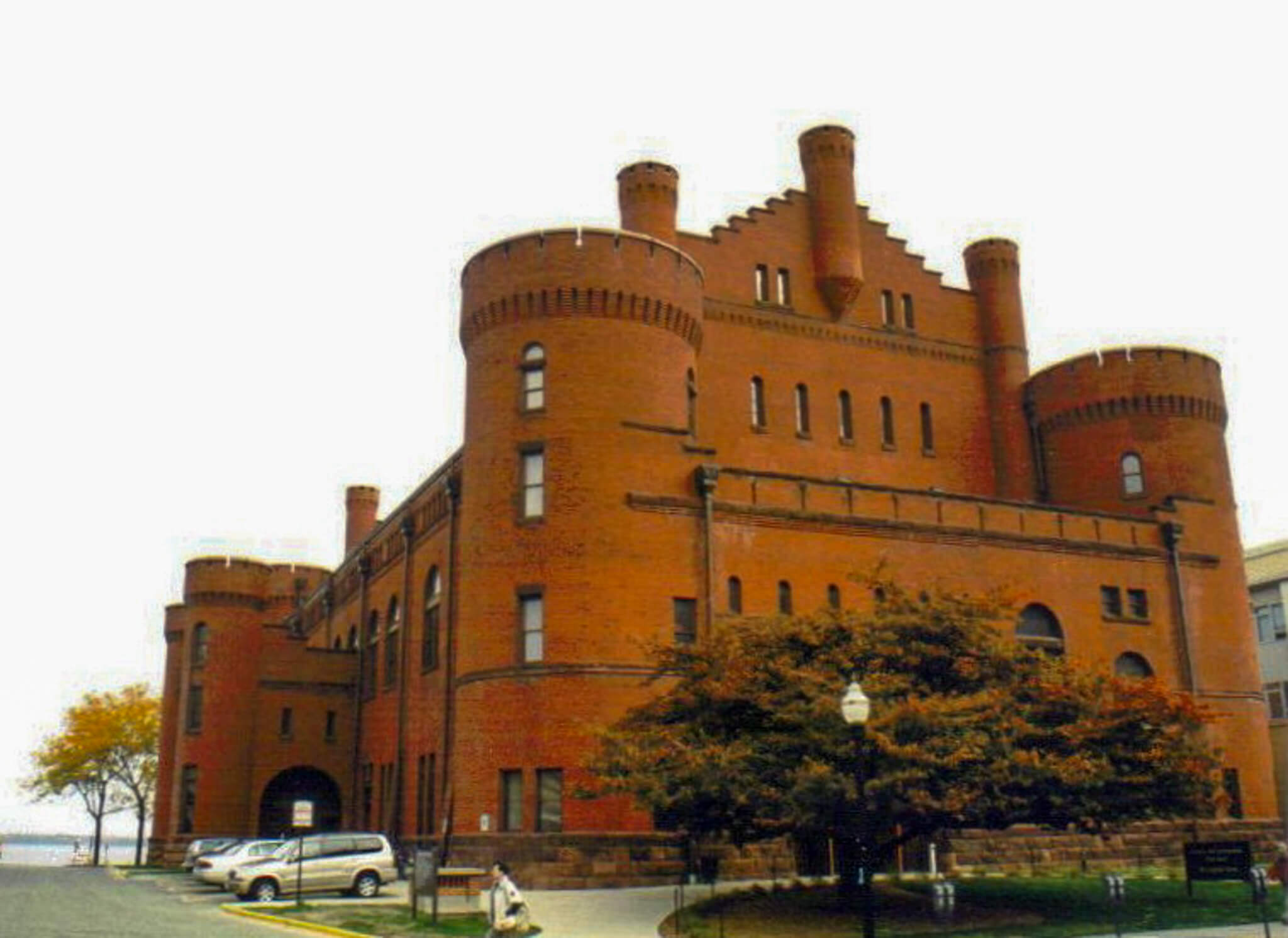
The sprawling campus of the University of Wisconsin (one of the most beautiful college campuses in the world) occupies more than 900 acres just a short walk from downtown Madison. Perhaps its most iconic building (and one of the top five buildings in Madison) is the University of Wisconsin Armory and Gymnasium, usually referred to as the Red Gym. This massive, hulking beauty designed by local architects in the Romanesque Revival style began its life as a combination gymnasium and armory in 1894, when labor riots across the United States were spooking politicians, who made loud calls for local armories to control unruly mobs and for military training for male students. Madison was no exception, and when the building opened, it included military offices, an artillery drill room, a rifle range, and a drill hall wide enough to accommodate a four-column battalion. The gymnasium part included bowling alleys, a swimming pool, a baseball cage, rowing machines, a running track, and gymnastic apparatuses. Indeed, the form of its design vividly reflects the function of the armory more than a gym; it’s a seemingly impregnable, castellated, fortress-like behemoth with circular towers, bartizans, machicolations, and corbels that reminded me of Castel Nuovo in Naples, Italy (except for the red). For about 30 years, it was an integral part of the campus, hosting everything from Big Ten basketball games to speeches by the likes of William McKinley, Eugene Debs, and Upton Sinclair. But then, compulsory military training was suspended, and a new field house became the venue for basketball games. Plans to demolish the now underused building floated for decades, and a firebomb aimed at the building by anti-war protestors in 1970 almost accomplished that. But the building survived, and, after an $11.5 million restoration project was completed in 1998, the Red Gym (declared a National Historic Landmark in 1993 and one of the world’s most beautiful things that are red) now serves as the home of centers and offices for student services, a student art gallery, a public lounge, and media rooms.
#4 Savannah Volunteer Guards Armory (Savannah, Georgia)
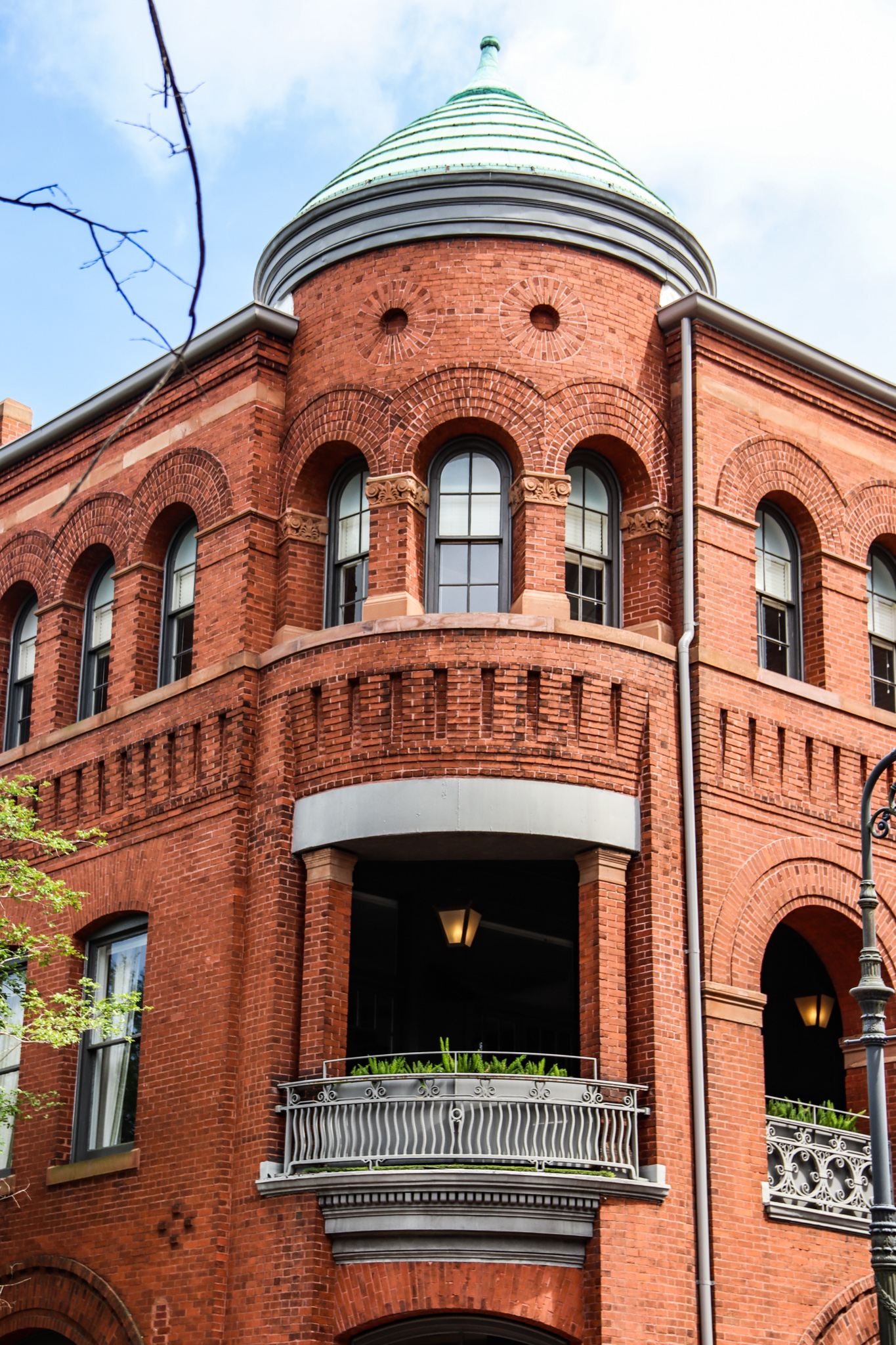
One of my top college campuses, the Savannah College of Art and Design (SCAD) has an admirable reputation of acquiring old, historically significant buildings and converting them into purposeful college properties. One such building is Poetter Hall, built in 1893 in the Richardsonian Romanesque style for the Savannah Volunteer Guards Armory. Fronting Madison Square, this 36,248-square-foot brick building contained a drill hall, ballroom, large company rooms, and a guard club. Arched entrances, outdoor spaces, and windows decrease in size on each successive story. Rounded corners on the main entrance façade, topped with verdigris-green domes, add visual appeal, as do the pair of bullet-like towers flanking the main entrance. After serving its original purpose, it passed on to the National Guard before it was converted to a high school and then, with the outbreak of World War II, the United Service Organizations took over. SCAD acquired the building in 1979 as its first academic building, christening it Preston Hall (after the architect who designed it) before changing the name to Poetter Hall in honor of May and Paul Poetter, two of SCAD’s co-founders. The college performed much-needed repairs and renovations, as well as some serious conversions (such as transforming the ballroom into a library), all while maintaining the fine exterior. Be sure to look for the cast-iron cannons and the straps keeping them attached to the building at the entrance, a fine reminder of the building’s history.
#5 Flushing Armory (Queens, New York)
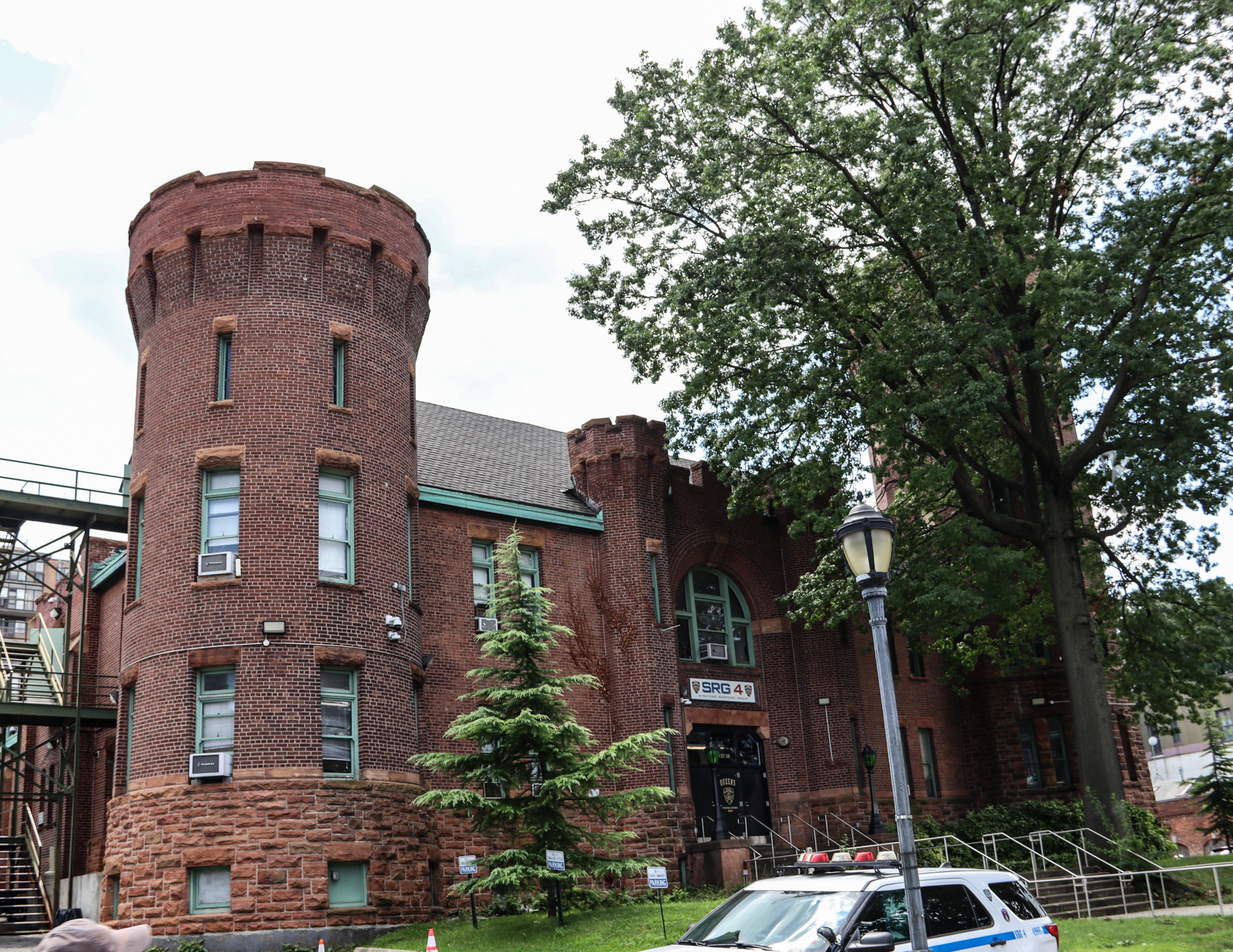
Now home to the New York City Police Department’s Queens North Task Force, the Flushing Armory is more than a century old, completed in 1906 at a cost of $82,000 for the 17th Separate Company. The brick and brownstone structure strongly resembles a medieval European fortress. The two-story arch at the entrance in the hip-roofed administration building is flanked by a pair of crenellated octagonal towers. To the left stands a five-story octagonal tower, and, to the right, a three-story round tower, both with tall, narrow windows, parapets, merlons, and embrasures. Behind them all, the drill shed occupies more than 11,000 square feet. Listed on the National Register of Historic Places in 1995, the armory has served, throughout its history, the National Guard and as a homeless shelter and a gymnastics center.
Five Runners-Up
- 14th Regiment Armory, New York National Guard (Brooklyn, New York)
- Old Georgia Hussars Armory (Savannah, Georgia)
- Nuremberg Armory (Nuremberg, Germany)
- Washington Avenue Armory (Albany, New York)
- Old Armory Building (Macon, Georgia)
I’d Love to Hear From You!
Have you been here? Have I inspired you to go? Let me know!


