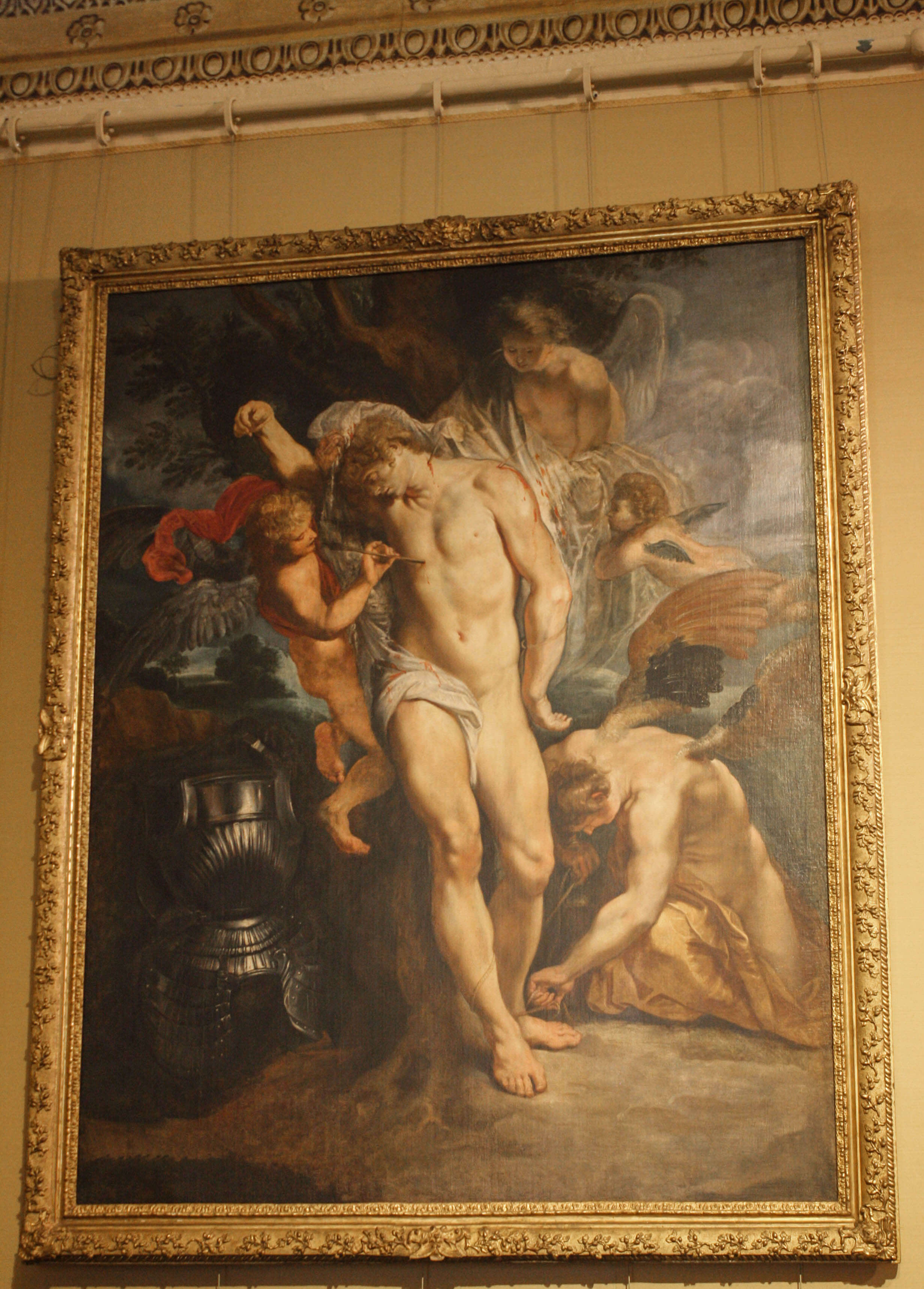
If Cupid should hit you with an arrow, consider yourself lucky. If anyone else does, it’s going to hurt. A lot. And if multiple arrows pierce you, good luck. St. Sebastian should know. A courageous captain of the Praetorian Guards in the Imperial Roman army during the 200s, St. Sebastian, in the Christian canon of gruesome martyrdoms, suffered this particular form of torture for being a devout Christian, yet he didn’t die from his arrow wounds. Rather, he survived, aided by a pious woman, only to be clubbed to death shortly after for some bold lèse-majesté against Emperor Diocletian. Despite his ultimate fate, the saint, whose feast day is celebrated on January 20, is almost always pictured as an archer’s target practice. Read about the top five depictions of St. Sebastian >
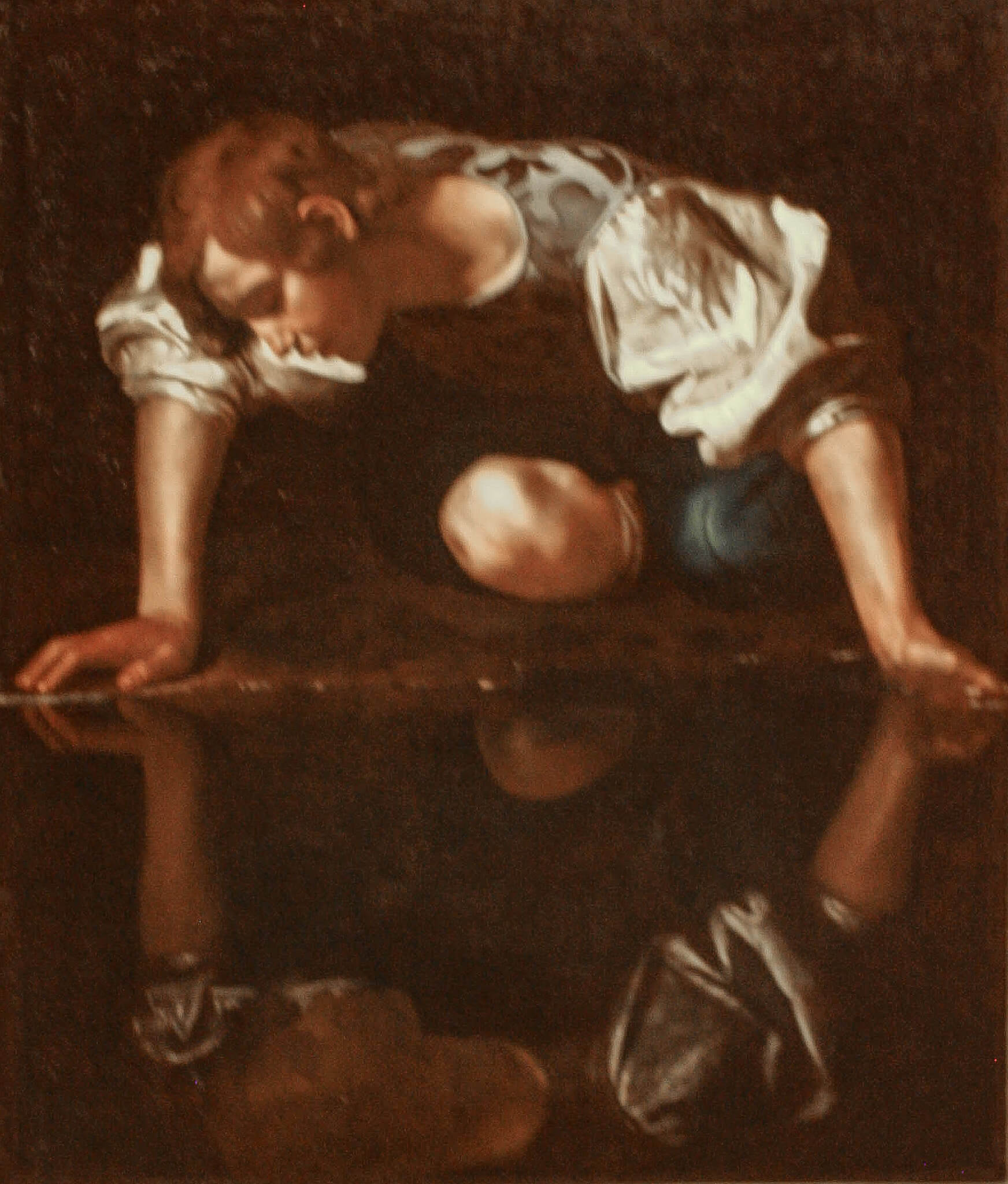
His art was as enthralling as his life. His paintings, always on canvas, were revolutionary. A master of chiaroscuro and realism, Michelangelo Merisi da Caravaggio ushered in a dramatic new style of art in the late 1500s and early 1600s that mesmerized some and appalled others, but which established him as one of the leading Baroque artists of his era. How he found time to create such an impressive œuvre amazes me: Caravaggio spent much of his time brawling, carousing, and bouncing around the Mediterranean, from his hometown of Milan to Rome to Naples to Malta to Sicily and back to Italy, being imprisoned, fleeing from a death sentence and warrants for his arrest for manslaughter and assault, and being expelled from the Knights of Malta after a membership of only half a year. And he did all of that by the time he died under mysterious circumstances at age 38. He left behind an impressive canon that easily established himself as one of my favorite artists—but one who was nearly forgotten for centuries. Read about my top five works by Caravaggio >

 If Cupid should hit you with an arrow, consider yourself lucky. If anyone else does, it’s going to hurt. A lot. And if multiple arrows pierce you, good luck. St. Sebastian should know. A courageous captain of the Praetorian Guards in the Imperial Roman army during the 200s, St. Sebastian, in the Christian canon of gruesome martyrdoms, suffered this particular form of torture for being a devout Christian, yet he didn’t die from his arrow wounds. Rather, he survived, aided by a pious woman, only to be clubbed to death shortly after for some bold lèse-majesté against Emperor Diocletian. Despite his ultimate fate, the saint, whose feast day is celebrated on January 20, is almost always pictured as an archer’s target practice. Read about the top five depictions of St. Sebastian >

 Stephen Travels