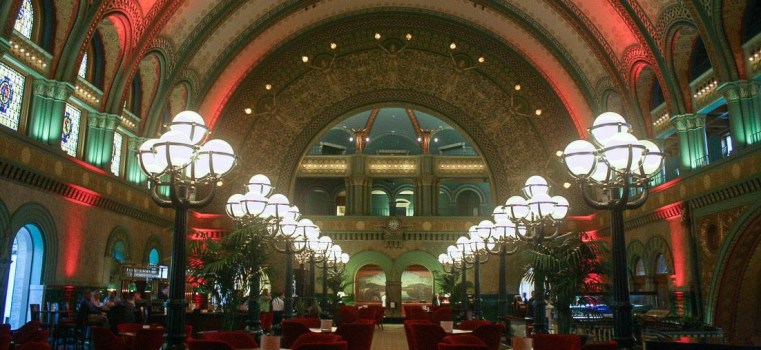
After World War II, when air travel became much more affordable and family vacations in cars on newly built roads became the norm, the passenger rail industry spiraled downward in a devastatingly rapid fashion. Majestic stations and terminals were abandoned or demolished. However, many survive, and the bullet trains of Asia and the success of the Chunnel are just two indicators that rail travel is far from history and will not be relegated to merely your daily commute to work. You should be sure to check out these architectural triumphs—very often located in the heart of the city that you’ve just flown into. These are my favorites.
#1 Central Station (Antwerp, Belgium)
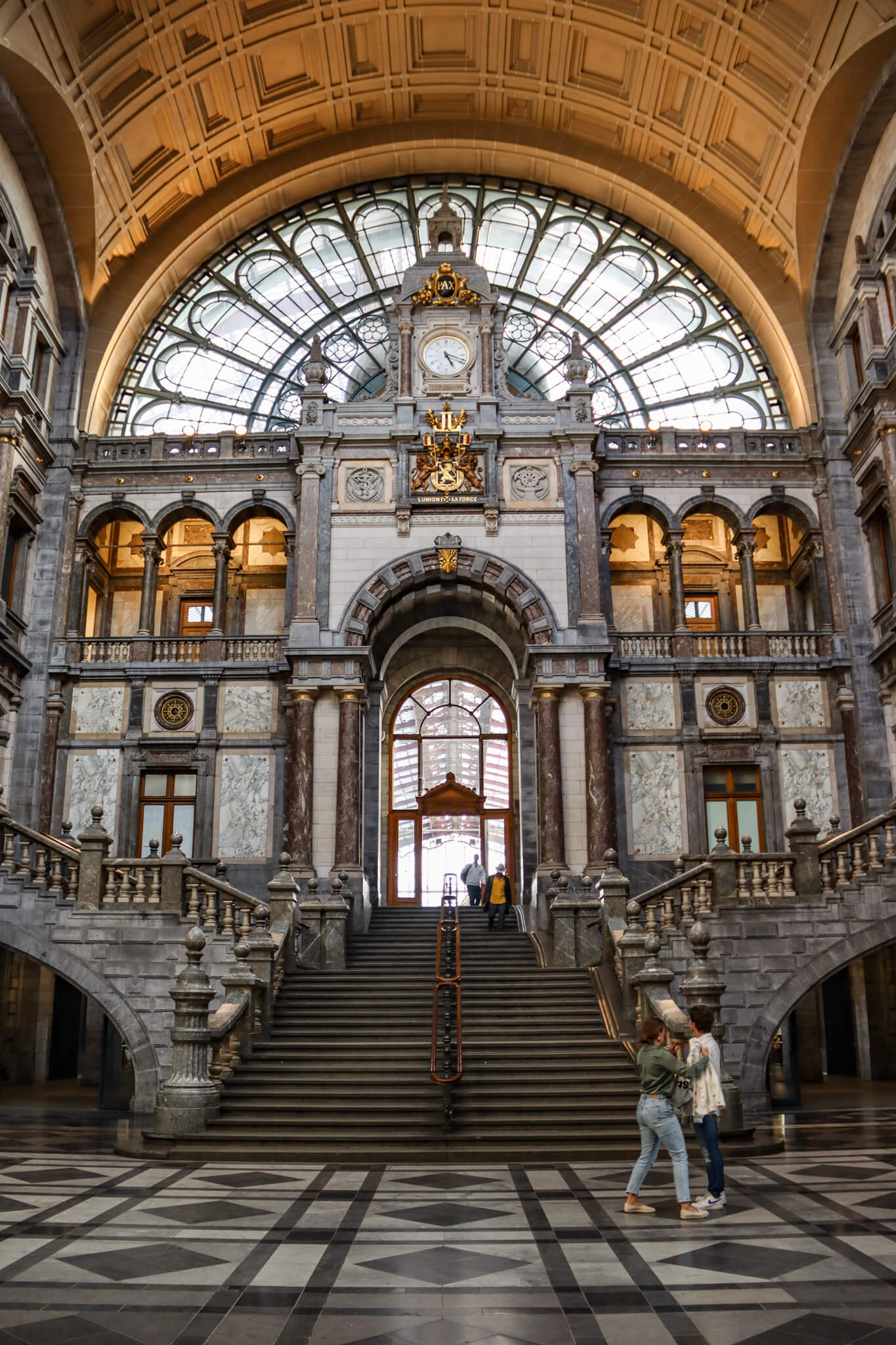 As my train arrived in Antwerp from Luxembourg, it started to decrease its speed along the 2.4-mile elevated viaduct adorned with more than 200 little towers alongside the tracks—my first hint that Central Station would be something special. My train pulled into the shed along one of the upper-level platforms, and as I emerged from the carriage, I was already impressed. The iron and glass vaulted ceiling runs to a length of 607’ and reaches a maximum height of just over 144’—deliberately high to help dissipate the smoke of steam locomotives when they were in use. Making my way along the platform, I was soon facing the impressive broad façade complete with columns, gorgeous fanlight glass in the arches, and the gilded ANTWERPEN sign under the clock. Through the doors, I entered the main hall and almost tumbled down the marble stairs, completely awestruck by the space. Massive arches with coffer soffits soar above the four stories of office space on the sides. Descending down the stairs, I was soon standing under the tremendous dome, admiring the vast space and the 20 different kinds of marble and stone used throughout. It’s so beautiful that you may very well miss your highly punctual train because you’re so taken with your majestic surroundings. In fact, you can easily extend your time here by having lunch or dinner at the palatial café, as I did. In 2013, the former waiting rooms were converted into Le Royal Café Brasserie & Restaurant, one of the world’s best cafés. Neo-baroque façades were restored, terrazzo floors were installed, and copper, wood, and stucco add warmth to this dining establishment, where you truly feel royal as you enjoy a filling meal of, say, linguine pesto with arugula, pine nuts, sundried tomatoes, and parmesan cheese shavings, while listening to Fleetwood Mac and Frank Sinatra and watching the time slowly go by on the large clock on one of the walls with gilded panels and festoons.
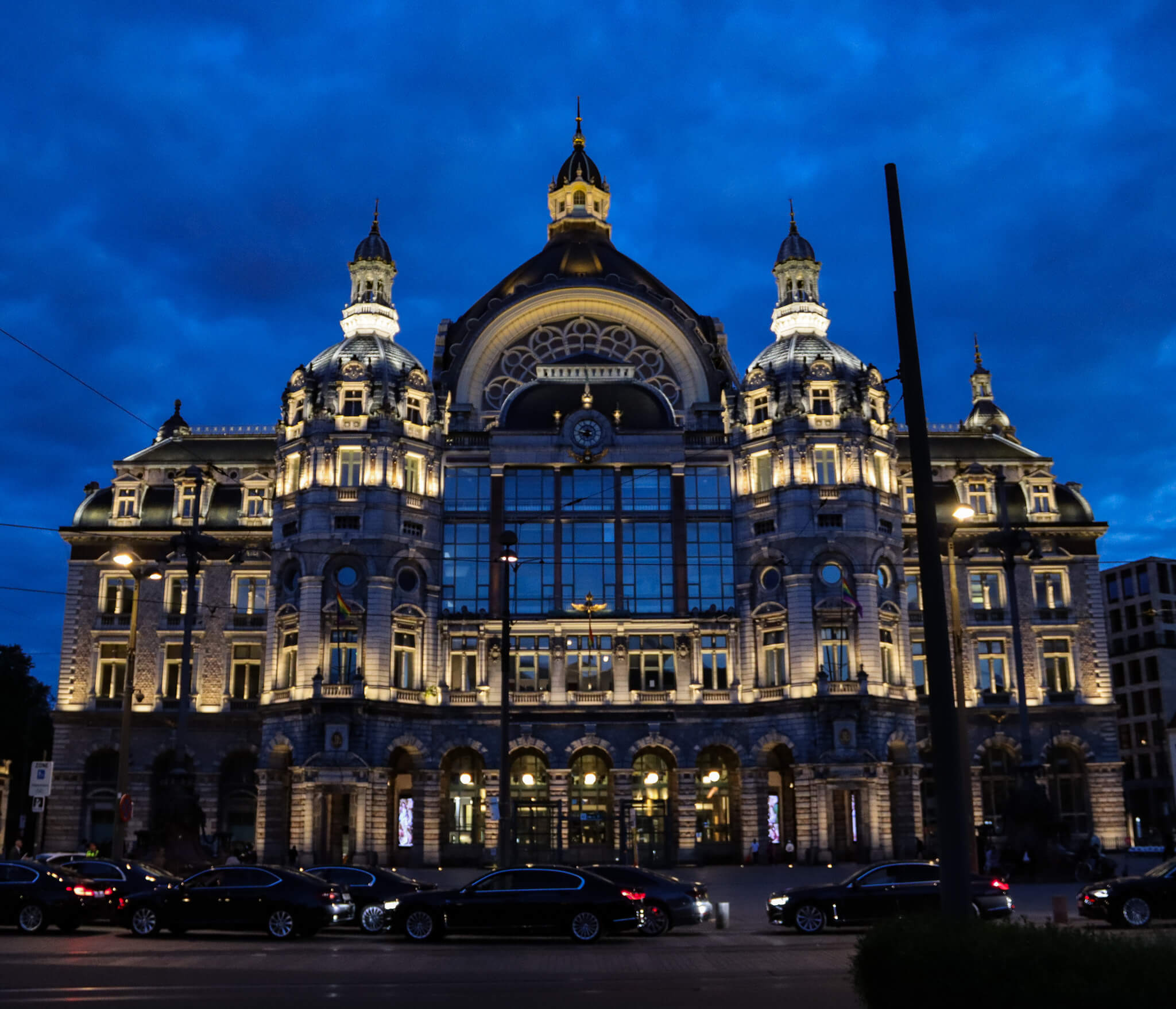 Outside, you’ll need to walk a bit through Queen Astrid Square and turn around to get the best view of this structure. Although there’s a monumental entrance on the west side of the building, it’s the north side that will completely wow you. Here, it becomes apparent why this station has received global accolades for its beauty. The glorious dome, the formidable yet elegant towers, the abundance of fenestration of different shapes and sizes, and the street-level arcade all combine to form a masterpiece. Completed in 1905 after a decade of construction, the station was severely damaged during German bombing in World War II. Despite restorations, constructional stresses had been caused by the bombings, leading to deterioration that prompted calls for the demolition of the entire building. Fortunately, repairs and restorations during most of 1986 restored the station’s glory. Today, this Belgian landmark is not only a key transportation hub, it’s also a destination in and of itself. Don’t forget to return here at night, when the entire structure is illuminated, a true beacon of modern rail travel.
#2 Union Station (St. Louis, Missouri)
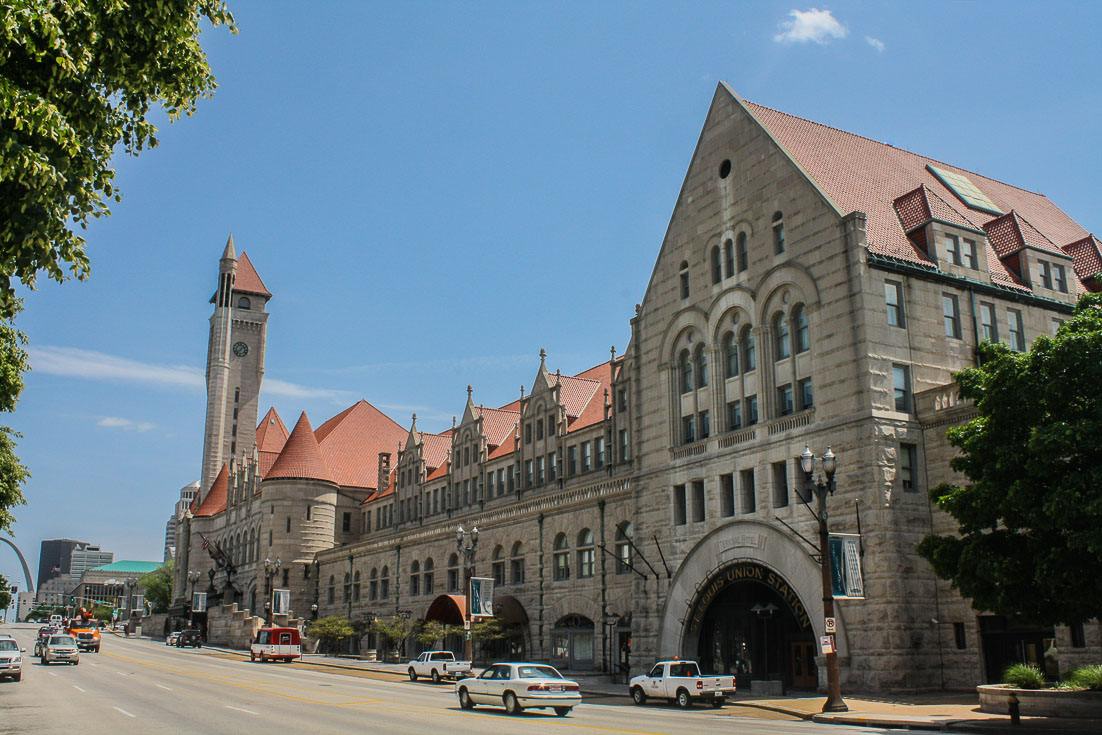 Opened in 1894 in the heart of downtown St. Louis, Union Station immediately entered the history books as the largest and busiest terminal in the world, featuring the largest single-span train shed ever constructed (covering 32 tracks and stealing that record from London‘s St. Pancras). This indisputable gem emits a magnetic allure that commanded my attention every time I passed by. Combining Richardsonian and French Norman styles, this enormous station, with its red roof, fortress-like round towers, and soaring clock tower, was serving upwards of 100,000 passengers per day on 22 different railroads using 42 tracks at its peak. It chugged along until operations ceased in 1978. A restoration project completed in 1985 preserved its flawless exterior that makes you feel like you’re about to embark on something special as soon as you approach it. Now serving only the city’s light-rail transit system on just two tracks, Union Station has been repurposed as a hotel, entertainment center, restaurant and shopping complex, and Memories Museum that traces the station’s history—including its role as the spot where the famous photo of newly elected President Truman holding up the Chicago Tribune‘s very incorrect headline (“Dewey Defeats Truman”) was shot. Inside, I was completely taken by the 65’ barrel-vaulted ceiling over the spacious Grand Hall covered in gold leaf and frescoes, and the Romanesque arches over windows and doorways. After enjoying a cool drink at the stylish bar, I made sure to admire one of the station’s highlights, the Allegorical Window—a stained-glass window depicting St. Louis as a goddess sitting regally and confidently on a long marble bench while rival goddesses New York and San Francisco rest on either side of her, eyeing her jealously.
#3 St. Benedict Railway Station (Porto, Portugal)
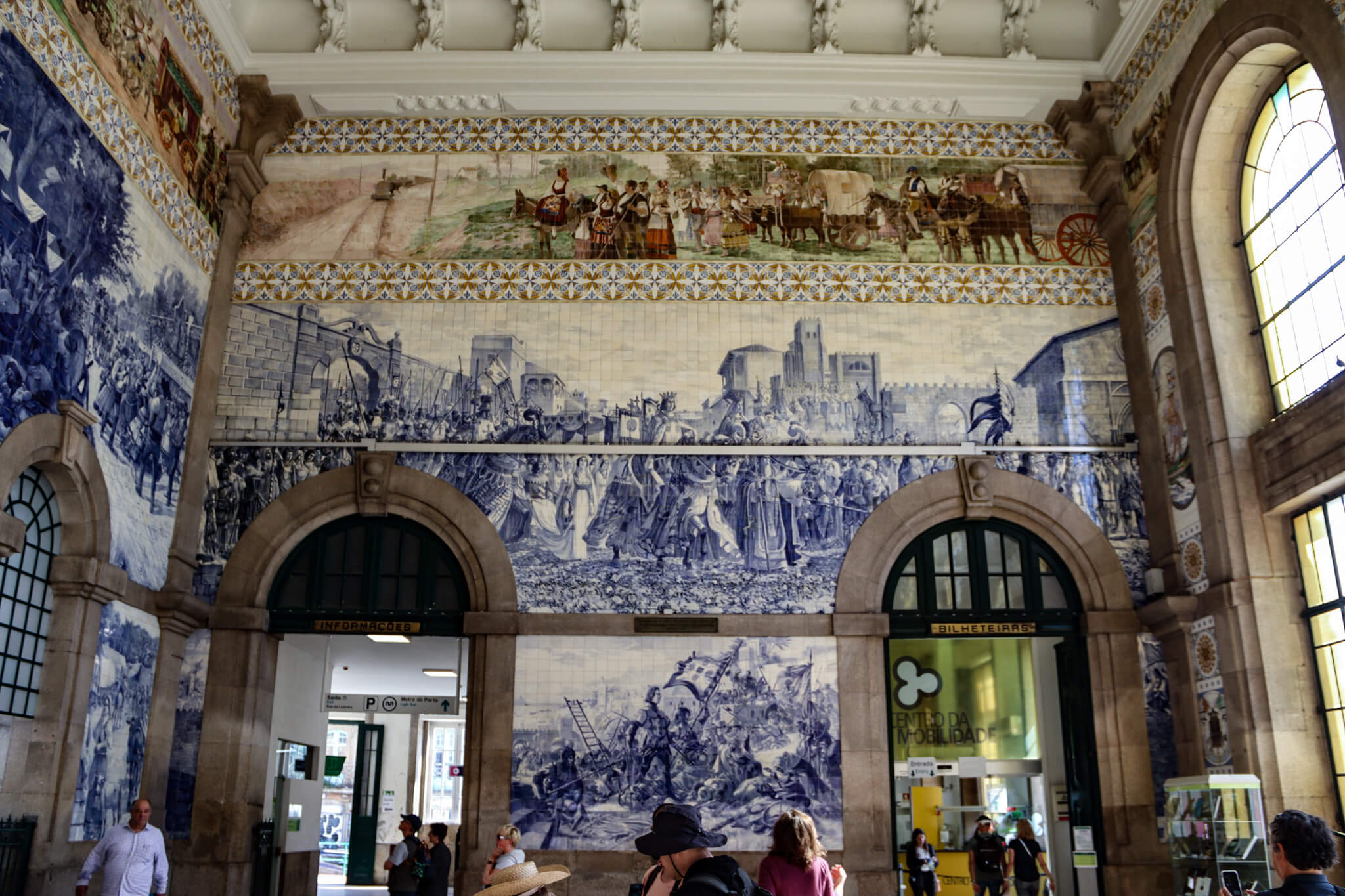 Just a few blocks from my wonderful hotel in Porto, Infante Sagres, chaotic activity abounded. A new subway station was being constructed, and pedestrian and vehicular traffic swarmed everywhere. In this little bottleneck, where you’ll find St. Anthony of the Gatherers Church, an existing subway station, open-air tour buses, the head of the shopping street Rua das Flores, and the tourist information center, stands the impressive São Bento Railway Station. Built on the site of a Benedictine monastery, the station opened in 1916 after a dozen years of construction and after King Carlos I placed the cornerstone himself. The symmetrical granite building is a Beaux Arts beauty, with arched windows with decorative keystones, a heavily bracketed cornice, and a couple of synchronized clocks on the corners. But it’s what’s inside that makes this station so spectacular. The ceiling of the entrance hall, painted a sunny yellow, sports beautiful white plasterwork, and I soon found myself gaping at the walls, covered with 20,000 azulejo pieces—ceramic tiles that are one of Portugal’s most iconic symbols. At the top of the walls, two bands of blue and gold stylized flowers sandwich a polychromatic frieze depicting the history of transportation in Portugal, from the earliest times to the arrival of the train. Below that, framed by pilasters and conforming to the arches of the windows and doorways, gorgeous murals in blue and white tile depict romantic and rural scenes, while the larger works represent key moments in the country’s history. Although I was unfamiliar with the historical scenes depicted, such as Prince Henry the Navigator’s conquest of Septa, the Battle of Arcos de Valdevez, and the arrival of King João I and Philippa of Lancaster in Porto on horseback, I was bowled over by the artistry that took 11 years to complete. Each blade of hay, each wrinkle in a banner, each fold in a woman’s garment, each insignia on a knight’s shield is expertly crafted, a prime example of an art form that has been beautifying this country since the 14th century. You may not use the train station for a practical transportation purpose when you’re in Porto, but you’ll long remember it as one of the world’s best.
#4 Dunedin Railway Station (Dunedin, New Zealand)
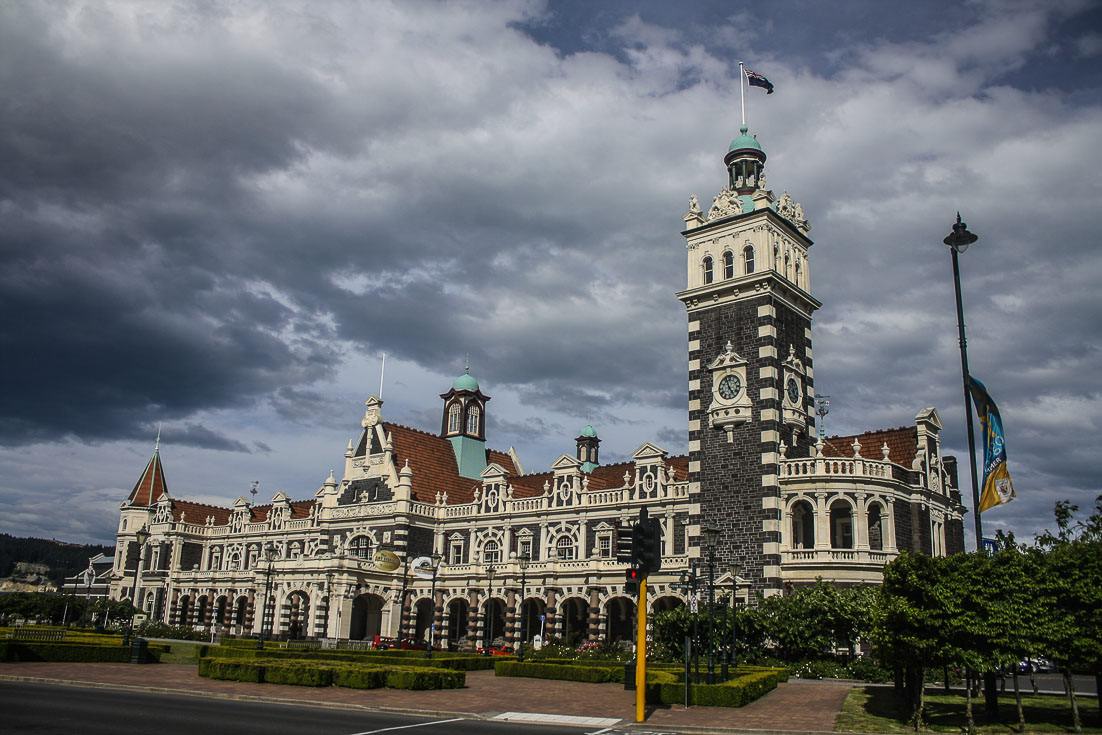 Fronting the triangular Anzac Square, the Dunedin Railway Station—once New Zealand’s busiest railway station in what was once its largest city—was completed in 1906 in a beguiling Flemish renaissance style, combining dark basalt with lighter stones, pink granite, and slate-gray terracotta shingles. A tall clock tower anchors one end of this exceptionally eye-catching and extremely long structure, and a protective colonnade runs along the front. The interior booking hall is highlighted by a floor of 750,000 mosaic tiles with locomotive and other train-related symbols. I caught the best view of it from upstairs, leaning over the rails of the balcony lined with a porcelain frieze and stained-glass windows, also containing rail motifs. Although its original purpose has been largely diminished, New Zealand’s most photographed building remains relevant by housing both the New Zealand Sports Hall of Fame and the Otago Art Society, and by hosting the South Island’s main fashion show every March, when its 1,640′ platform is transformed into the world’s longest catwalk.
#5 Union Terminal (Cincinnati, Ohio)
 Walking through the expansive plaza fronting Cincinnati‘s Union Terminal gave me plenty of time to admire this Art Deco treasure. The largest manmade half-dome in the Western Hemisphere became an iconic symbol of the city as soon as it opened in 1933, but a doomed one at that. Rail travel was already starting to taper off, and the last train departed the station in 1972. After a tumultuous few decades under the constant threat of demolition, Union Terminal has emerged as a cultural center containing three museums, a library, an Omnimax theater, and the Cincinnati Railroad Club. Limited rail service—one train, three times a week —was restored in 1991, and those lucky passengers get to walk through a striking interior, characterized by sweeping circular lines, rich woods, unmistakable Art Deco fonts in the old signage, and, especially, brilliant murals in the rotunda. At 22′ high and 110′ long, the murals depict the city’s history through images of everything that shaped the “Queen City”—railroads, steamships, industry, farms. Unfortunately, Union Terminal is once again at a critical juncture, having been listed as one of the 11 most endangered historic places in the United States by the National Trust for Historic Preservation in 2014 due to extensive deterioration and water damage. Hopefully, Cincinnatians will find a way to keep Union Terminal from the wrecking ball—it deserves better.
Five Runners-up
- Union Station (Omaha, Nebraska)
- Central Railway Station (Helsinki, Finland)
- St. Pancras International (London, United Kingdom)
- Grand Central Terminal (New York, New York)
- Amsterdam Centraal Station (Amsterdam, the Netherlands)

 Stephen Travels
Pingback: Five Train Stations That Will Make You Rethink Flying | Stephen Travels
July 17, 2015 at 10:49 am
Very informative! Thanks for this post!
LikeLike
July 17, 2015 at 10:50 am
Thanks, Bel. Glad you enjoyed it!
LikeLiked by 1 person
Pingback: Amsterdam’s Most Beautiful Churches | Stephen Travels
Pingback: Kansas City’s Union Station Is More Than Just a Mecca for Train Lovers | Stephen Travels
Pingback: Tile Style | Stephen Travels
Pingback: Dine Like Royalty in Antwerp’s Gorgeous Train Station | Stephen Travels