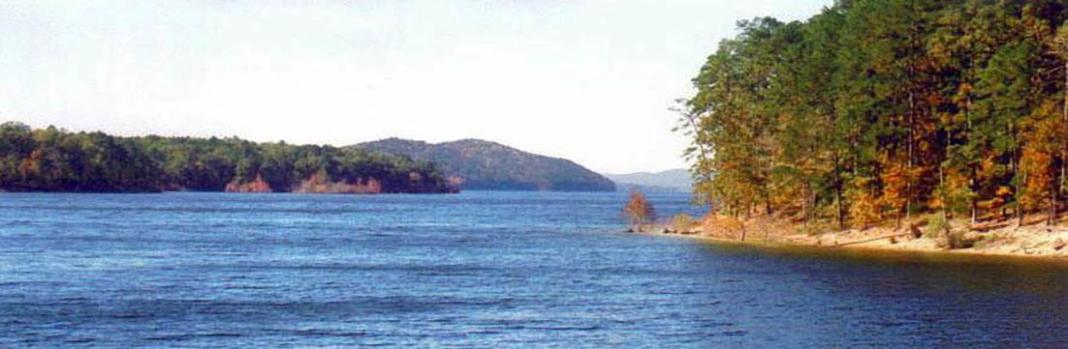
I didn’t know what to make of Arkansas. As I entered the state for the first time, crossing over a bridge spanning the Mississippi River from Memphis, three roadside signs appeared, one after the other: a billboard of smiling children at the county fair, next to a billboard for guns, next to a billboard for Jesus. Mixed messages, indeed. But, as I settled in, politics and religion took a very remote back seat to some of the best things to see and do in Arkansas. These are my favorites.
#1 Soak In (Literally) Bathhouse Row in Hot Springs
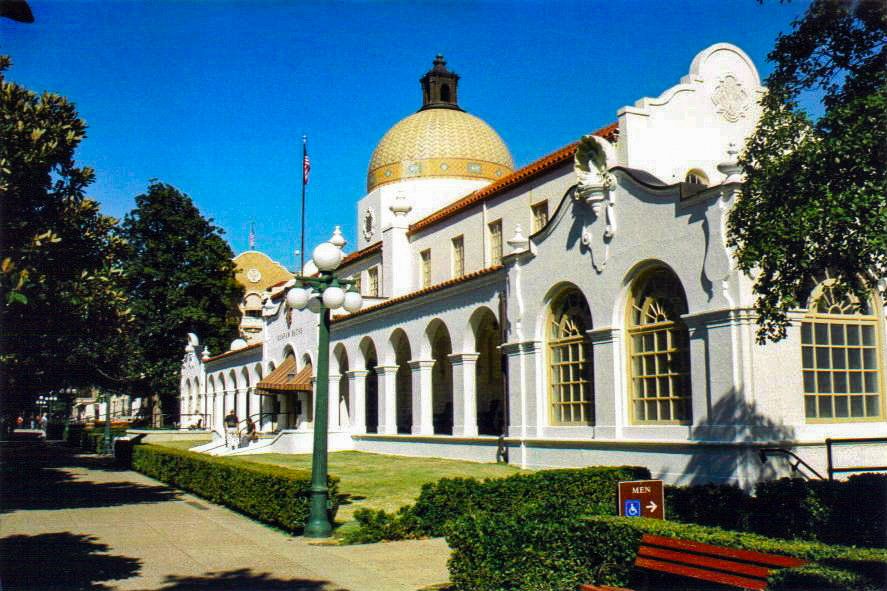 A couple of centuries after Hot Springs was discovered by Hernando de Soto, people began to visit for the healing power of the springs, which are still here today—I saw the steam rising from the hot spring fountains around town. Hotels and bathhouses began to sprout up to accommodate them between 1892 and 1923 and were followed by casinos, brothels, and gangsters, and it became a pretty rowdy town. Once modern medicine made cures quicker and easier than a trip to Hot Springs, and once the gangsters were forced out, the casinos closed, just about all of the bathhouses shut down, and the town collapsed. Now it’s a low-key city, the heart of which is still Bathhouse Row, part of Hot Springs National Park. It’s a strip of about seven bathhouses. Magnolia trees line the sidewalk in front of all of them, and behind them and up on the hill is the lovely brick Grand Promenade. Two of the bathhouses have reopened. A third, the Fordyce, serves as the visitor center for the park, and its rooms and baths are open for viewing. The men’s section has a large, central bath hall with private rooms around the perimeter for bath tubs, steam rooms, and hydrotherapy rooms. Above a statue of de Soto and a fountain is a beautiful stained-glass ceiling. The old steam cabinets were the ones where only your head popped up through an opening in a metal box. When you’ve admired it all, treat yourself to a full bath treatment at the Buckstaff Bathhouse, the only continuously operating bathhouse in town, active since 1912. If you weren’t there for a relaxing time, you might think you were in a Victorian insane asylum, what with all the bizarre equipment and separate rooms and hallways. For a very reasonable price, I received a 30-minute whirlpool mineral bath, a two-minute steam, a 20-minute wrap in a sheet and hot towel, a two-minute shower, a 20-minute massage, and a 10-minute paraffin hand treatment. After all that, you’ll find it utterly impossible to walk quickly, or even at a normal pace, even if you had to. Instead, just pour yourself into a blue Adirondack chair on the front porch of the bathhouse under the blue and white striped awnings and revel in your newly relaxed body.
#2 Be Surprised by Garvan Woodland Gardens
 Garvan Woodland Gardens occupies a peninsula that juts into Lake Hamilton in Hot Springs. I was intending to just take a leisurely stroll through some nature, but surprise after surprise turned this little walk in the woods into a memorable afternoon. Run by the University of Arkansas, Garvan opened to the public when local resident and self-taught gardener Verna Cook Garvan bequeathed the property upon her death in 1993. Today, it is one of the world’s top 10 botanic gardens. Right beside the entrance, I found my way into the bonsai garden, a delightful collection of nearly three dozen bonsai—miniature trees and bushes, meticulously trimmed, in trays and shallow pots. From there, I began exploring Garvan’s halcyon 210 acres. You’re treated to seasonal displays of beautiful flora, such as camellias, daffodils, magnolias, tulips, and more than 160 different types of azaleas. The four-acre Garden of the Pine Wind is chock-full of maples and dogwoods, a 12’ waterfall, a pond filled with colorful koi, and the Joy Manning Scott Bridge of the Full Moon, a romantic stone crossing with a sphere-shaped arch inspired by China’s rustic bridges. Surrounded by 4.5 miles of shoreline, the gardens are never far from beautiful water views, with trees enflamed with autumnal colors covering the gentle foothills of the Ouachita Mountains. Paths and stone staircases lead to and from these viewpoints, wending their way through ash, hickory, oak, and pine trees. I received another surprise when I stumbled upon the Millsap Canopy Bridge. Two stories above the forest floor, the snakelike 120’-long bridge resting on stone piers offered me a bird’s-eye view of the cascades, pools, ferns, rhododendrons, and hydrangeas below me in the ravine. Another unexpected turn came when I found the Sugg Model Train Garden. The display features 389’ of track and 259 trestles, upon which passenger trains and freight trains hauling clay for the brick factory or logs bound for the lumber mill loop their way past and around manufacturing plants, kilns, mills, and other related buildings. My biggest surprise came when I turned onto a trail for the great Anthony Chapel, one of the most beautiful buildings in Hot Springs. Dedicated in 2006, this gorgeous 160-seat chapel is one of the most requested wedding venues in Arkansas. Blending harmoniously into its surroundings, the chapel is an architectural feat. Yellow pine beams and columns support the steeply pitched 57’-high roof, which almost appears to float in the middle of the forest thanks to floor-to-ceiling windows. I walked down the flagstone aisle to the simple altar, with the windows bringing nature—the perfectly blue sky, the autumnal yellows and oranges of the changing leaves, the green conifers—right inside. I imagined it must be just as beautiful in winter, illuminated by exterior lights and inside sconces against a cobalt-blue dusk sky—and it was the very last (and most memorable) thing I expected to see in a botanic garden.
#3 Hike Through Nature and History in Petit Jean State Park
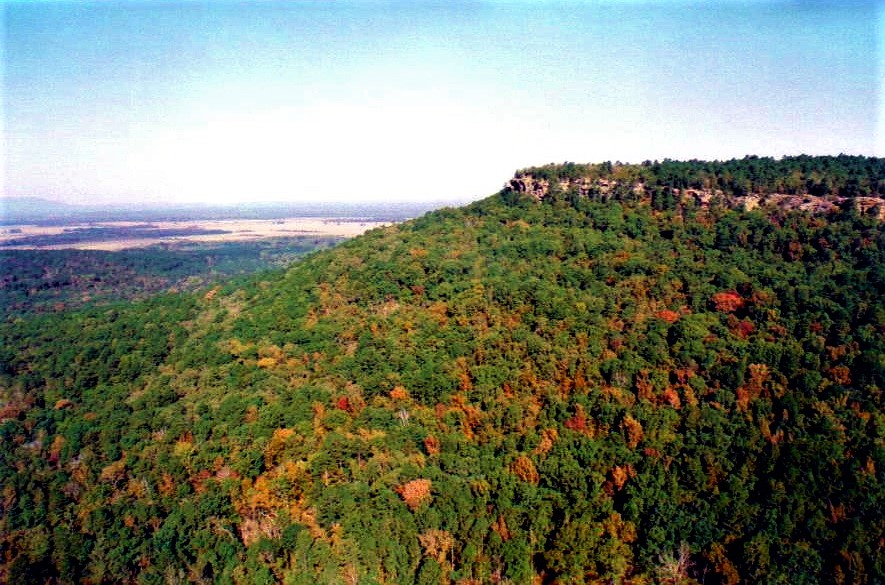 In the 1700s, a young French nobleman named Chavet went to the New World to explore the Louisiana Territory. His fiancée, a grisette named Adrienne Dumont, not wanting to be separated from her inamorato for possibly years, cut her hair, disguised herself as a boy, and secured a position on the ship as a cabin boy, never revealing her true identity to anyone, including her beloved. Called “Petit Jean” by the sailors, she and the crew eventually arrived in this area of Arkansas, about an hour’s drive from Hot Springs, and spent the summer there. At some point, she became sick. On her deathbed, she revealed her identity for the first time, including to Chavet, and she died a few days later. She was buried on the mountain, not under her real name, but under her nickname, which leant itself to both the mountain and to the first state park in Arkansas. That irresistible story is one of the charms of Petit Jean State Park, established in 1923. The park occupies a flat mountaintop and then descends from just over 1,200’ above sea level to about 750’. I began my exploration with a hike on Cedar Creek Trail, a moderate 1.25-mile loop that gains just over 200’ in altitude. Amid its thick vegetation, I strolled alongside the creek, across a couple of bridges over ravines and the water, and past rough and unusual geological formations and under one of them—Leaning Rock, a giant slab tilting on the path at a 45-degree angle. Rock steps, created by the Civilian Conservation Corps (CCC) in the 1930s, lead to scenic bluffs for wonderful views and spots for bird-watching. The CCC made major contributions to the park that retained the rustic feel and are still in great condition. CCC crews laid out trails and cut roads, built dams and bridges, and erected buildings, including Mather Lodge. It’s positively glamorous compared to another cabin you’ll find in the park—a one-room pioneer cabin that once housed a family of nine. Another trail took me to the mountaintop, where I was rewarded with sweeping vistas of the Arkansas River Valley, Arkansas River, Ouachita Mountains, Ozark Plateaus, bluffs, and waterfalls. And when a bird of prey silently glided across the sky, I achieved a wonderful sense of serenity and, as always when I gaze at unspoiled views, a tremendous appreciation of Mother Nature’s handiwork.
#4 Explore the Historic Districts of Little Rock
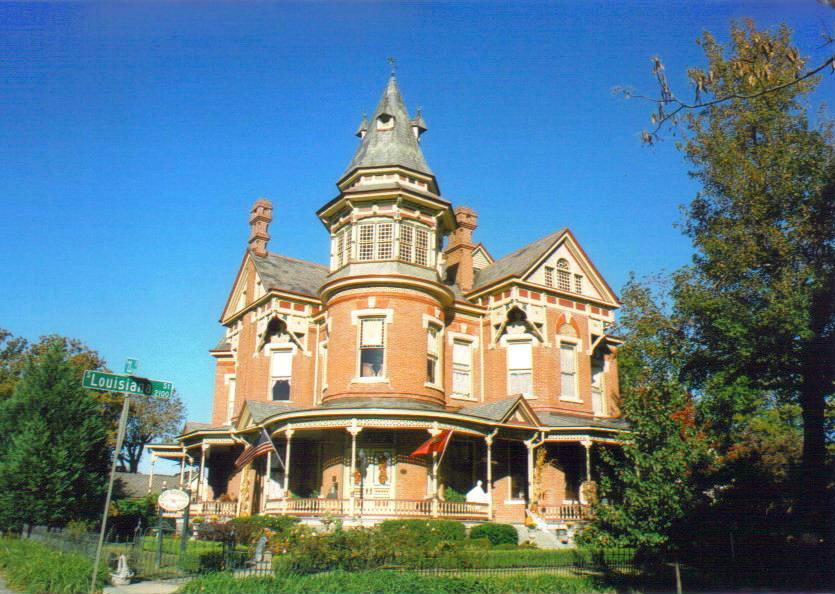 Curran Hall (circa 1842, and the city’s only antebellum home open daily to the public) houses the Information Center in Little Rock—a good indication that the city takes its history seriously. Indeed, there are nearly two dozen designated historic districts here, including one of the best historic districts in the United States. I took some time to explore a couple of them, where I found the city’s most beautiful buildings. For instance, the Hornibrook House, from 1888, once a private residence, is now the Empress of Little Rock, a gothic Queen Anne bed and breakfast. Other standouts from the late 1800s include the Dibrill House (1892), with its seven porches; the Holtzman-Vinsonhaler House (1898); the Hotlzman-Vinsonhaler-Vogler House (1890); the Turner-Back house (1885), a Queen Anne remodeled in the Craftsman style about 30 years after it was built; the Ragland House (1889), a lovely Queen Anne built by a 21-year-old architect; and Villa Mare (1874), the first post–Civil War residence in Little Rock to be rehabilitated and whose exterior is widely known as the house featured in the opening credits of the sitcom Designing Women. The 1900s saw the addition of the Hotze House (1900), a grand Colonial Revival; the Turner-Folk House (1904), with a classical portico held up by Ionic columns; the Rogers House (1914); and the Governor’s Mansion (1950). If you want to marvel at some tremendously pretty architecture in between your outdoor pursuits in Arkansas, this is the best place to do it.
#5 Climb to the Top of a Mountain at Mount Magazine State Park
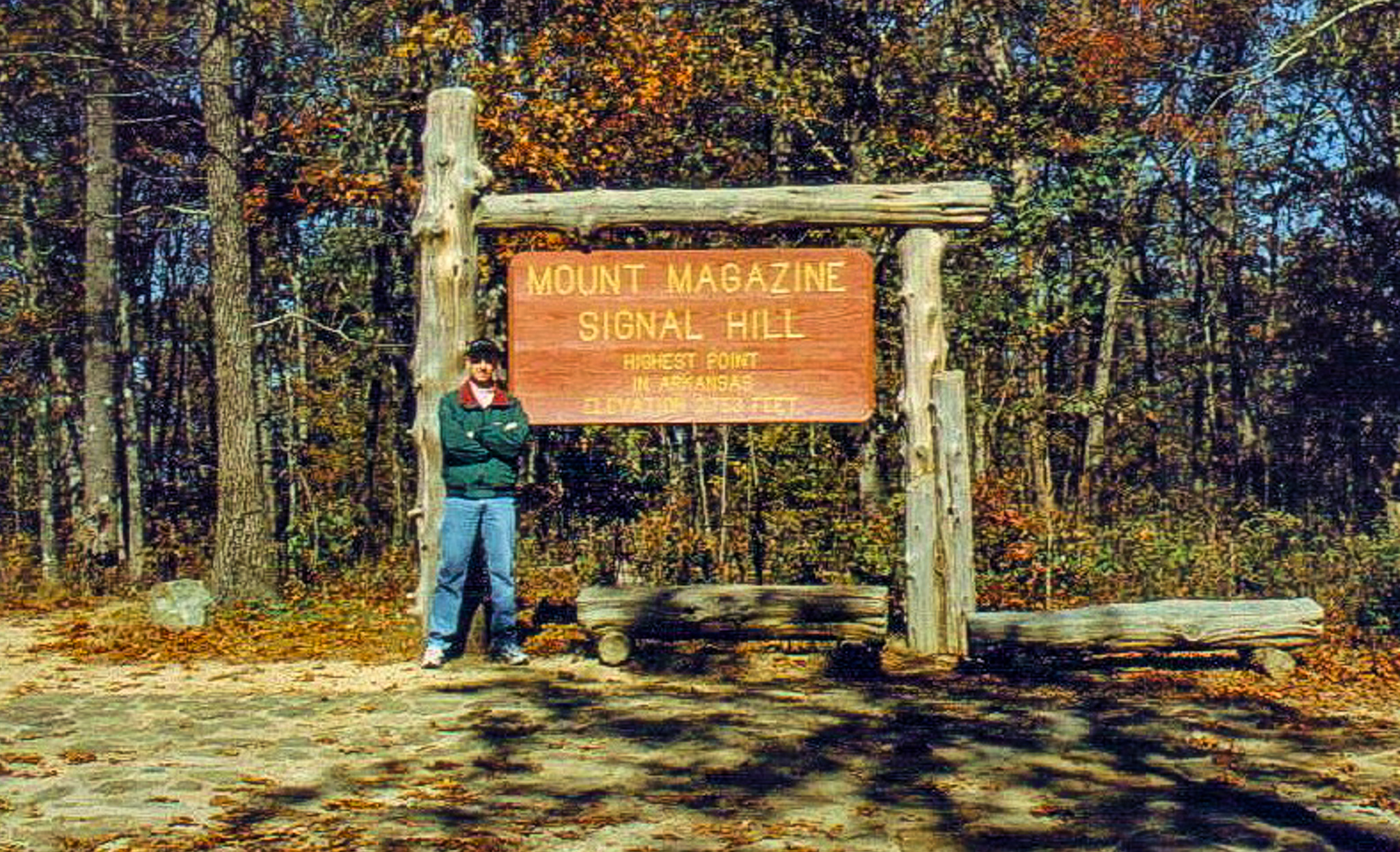 Want to go to the top of not only a mountain, but of Arkansas itself? Head to Mount Magazine State Park, nestled within the larger Ozark–St. Francis National Forests. I began my time here at the lovely visitor center, an 8,000-square-foot repository of information and exhibits on the park and its geology, history, flora, and fauna. I headed to the Lodge at Mount Magazine, a wonderful 60-room accommodation on the mountain’s south bluff that sports gorgeous views of the Petit Jean River Valley and Blue Mountain Lake. With this as my base, I hiked to the top of Signal Hill, the highest point in Arkansas, at 2,753’. It’s a moderate 1.4-mile–loop nature walk, where it’s just you and some of the park’s 375 wildflower species, hundreds of plants, and oak and hickory trees. When I reached the top, I found the Highpoint Monument, a 400-square-foot map of Arkansas that depicts the location of Mount Magazine as well as the six natural divisions of the state, composed of six different stones to represent the unique topography of each division as well as blue chalk mixed with mortar to depict rivers. Of the highest point in each U.S. state, I’ve reached only two—here, and Mount Washington in New Hampshire. And this one is a sublimely tranquil place to relax on an autumn day, breathe in the fresh air, and have a snack of some apple-cinnamon cookies and a bottle of fresh-pressed cider.
Five Runners-Up
- Revel in the fall foliage of Hot Springs National Park.
- Wander through the Arkansas State Capitol in Little Rock.
- Learn about mobsters and molls in the Gangster Museum in Hot Springs.
- Commune with nature in Ouachita National Forest.
- Zip up to the observation decks of Hot Springs Mountain Tower.
Leave a Comment
Have you been here? Have I inspired you to go? Let me know!


 Stephen Travels