What is that huge, gorgeous building? In Scotland, very often it’s a museum. You can’t miss them—tremendous edifices with outstanding architecture. And you won’t want to miss what they hold. Within their walls you’ll find Scotland’s greatest treasures in just about every field, from paintings and sculptures, to archaeological items and natural history exhibits, to modes of transportation and stained glass. When the weather doesn’t cooperate, Scotland’s museums are the perfect places to spend a few hours, or a few days. These are my favorites.
#1 Kelvingrove Art Gallery and Museum (Glasgow)
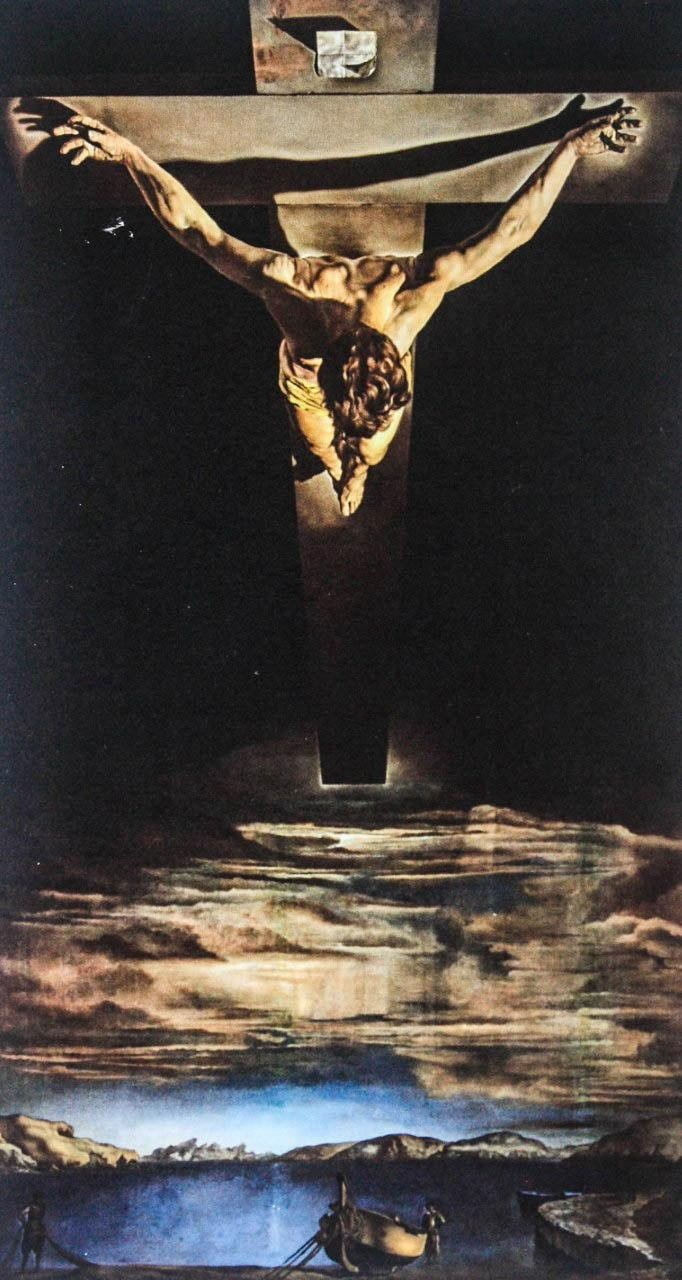 Anchoring Glasgow’s Kelvingrove Park is the fantastic Kelvingrove Art Gallery and Museum, housed in a beautiful, sprawling 1901 red-sandstone building in the Spanish Baroque style on the banks of the River Kelvin. It’s the most popular free attraction in Scotland and the most visited museum in the United Kingdom outside of London, attracting about two million people annually. The Central Hall is gorgeous, with original electroliers and a concert pipe organ with a walnut case front (regularly held recitals shouldn’t be missed!). From here, you can branch out in many directions to explore the 22 galleries and take in the art (Scottish Colourists, along with the likes of van Gogh, Rembrandt, Monet, and Gauguin), design, archaeology, and natural history exhibits. There are Asian ceramic figurines, expertly crafted marble busts (including a terrific one of Queen Victoria), Egyptian sarcophagi, Art Nouveau pieces, a 1944 spitfire, and a collection of arms and armor. Arguably the museum’s most important piece is Salvador Dalí’s Christ of Saint John of the Cross, one of the world’s top five depictions of the Crucifixion, a revolutionary, masterly, and quite mesmerizing painting.
#2 National Museum of Scotland (Edinburgh)
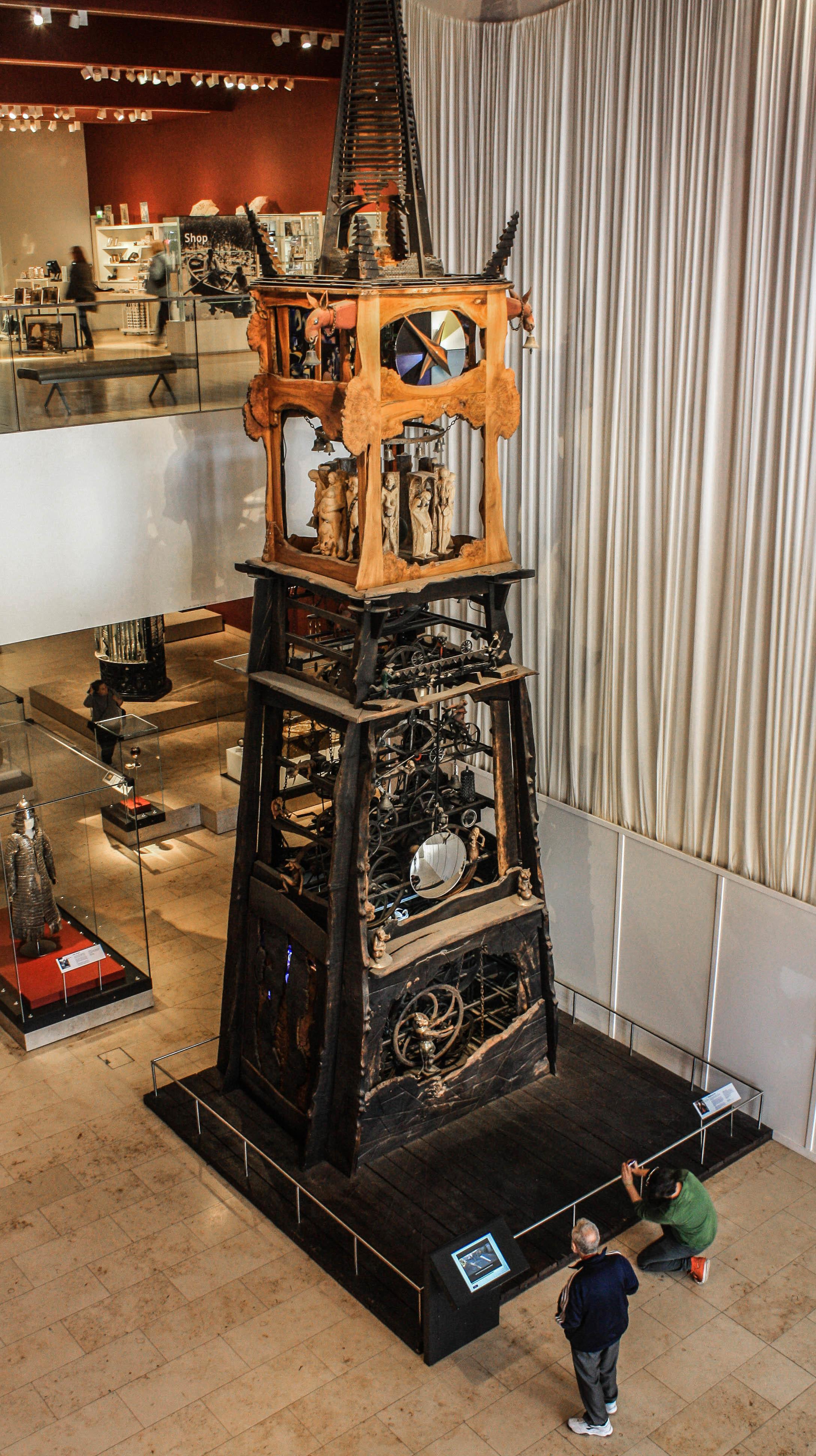 The massive National Museum of Scotland, modeled on the former Crystal Palace in London, presents an exhaustive look at Scottish history and beyond, from the early peoples to present day, housing a collection of everything from ancient coins to ship models to early locomotives to Victorian photography. I started my exploration in the Grand Gallery, the light-flooded main hall with slender pillars and a glass ceiling. It led me to one of my favorite pieces in the entire museum—one of the top five clocks in the world, the Millennium Clock Tower, a 33’-tall clock constructed of wood, glass, and metal, with a jumble of cogs, chains, and wheels; gargoyles; figures of the 20th century’s most notorious politicians; months of the year represented by degraded humans subjected to war, famine, and slavery; and a Pietà. It’s easy to spend days wandering through its halls and galleries, so you certainly won’t get to see it all in a single visit. Be sure, however, to check out the Isle of Lewis pieces, a collection of 11 carved chess pieces made, most likely by Norwegian Vikings in the 1200s, of walrus ivory and sperm whale tooth. They were discovered 800 years later on a beach on the Isle of Lewis—one of the most important archaeological discovers ever in Scotland. And don’t miss the eight mini-coffins (survivors of the original 17), found by rabbit-hunting boys in 1836 in a cave on Arthur’s Seat in Edinburgh. Each coffin measures less than four inches and has a lid, and contains a clothed figure, which has set off myriad theories as to what they were. Some have suggested they were used by witches to cast death spells; others have claimed they were kept by sailors as protection from death. Still others have said they represented a mock burial for the 17 victims of Burke and Hare, two chaps who murdered people and sold the bodies to medical schools for dissection in anatomy classes—Burke was eventually caught and executed…and his body was legally given to an anatomy class for dissection.
#3 Scottish National Portrait Gallery (Edinburgh)
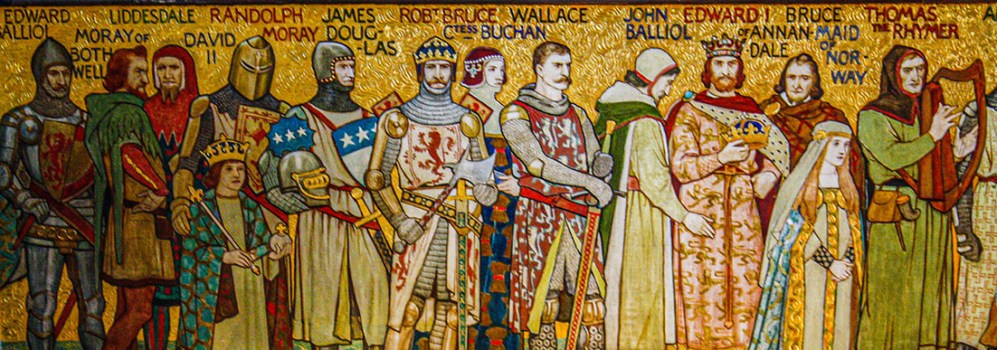
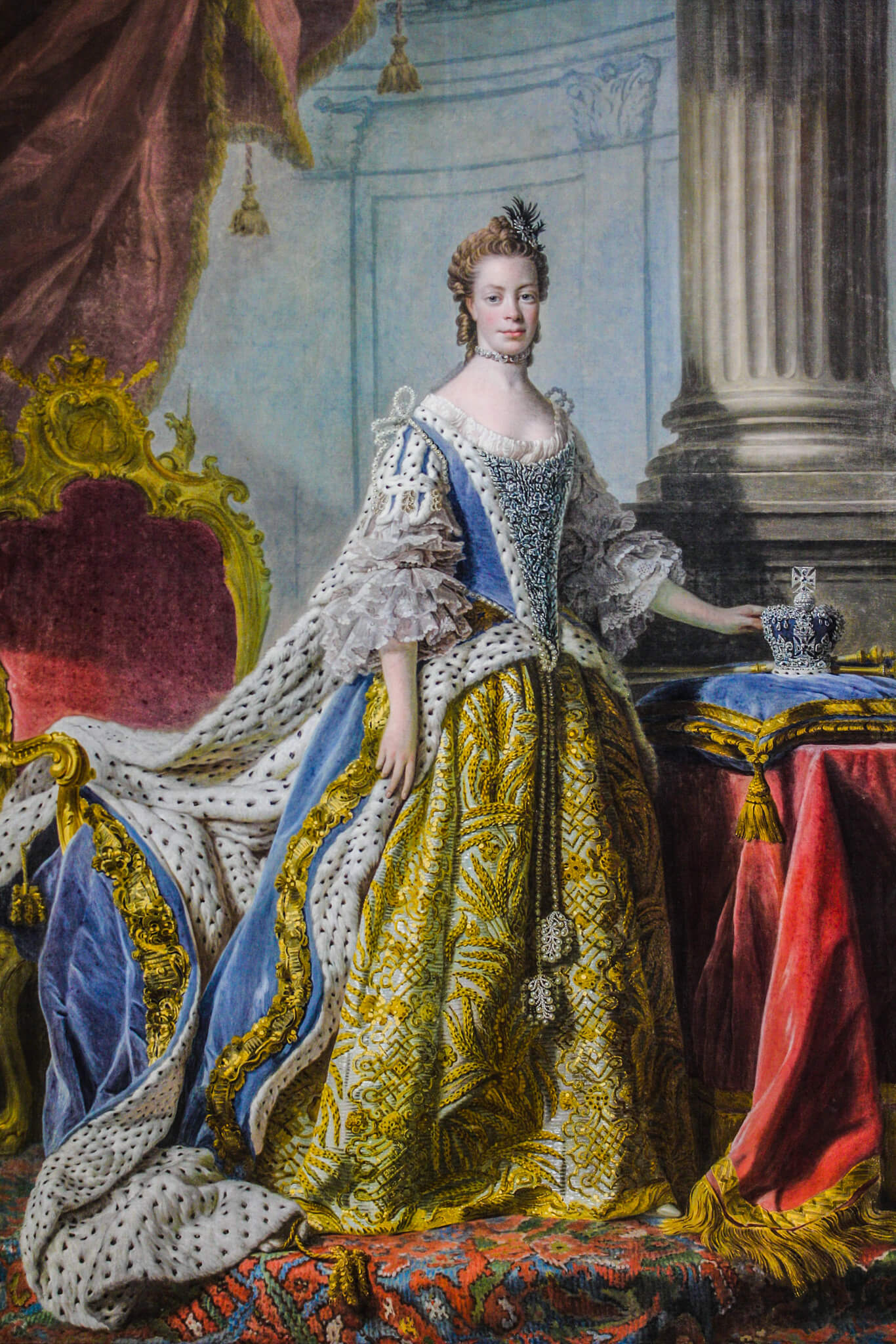 Everything about this Edinburgh institution is a work of art. Let’s start with the building itself, a huge red-sandstone structure completed in 1890 in the Spanish Gothic style, a major contrast to its Georgian Neoclassical neighbors. Carved pointed arches frame the windows, and a highly decorative gabled arch and arcade embellish the entrance. Four octagonal towers at the corners are decorated with crockets and pinnacles. Around the façade, you’ll find sculpted figures of notable Scots set in niches, including Adam Smith, David Hume, John Knox, William Wallace, Mary Queen of Scots, and Robert the Bruce. Inside the Scottish National Portrait Gallery, I was immediately impressed by the colorful frieze above the Gothic arches in the main entrance hall. This gorgeous mural depicts crests of various Scottish cities and a parade of important Scots from the fifth-century Saint Ninian to poet and lyricist Robert Burns. With that as an incredible introduction, I spent several hours here, in the first purpose-built portrait gallery in the world, starting with walking up to the first-floor balcony to admire the large-scale murals depicting key scenes from Scottish history, produced with painstaking details like every ring in chainmail armor and every ripple on water. The gallery houses more than 3,000 paintings and sculptures, 25,000 prints, and 38,000 photographs. So, who’s represented? You’ll see lots of dukes and duchesses, lords and ladies, Queen Charlotte in her coronation robes with enough material to keep a family of five warm at night, men in kilts, and men engaged in one of Scotland’s greatest sports contributions to the world—golf. But the gallery doesn’t stop with its historical figures. You’ll also find works of art like Three Tahitians, by Paul Gaugin; portraits of actors Tilda Swinton and Robbie Coltrane; and a violent depiction of the stoning of St. Stephen.
#4 Scottish National Gallery (Edinburgh)
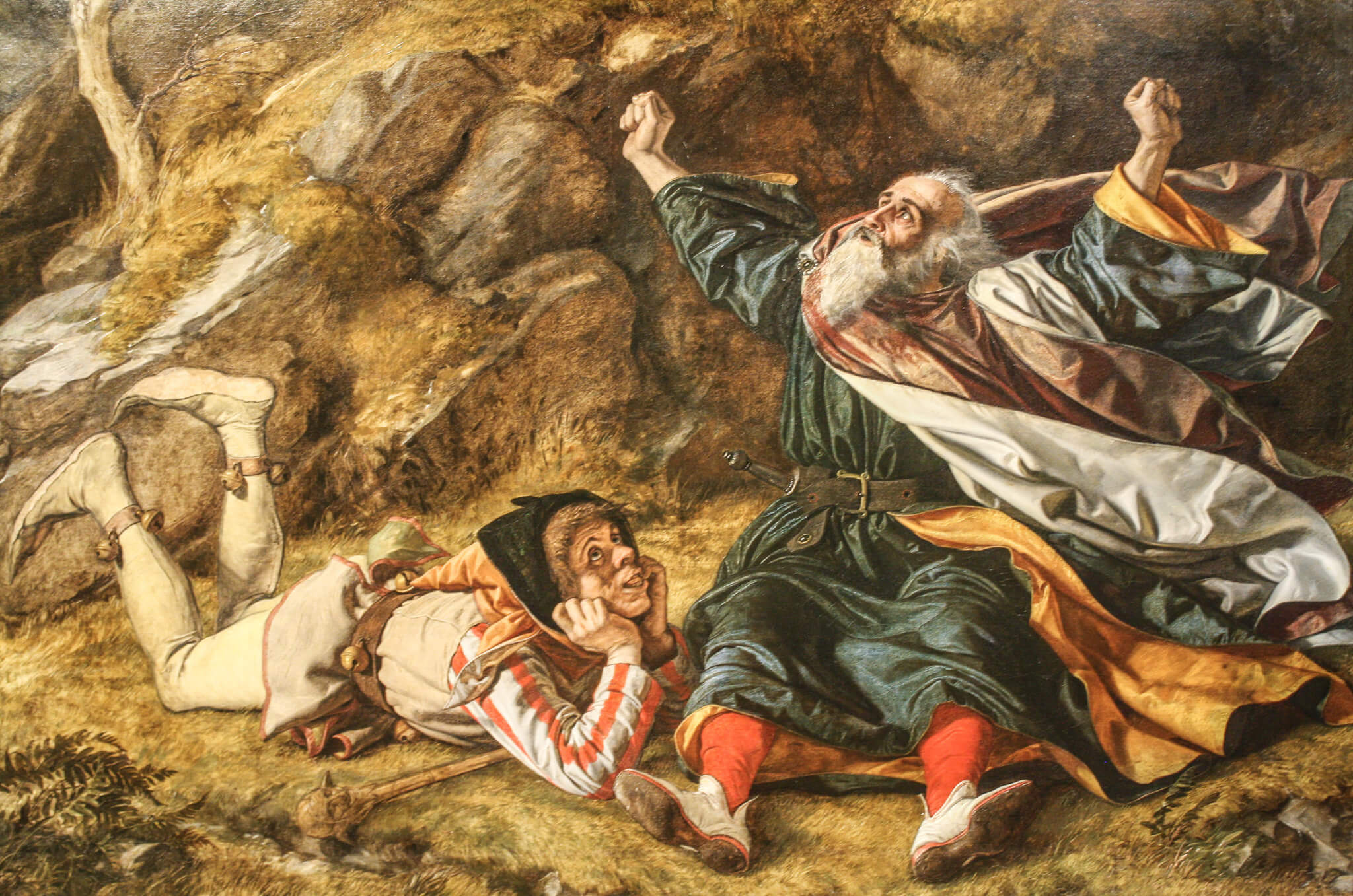 Housed in a neoclassical building with protruding porticos with Ionic columns, like an Ancient Greek temple, the Scottish National Gallery opened to the public in 1859. The well-arranged rooms showcase a collection that includes plenty of Scottish artists as well as art’s heaviest hitters, and I was soon surrounded by exquisite and often highly dramatic art. Jacopo Bassano presents a nearly chaotic Nativity scene in The Adoration of the Kings (1540s), with the three magi at the head of a crowded procession of attendants and animals. Grief and sorrow are on full display in Nicolas Poussin’s Extreme Unction (1640), where family and friends gather around the deathbed of an ashen man receiving the final sacrament. Sir Peter Paul Rubens creates a bacchanal dinner party in The Feast of Herod (1638), with everything from a monkey to Salome presenting John the Baptist’s head to Herod. The clifftop ruins of a castle overlook multiple imminent shipwrecks in turbulent waters in Alexander Nasmyth’s A View of Tantallon Castle with the Bass Rock (1816). Wind-blown garments reveal a tempest bearing down on Shakespeare’s most memorable characters in King Lear and the Fool in the Storm (1851), by William Dyce. Still not impressed? Then keep looking around, and you’ll find works by Raphael, Botticelli, Cézanne, El Greco, Monet, Canaletto, and Vermeer.
#5 People’s Palace (Glasgow)
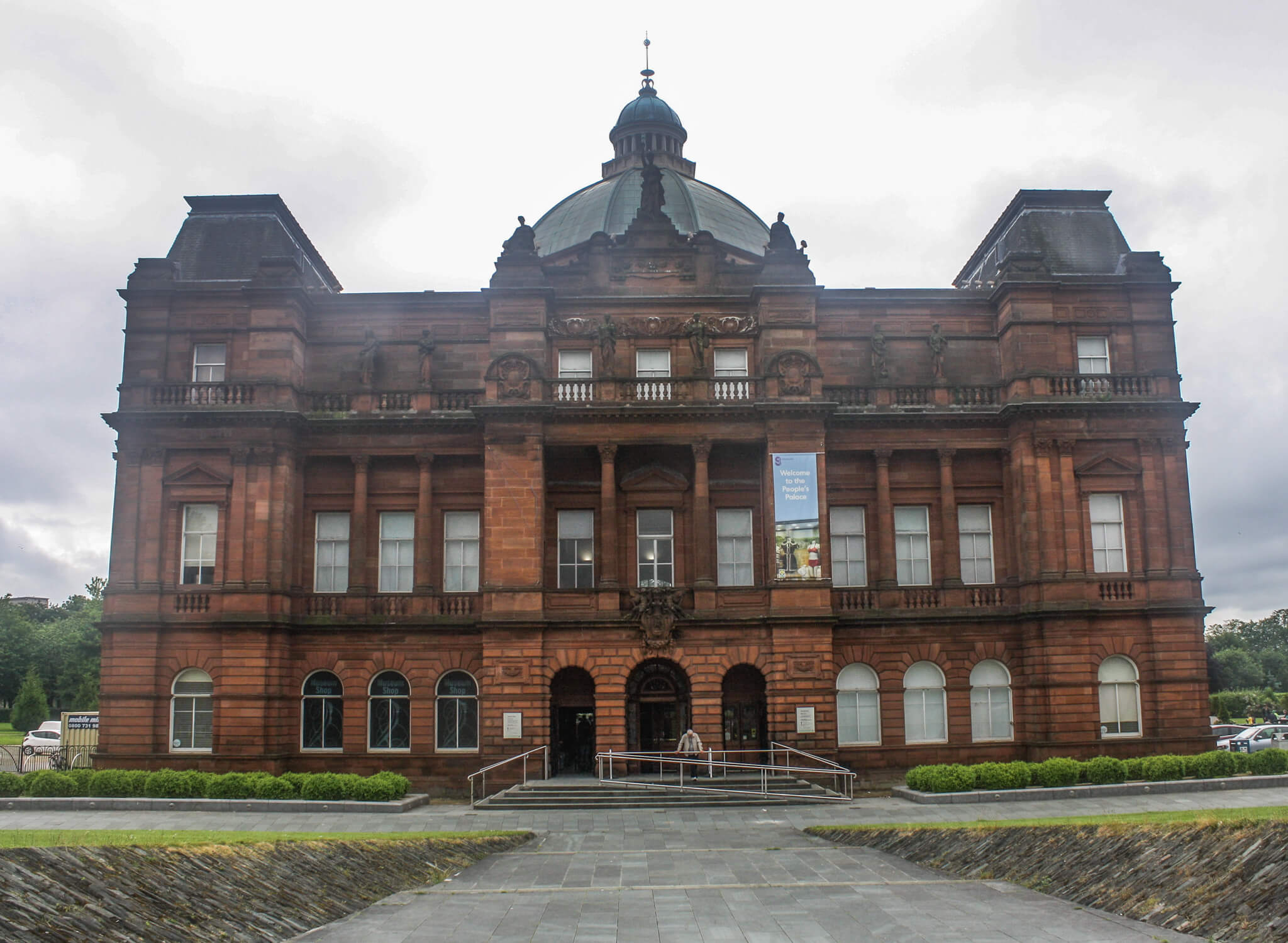 People’s Palace opened in 1898 as a cultural center along the northern banks of the River Clyde as part of the alluring Glasgow Green, the city’s oldest park, dating from 1450. This impressive three-story red-sandstone building features two slightly projecting wings, a central dome, a balustrade, and nearly a dozen statues. But it’s what’s inside that will draw you here even more. In 1940, the cultural center morphed into a museum that tells the story of Glasgow and its people from 1750 to today. Its collection explores the city’s social history through artifacts, paintings, prints, photographs, stained glass, film, and interactive computer displays. You can step into a re-created storefront of the Buttercup Dairy Co. and check out the city’s early fire alarm system. You can learn about the city’s circular subway, opened in 1896 as the third underground rail transit system in Europe and billed as the only underground cable railway in the world. You can look at the 62-page book on how to be safe from air raids and find out about the city’s war participation, housing crises, and overall health. (Glasgow is one of the unhealthiest cities in Europe today, thanks to drafty houses and high smoking rates, among other reasons.) Get a taste of women’s rights with the likes of a testimonial from a girl in 1978 who stated, “My mum was battered. They used to fight all the time. He used to hit her. She framed the divorce paper and put it up on her kitchen wall.” And when you’ve had enough of history and the evolving experiences of Glaswegians at home, at work, and at leisure, stroll into the adjacent Winter Gardens (if and when it ever reopens), a massive Victorian greenhouse originally built as a hall for music.
Five Runners-Up
- Riverside Museum (Glasgow)
- National War Museum (Edinburgh)
- Museum of Edinburgh (Edinburgh)
- Hunterian Museum (Glasgow University, Glasgow)
- St. Mungo Museum of Religious Life and Art (Glasgow)
Leave a Comment
Have you been here? Have I inspired you to go? Let me know!


 Stephen Travels