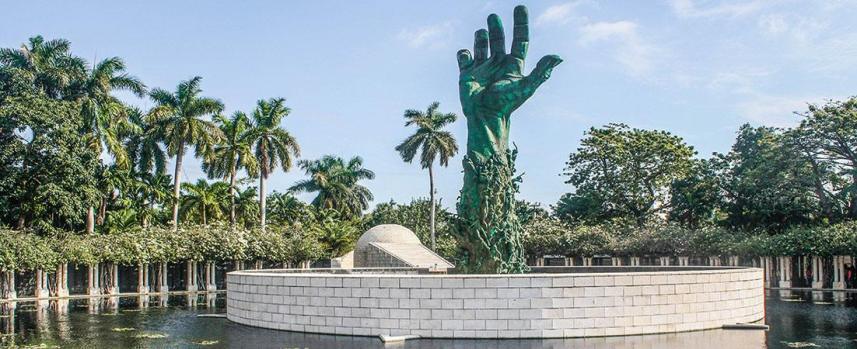
They serve as permanent reminders of significant local, national, or global events; of individuals whose thoughts and actions shaped world history; of movements, tragedies, and disasters. Memorials around the world keep us in touch with the past, hopefully to remember those who went before us and to learn from our past mistakes. Some are grand; some are simple; all are thoughtful and respectful. These are my favorites.
#1 Vietnam Veterans Memorial (Washington, D.C.)
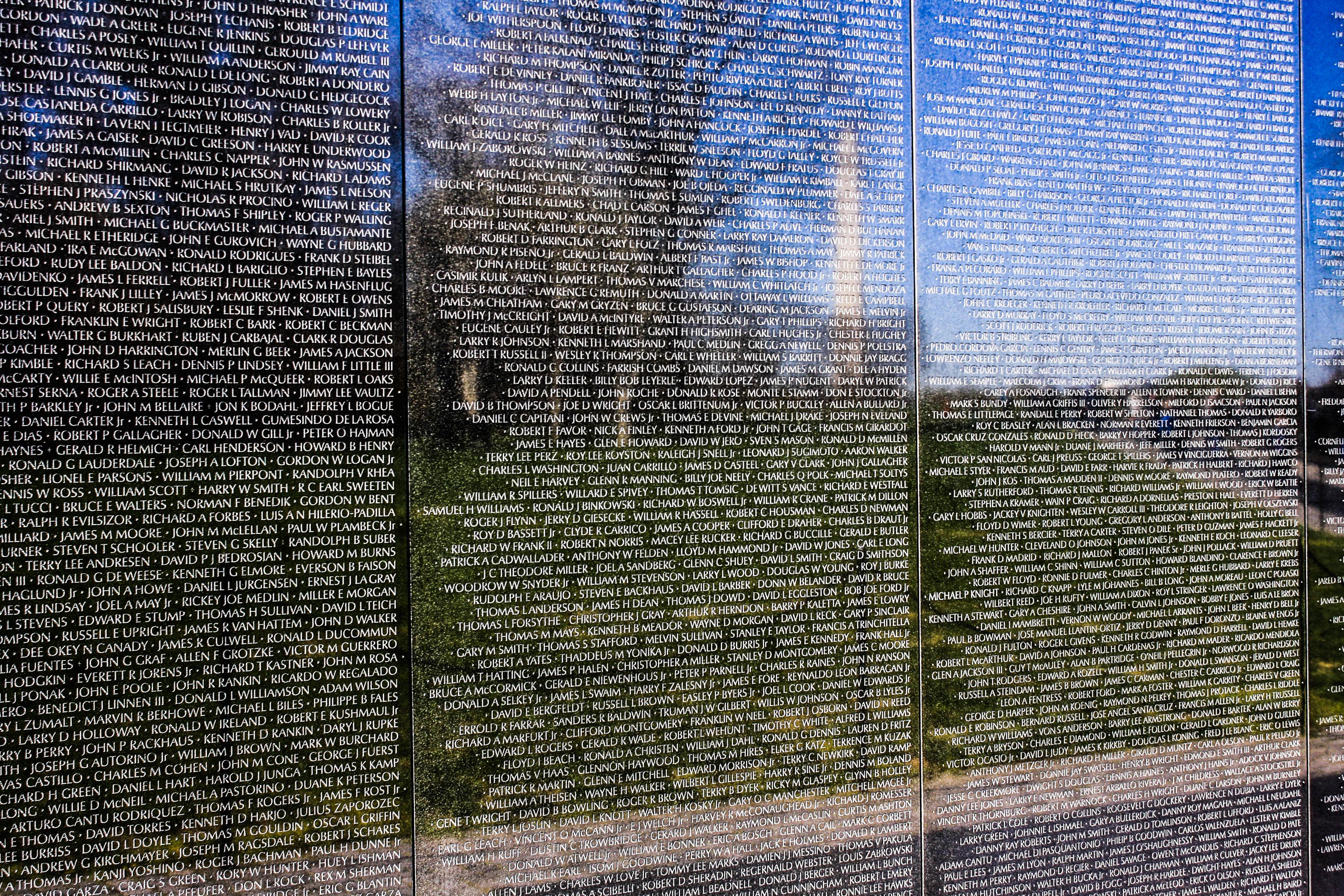 In a city filled with memorials, none matches the emotional wallop of the Vietnam Veterans Memorial. It’s a simple memorial, nothing more than names etched on a wall—just names: no rank, no hometown, no age. But it is so brilliantly conceived and executed, thoughtful on every level, that it will overwhelm you with sorrow, even if you have no personal connection whatsoever to this misguided, divisive, devastating conflict. Designed by American architect Maya Lin, the Memorial Wall is composed of two connecting walls that stretch for a total of nearly 500′. I began at one end, where the wall rises only about eight inches from the ground. But the ground declines the farther you walk—as do the ambient noise and the chatter of visitors—and the wall grows taller and taller beside you, until, at the ground’s lowest point, the wall towers above you, rising to a height of 10′. The names of more than 58,000 service members who died or remain missing in action during the war that raged through the 1960s and well into the 1970s in Vietnam and Southeast Asia are etched into 144 panels of polished black granite. Here, in near total silence, you look at the reflection of yourself looking at the names, placing you among the seemingly endless roll of far too many mostly young men lost forever that washes over you. To the right, you’ll see a reflection of the Washington Monument; to the left, the Lincoln Memorial—two iconic symbols of freedom, for which these soldiers allegedly died. You’re practically guaranteed to notice someone with a bowed head placing his or her hand on the name of a loved one or stenciling a name on a piece of paper. Flowers and memorial wreathes often line the foot of the wall. You may feel a bit smothered here, engulfed by sadness, suppressed by the sheer number of the dead, and as you continue, and the ground rises again so that the wall eventually is at your feet once more, you will experience a sense of relief. But no matter what emotion this outstanding memorial educes from you, I dare you to step away from it without tears in your eyes.
#2 Holocaust Memorial (Miami Beach, Florida)
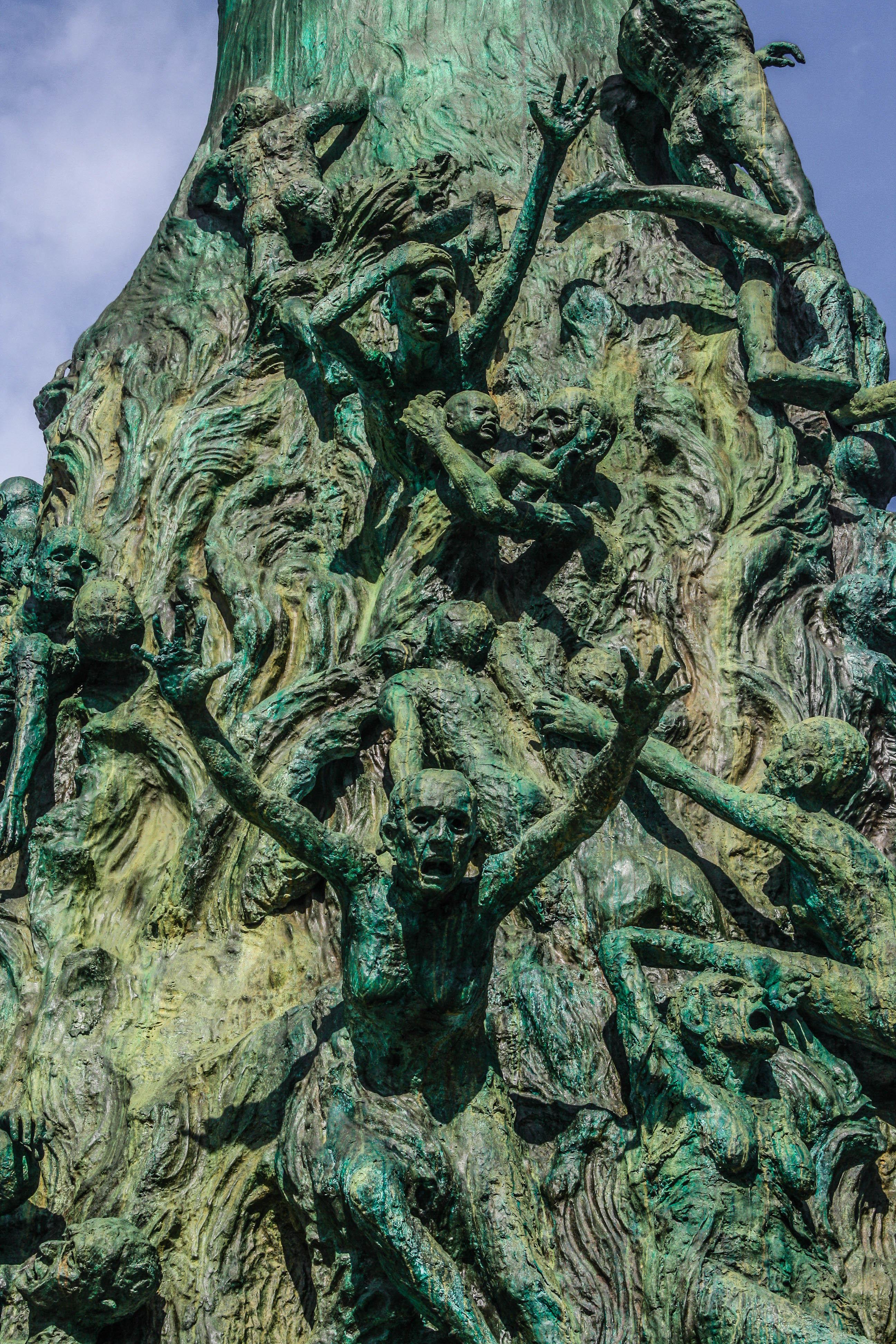 Miami Beach is usually just about fun—sun and beautiful beaches, great restaurants, music and dancing, and those iconic Art Deco hotels in one of the top five historic districts in the United States. But then the Holocaust Memorial delivers a hard dose of reality—a reminder that it’s not only about tans, thongs, and tequila. Conceived by a committee of Holocaust survivors in 1984 and opened in 1990, the memorial pays homage to the six million Jews slaughtered in World War II. Under a wooden arbor with white bougainvillea vines, supported by Jerusalem stone columns, I walked through the semicircular colonnade, looking at disturbing photos etched into the black granite slabs beside me—pictures of Jews as they were forcibly marched away from their homes as the flagitious Nazis scoured Europe in their relentless attempt to extirpate them, dangerously underweight figures donning the infamous striped pajamas, piles of corpses. The colonnade gives way to an enclosed area with a dome, the center of which is pierced by a yellow Star of David with the word “Jude.” This funneled me into a stone passageway, where the names of the death camps (Buchenwald, Birkenau, Auschwitz, and on and on) are etched into the walls, broken by narrow vertical openings that provide light and glimpses of the water feature outside, a pool 200′ in diameter with water lilies representing the lives that were senselessly lost in the 1930s and 1940s. I emerged from this tunnel and was more than taken aback by the memorial’s defining—and most horrifying—element: Set in the center of a walled circle, a four-story bronze sculpture (now turned a verdigris green) of a forearm and hand rises up from the ground, reaching for the sky. A concentration camp number is tattooed below the wrist. Hundreds of small human figures cover the entire forearm, suffering in unimaginable agony as they cling to each other or reach out for any sort of salvation. You can almost hear their cries for help. Like the Vietnam Veterans Memorial in Washington D.C., this memorial features a black wall with the names of the dead, this time victims of the Nazis. As I circled around the arm, I was continually met by free-standing, life-sized sculptures of naked, emaciated men, women, and children in various stages of agony and desperation, their spines, rib cages, and pelvises clearly defined. Just when you’re about to completely break down and give up on the world’s madness, you’ll find the immortal words of indomitable Holocaust victim Anne Frank etched on one of the walls: “Then in spite of everything, I still believe that people are really good at heart.”
#3 Indiana World War Memorial (Indianapolis, Indiana)
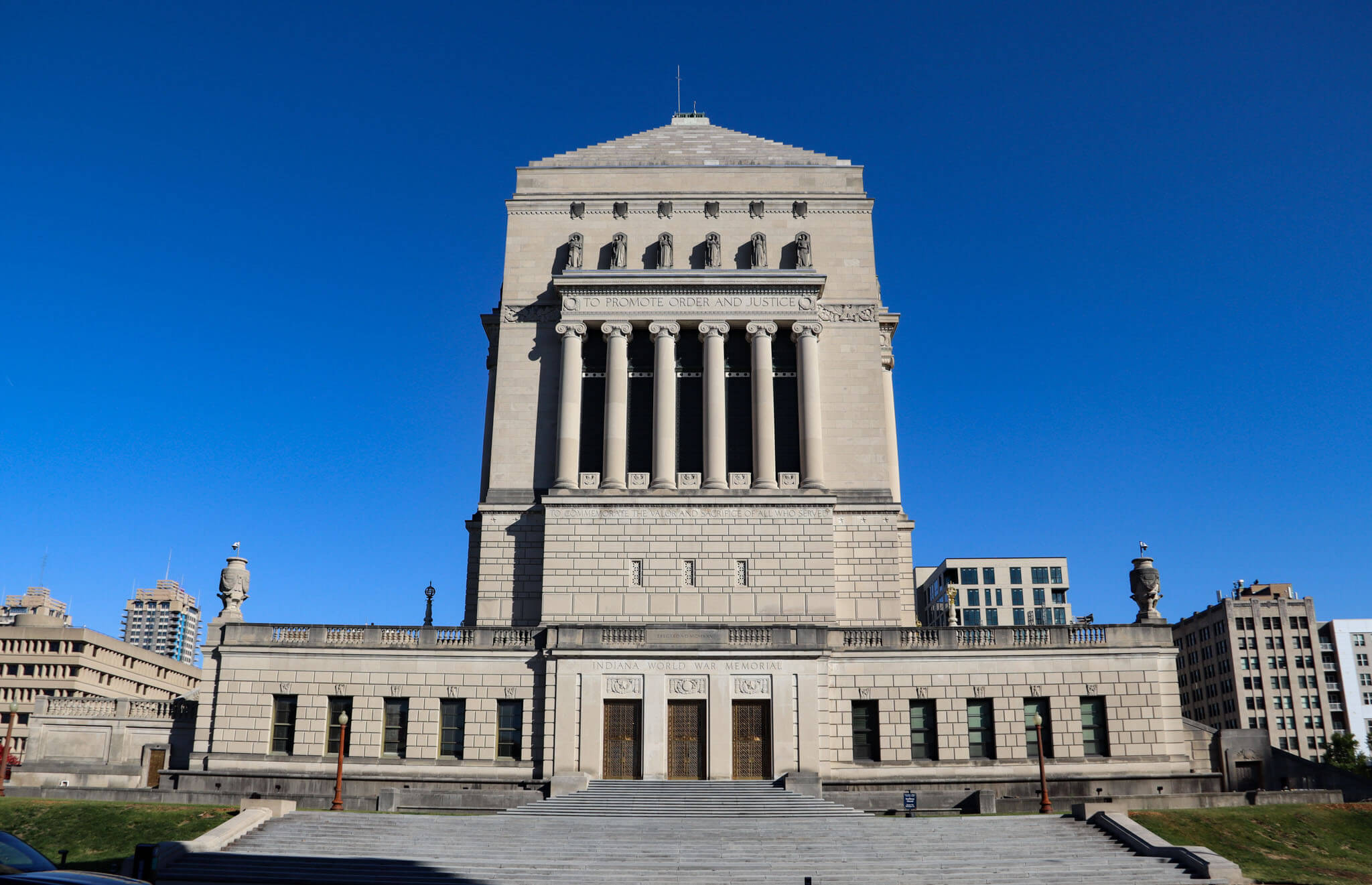 After Washington, D.C., Indianapolis has more historic memorials and monuments than any other city in the United States. In this crowded field, the one that I made sure not to miss was the magnificent Indiana World War Memorial. Occupying an entire city block in downtown Indianapolis and flanked by gently sloping green lawns, this massive memorial to the veterans of World War I rises to a height of 210’, making it one of the tallest memorials in the United States. Its neo-Classical design was based on the Mausoleum of Halicarnassus, one of the Seven Wonders of the Ancient World. Construction began in 1926, and it was dedicated in 1933, but the final touches weren’t completed until 1965. The memorial stands on a raised terrace with a tremendous urn balanced at each corner. Wide monumental staircases climb up to its base on each of its four sides. All four of the structure’s limestone facades are identical: an Ionic screen of half a dozen columns, tall banks of windows behind them, and two male and four female figures symbolizing Courage, Memory, Peace, Victory, Liberty, and Patriotism. Limestone lions bearing shields guard the north and south entrances. The entire thing is capped with a stepped pyramidal roof and a lantern at its peak. I climbed the two dozen steps to the main entrance and a quartet of intricately carved bronze doors. Already impressed, I entered directly into the Grand Foyer, a large hall with Tennessee marble floors and Art Deco Egyptian motfis. The lower level is occupied by the Indiana War Memorial Military Museum, a comprehensive collection that traces the history and contributions of Hoosier soldiers, from the events leading up to the Revolutionary War to current conflicts in the Middle East. From there, I climbed one of the very, very, very long staircases of Georgia white marble and entered the incomparable Shrine Room. Soaring to a height of 110’ and measuring 60’ on each side, this sacrosanct space—one of the most dramatic interiors you’re likely to experience—intrinsically demands quiet and respect. Clad in materials collected from all the allied nations of World War I, the shrine’s walls bear the names of all the Indiana military personnel who fought in the war. Sixteen fluted marble columns are capped with gilded Corinthian capitals. Tall, brilliant, deep-blue stained-glass windows allow muted natural light to enter. A white plaster frieze with allegorical bas-relief figures and golden captions wraps around the room, depicting key events and guiding forces of the war. An American flag, measuring 17’ x 30’, is suspended from the domed ceiling, cast in the glow of the many blue lights above it as well as of the Star of Destiny, an illuminated star made of Swedish crystal. The flag hangs above the Altar of Consecration, covered in brightly colored enamels and ornamented with patriotic imagery. This spectacular, sacred place humbles you not only by its size but also by those for whom it was constructed. It pays homage to those who fought in, were wounded in, died in, and survived a particularly vicious war. While the National World War I Museum and Memorial in Kansas City, Missouri, does a superior job of explaining everything about the war, the Indiana World War Memorial is the place to go to honor those who actually lived it.
#4 Albert Memorial (London, England)
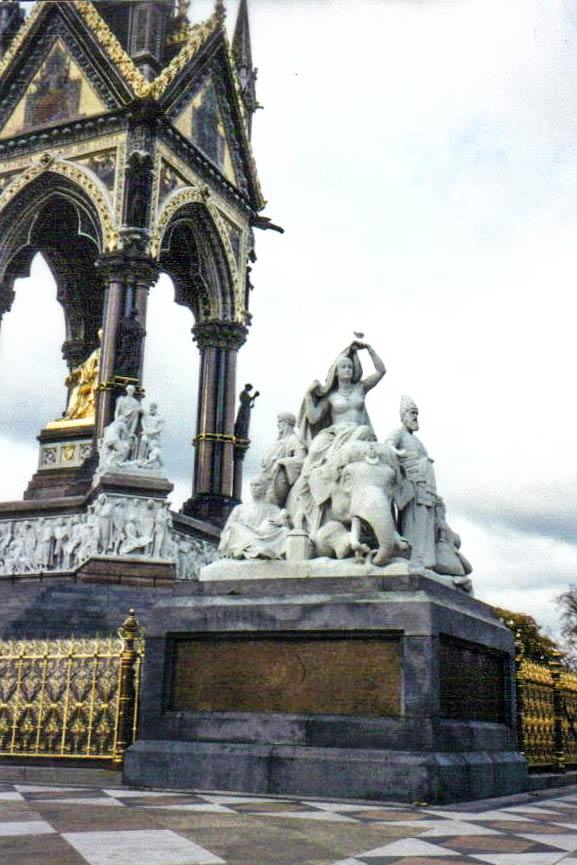 Across the street from Royal Albert Hall, along the southern edge of Kensington Gardens, I found the Albert Memorial, a terrifically eye-catching work honoring Prince Albert, who died of typhoid in 1861 when he was 42 years old, leaving his wife, Queen Victoria, a widow for the remaining 40 years of her life. Unlike my two favorite memorials, this one, unveiled in 1872, is all about life—Albert’s, in particular, and his passion and interests during a time of ceaseless Victorian achievement. Most of the memorial occupies the top of a four-sided staircase enclosed on all sides by fancy railings. Sitting under an outrageously ornate Gothic canopy, the gilded statue of the dashing prince holds a catalog of the 1851 Great Exhibition, which he inspired and assisted in organizing. Details litter the canopy itself: mosaics of enamel, onyx, jasper, marble, and other materials present allegorical representations of architecture, painting, poetry, and sculpture, each of which is flanked by two historical figures, such as Homer for poetry and Michelangelo for sculpture. More than a dozen gilded statues represent the arts, sciences, and cardinal and theological virtues. A gold cross with red, white, and blue accents tops the whole thing. At the bottom, a gorgeous frieze runs around all four sides—about 170 beautifully carved figures of renowned architects, musicians, painters, poets, and sculptors, in a nod toward Albert’s love for the arts. Each corner contains a white marble sculptural group, representing agriculture, commerce, engineering, and manufacturing, and each created by a different sculptor. Four additional white marble sculptural groups (also by four different sculptors) anchor the entire monument with their representations of Africa, America, Asia, and Europe, each with human figures and one telltale animal for the region (a bison for America, for example; a camel for Africa). We owe this spectacular display to the very fecund mind of George Gilbert Scott, an English architect who designed or altered more than 800 buildings during his career in the 1800s.
#5 Korea War Veterans Memorial (Washington, D.C.)
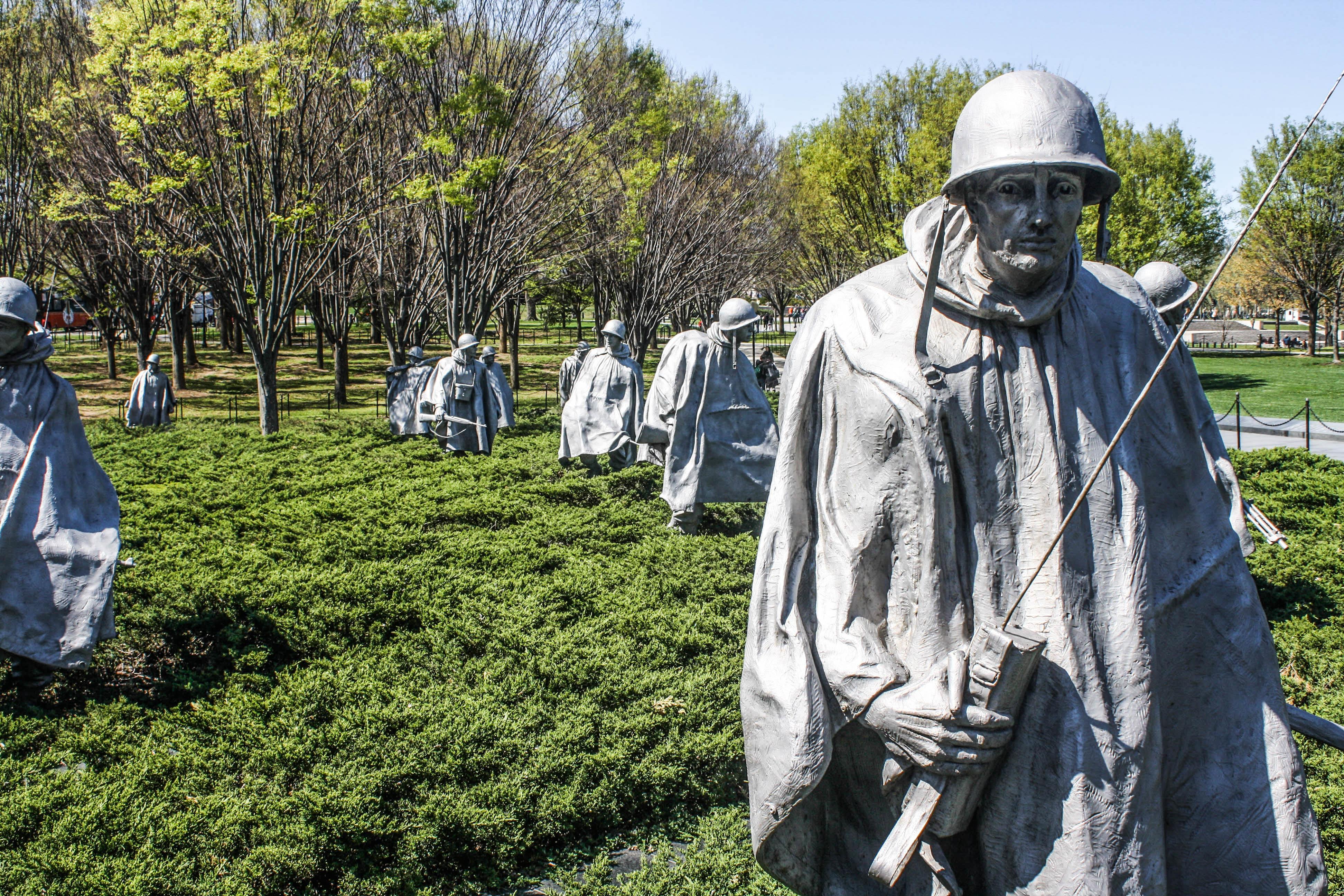 The eeriest memorial in the U.S. capital stands on the opposite side of the National Mall’s Reflecting Pool from the Vietnam Veterans Memorial. Dedicated by President Clinton and the president of South Korea in 1995 on the 42nd anniversary of the armistice that ended the war, the Korea War Veterans Memorial encompasses four elements: the United Nations Wall, which lists the 22 countries that contributed troops to the U.N. efforts during the war; the Pool of Remembrance, where you can find the statistical data of human damage in the form of those killed, wounded, missing in action, and prisoners of war; and the Mural Wall, with 2,500 archival images sandblasted onto the 41 panels of black granite. The fourth feature is the memorial’s highlight, and its spookiest. Nineteen stainless steel statues of soldiers, a little larger than life-size, at just over seven feet, tread carefully through juniper bushes and strips of granite that represent the Korean landscape. Dressed in full combat gear, with helmets and ponchos that seem to be blowing in the wind, the figures include scouts, riflemen, gunners, group leaders, a corpsman, an army medic, and a radio operator. As the platoon cautiously marches forward with alert eyes and rifles in hand, and the quiet around the memorial envelopes you, you can’t help but absorb some of the soldiers’ apprehension and tension, doing their duty while undoubtedly thinking about the land mines and snipers that could destroy or end their lives at any given moment, challenging their mettle. This memorial will give you the chills as well as some new respect for the more than 36,000 Americans killed, 103,000 wounded, and 8,200 missing in action in the three-year war.
Five Runners-up
- George Washington Masonic National Memorial (Alexandria, Virginia)
- Scottish National War Memorial (Edinburgh, Scotland)
- Oklahoma City National Memorial (Oklahoma City, Oklahoma)
- George Rogers Clark Memorial (Vincennes, Indiana)
- Kentucky Vietnam Veterans Memorial (Frankfort, Kentucky)

 Stephen Travels