Everyone loves a good impractical story, from Santa Claus’ one-night flight around the world to Robin Hood stealing and giving as he saw fit. When I’m traveling, I occasionally come across a great legend—sometimes true, often not. Either way, they’re memorable tales that make whatever it is I’m looking at, from a lake to a fountain to a column to a flag, take on added depth and importance. Legends like these are bound to etch themselves in your travel memories forever. These are my favorites.
#1 Lake Wakatipu’s Tide (New Zealand)
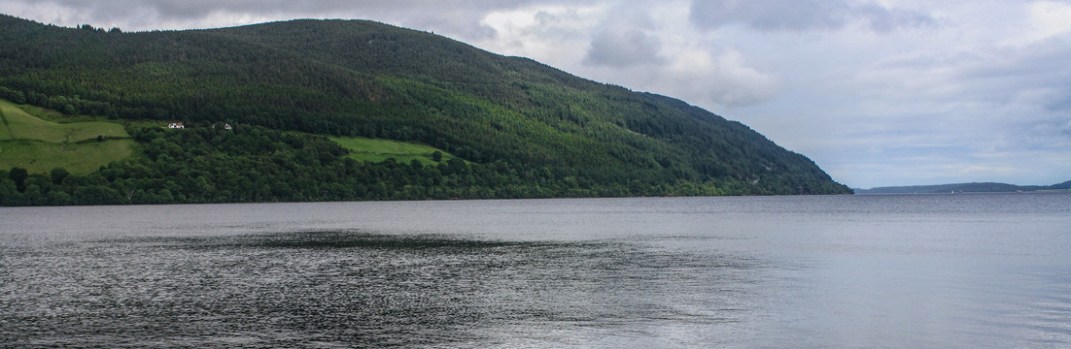
 I was staying in Queenstown at the Chalet Queenstown (one of the world’s best bed and breakfasts), perfectly situated along the shore of the deep-blue Lake Wakatipu, surrounded by the beautiful Remarkable Mountains. Every night, I would head down to the lake, cup of hot chocolate in hand, to enjoy this spectacular setting. During my time here, I ascended one of the world’s best aerial tramways for incomparable vistas, and I experienced one of the world’s best drives, from Queenstown to Glenorchy, that runs right along the lake. There are several legends that explain why this lake has a tide, but my favorite is the Māori story about a forbidden romance between Manata, the daughter of a local chief, and Matakauri, a young warrior. When Manata was kidnapped by the giant Matau who had been terrorizing the village, Matakauri accepted the challenge to rescue Manata to prove his love for her and, if successful, marry her, as promised by the chief, even though he didn’t approve of Matakauri. Off he went, and he soon found Manata tied up in the giant’s cave. While Matau was sleeping, our hero tried to cut the rope that bound Manata, but it was too strong. Although she pleaded with Matakauri to leave and save himself before the giant arose, he remained. To liberate her, and to save his village from future incursions by the giant, Matakauri set fire to Matau’s bed, burning him (and the rope) to death. The fat from Matau’s body intensified the fire to such a degree that it burned a deep hole in the ground, which was eventually filled with rainwater, creating Lake Wakatipu. Seen from above, the lake looks like a giant lying down sideways, with Glenorchy at the head and Queenstown at the knee. The only part of the giant that survived was his heart, now at the bottom of the lake and still beating, causing the lake’s water to rise and fall rhythmically. Science explains this phenomenon as a seiche, but isn’t the legend infinitely better?
#2 Chimayó Sanctuary (Chimayo, New Mexico)
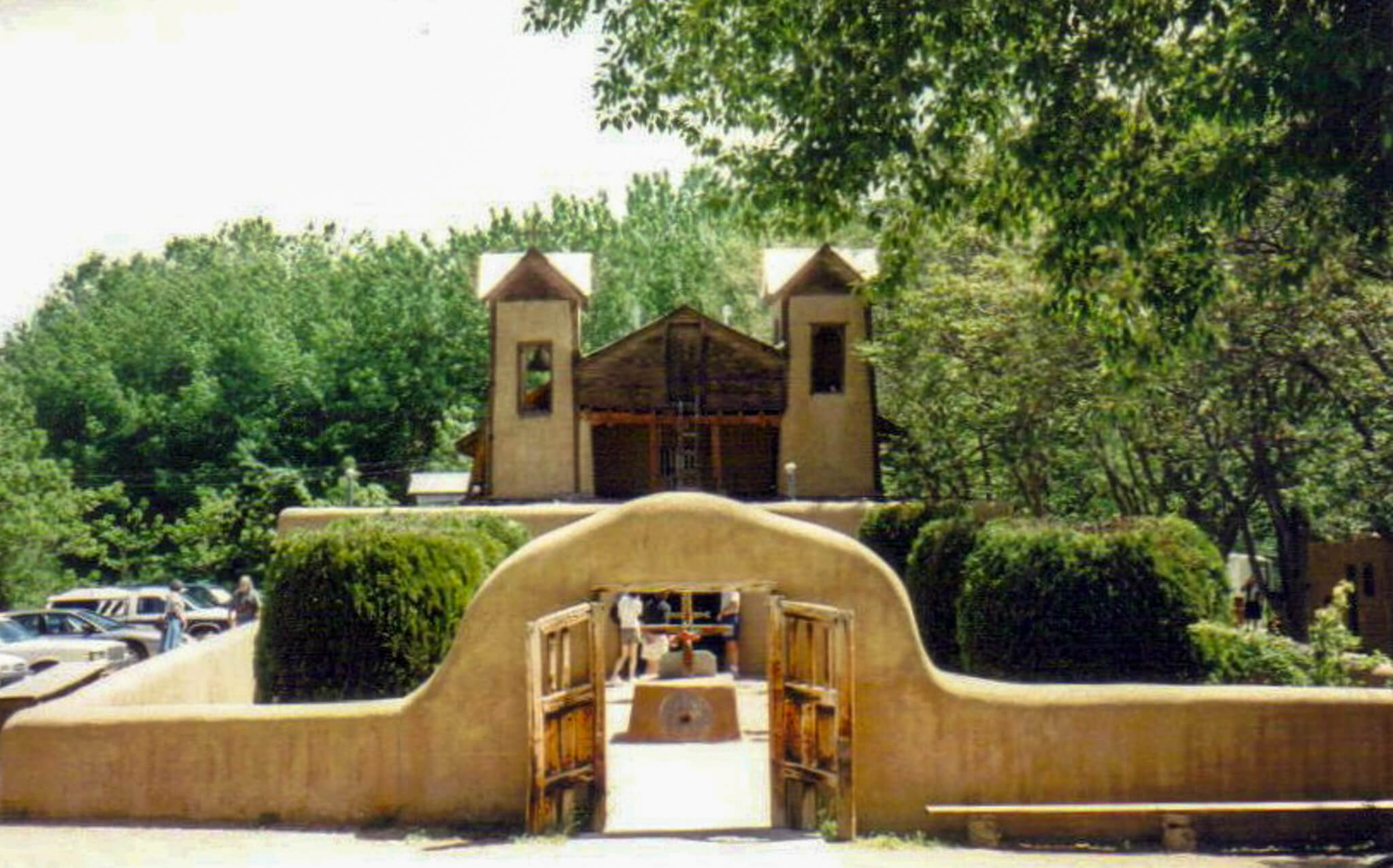 Holy dirt! Modern medicine would disagree that such a thing exists, but devout Catholics would beg to differ. Legend holds that on the night of Good Friday in 1819, a member of the Penitentes named Don Bernardo Abeyta saw a light emitting from a hill near the Santa Cruz River in Chimayo. When he followed it to its source, he saw that the light was coming out of the ground. Digging with his bare hands, he found a crucifix. He left it there and went to notify a priest, Fr. Sebastián Alvarez, in Santa Cruz. Alvarez went to Chimayo and carried the crucifix back to his church, placing it in the niche of the main altar. The next morning, the crucifix was gone. Stolen? No. It inexplicably returned to its original underground location in Chimayo. Mystified, Alvarez brought the crucifix back to his church, only to find that, once again, it returned to its original location overnight. And then it happened a third time. Clearly, the crucifix wanted to reside in Chimayo. So, in 1813, Abeyta petitioned Alvarez for permission to build a chapel dedicated to Our Lord of Esquipulas on what the people believed to be the site of the miraculous crucifix—the place where the earth had healing powers. The miraculous healings grew so numerous that a new, larger church was soon required, replacing the chapel with the current shrine in 1816. The belief in the holy dirt is so strong that at least 300,000 pilgrims come to Chiamyó Sanctuary in the Sangre de Cristo Mountains every year.
#3 The Formation of Zealand (Copenhagen, Denmark)
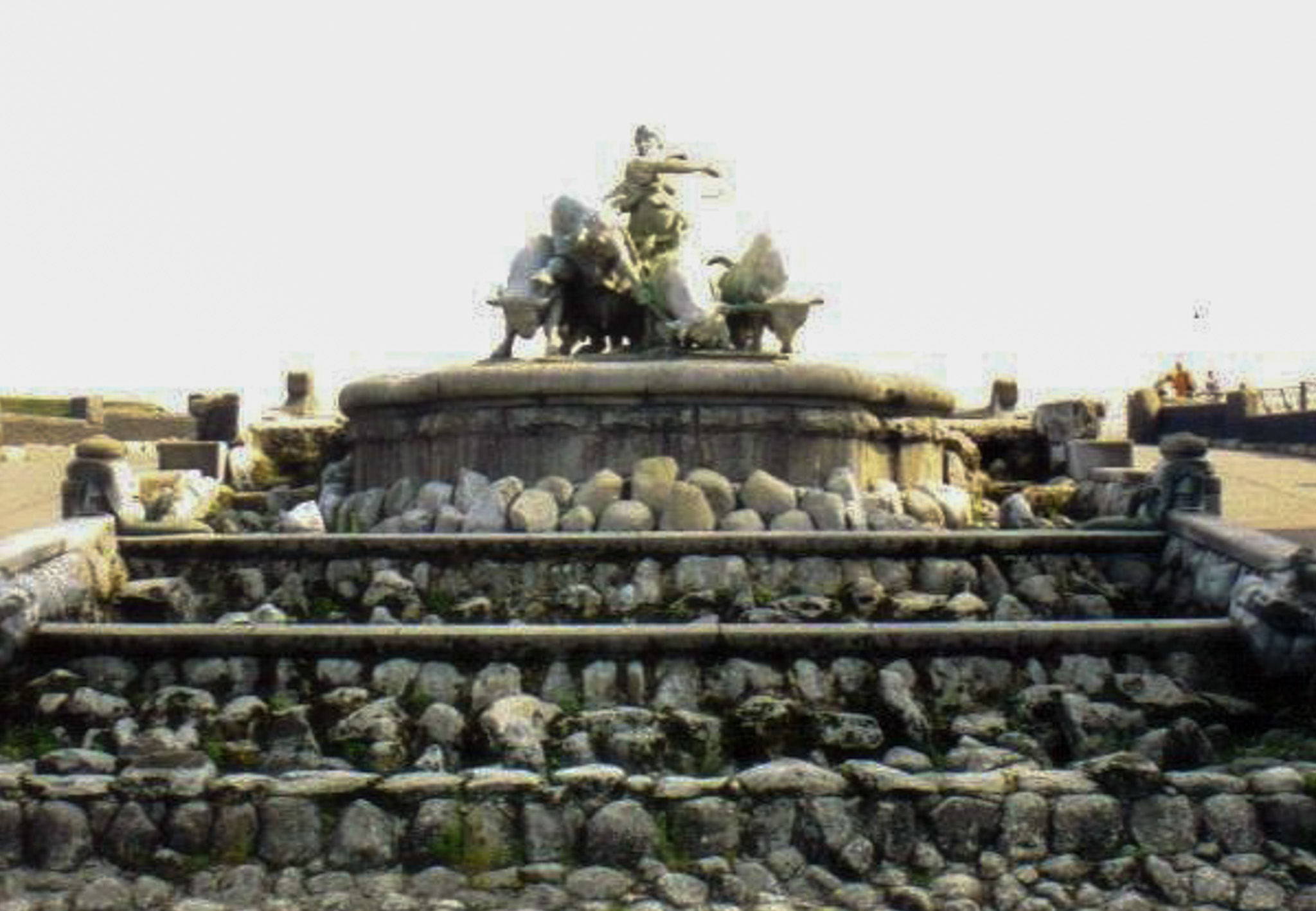 Between Churchill Park, one of the most beautiful urban parks in the world, and the adjacent Langelinie Park along the harborfront in Copenhagen, I came across the striking Gefion Fountain. The fountain features a large-scale group of four oxen pulling a plow and being driven by the Norse goddess Gefjun. Donated by the Carlsberg Foundation in honor of the brewery’s 50th anniversary and designed by a Danish artist, the figures were completed by 1899, with the basins and decorations finished by 1908, the same year the fountain was activated. The fountain is quite beautiful, but it’s the Gefion legend that makes it so memorable. According to a saga in a ninth-century Old Norse poem, the Swedish king Gylfi promised the goddess Gefjun all the territory she could plow in a single night. Gefjun then did a creative, and quite unmaternal, thing: She turned her four sons into four oxen, exponentially increasing the area of land she could plow. By the morning, all the dirt that had been plowed and thrown into the sea had formed a new island—Zealand, the 13th-largest island in Europe, measuring 2,715 square miles, and now home to 2.3 million people, including everyone who lives in Denmark’s capital.
#4 The Devil’s Footprint in the Cathedral of Our Lady (Munich, Germany)
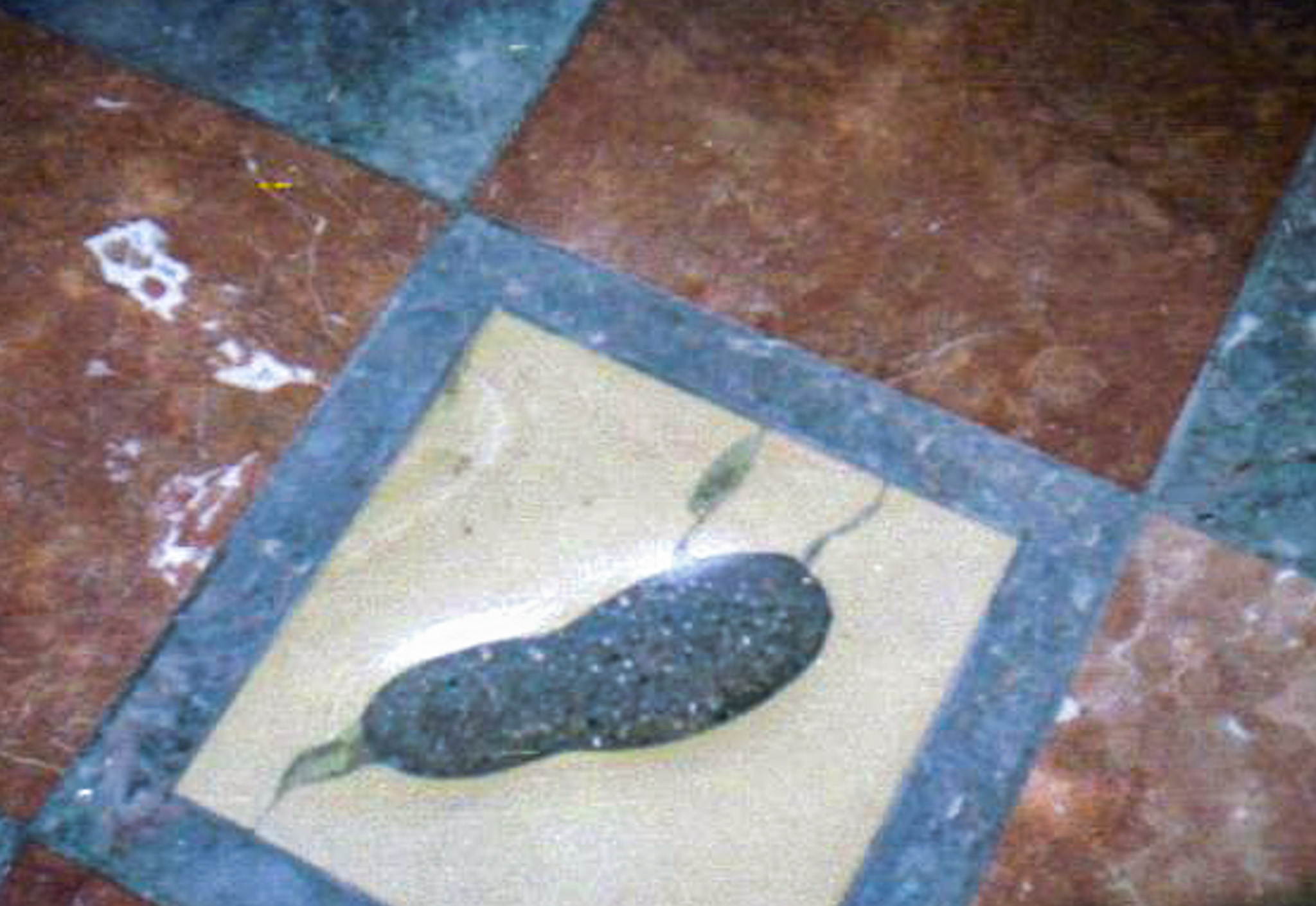 One of Germany’s most beautiful churches dates way back to 1524. Munich’s Cathedral of Our Lady serves as the cathedral of the Archdiocese of Munich and Freising and seat of its archbishop. The landmark building is huge—it’s the world’s biggest hall church (a church with a nave and aisles of approximately equal height). Noted for its twin bell towers with verdigris-green domes, whose height of 323’ may not be surpassed by any other building thanks to a 2004 law, the cathedral has an apse measuring 358’ long, 130’ wide, and 121’ high. That’s a lot of space to fill, and it must have cost a pretty Deutsche Mark to build. Good thing Satan paid the bill. According to legend, the devil made a deal with the architect to finance construction of the cathedral completely, under one condition—it could not have any windows; it was to be a celebration of darkness. The architect agreed. Once the church was completed and consecrated, the architect invited the devil in to inspect his work. Although there was light, there seemed to be no windows, and the devil was satisfied and, apparently, paid up. But then the devil took a step farther, and the clever trickery of the architect literally came to light: He had positioned all the columns in the cathedral in such a way that the devil couldn’t see any of the windows from where he first stood. Enraged and fooled, the devil stamped his foot in anger and fled the church, leaving behind the dark footprint with whisps coming out of the heel and toe that suggest flames. It remains visible in the cathedral’s entrance today—one of the few survivors when the cathedral was practically destroyed during World War II.
#5 The Loretto Chapel Staircase (Santa Fe, New Mexico)
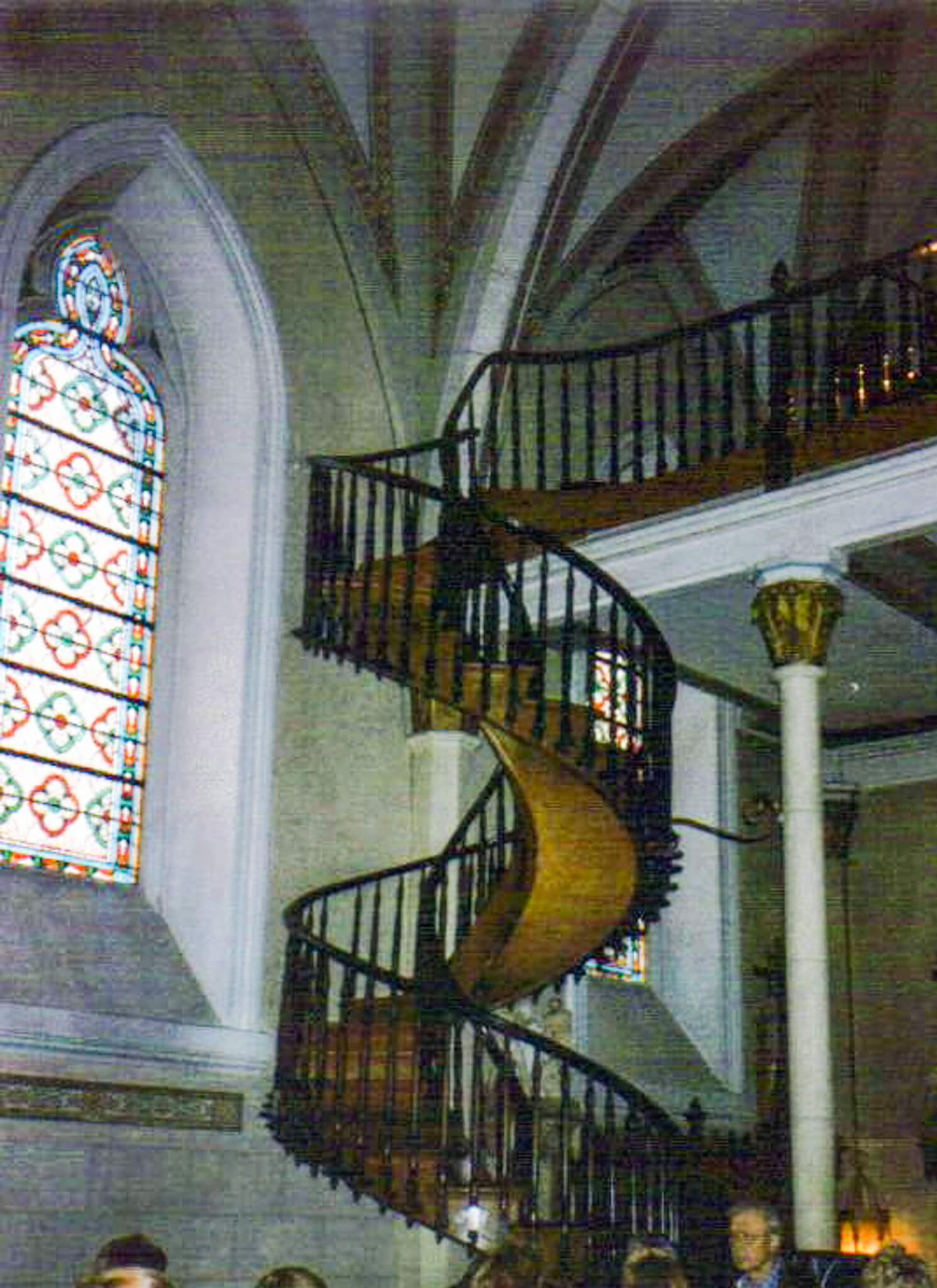 Staircases in movies. That seems like something fairly forgettable. Unless you’re talking about Sylvester Stallone heading up the huge staircase in front of the Philadelphia Museum of Art in Rocky, or Shelley Duvall backing up a staircase in the Overlook Hotel away from a threatening Jack Nicholson in The Shining, or the massacre scene on the Odessa Steps in 1925’s Battleship Potemkin. The staircase in Loretto Chapel joins that impressive cinematic list with a small-screen 1998 film starring Barbara Hershey and William Petersen. The inspiration was this former Roman Catholic church, now a museum and wedding chapel. The legend begins in 1873, when the Sisters of Loretto began construction of a chapel in Santa Fe, employing a French architect. The architect died before the choir loft was built, leaving a conundrum—given the chapel’s small size and the loft’s height, a staircase would have taken up too much floor space, drastically cutting the seating capacity to an insufficiently small level. So, the sisters prayed a nine-day novena to St. Joseph, patron saint of carpenters, for a solution. On the ninth night, an old bearded man arrived out of nowhere on a donkey, carrying only a hammer and carpenter’s square. He proceeded to build the Miraculous Staircase using only simple tools, wooden pegs, and rare wood that isn’t native to the American Southwest…and then disappeared. The sisters could find no trace of him to thank, or to pay, him. They firmly believed they had been blessed by St. Joseph himself for providing this miracle. I wasn’t exactly convinced that there could be a better explanation—the staircase has two complete 360° turns with no center pole for structural support, the entire weight of the staircase rests on the bottom stair, and no nails were used. An elusive carpenter, or a modern miracle? Exactly the kind of question that legends leave us with.
Five Runners-Up
- The rise of Holger Danske (Kronborg Castle, Elsinore, Denmark)
- The Danish flag (Danish King’s Garden, Tallinn, Estonia)
- The Waving Girl statue (Savannah, Georgia)
- The Apprentice Pillar (Rosslyn Chapel, Roslin Glen, Scotland)
- The Loch Ness Monster (Scotland)
Leave a Comment
Have you been here? Have I inspired you to go? Let me know!


 Stephen Travels