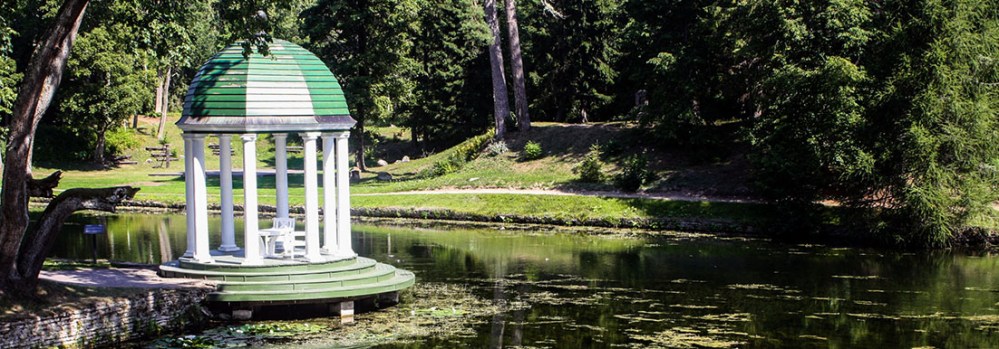
I have always found gazebos to be a welcome sight, and they’re usually easy to find, situated in open spaces to take advantage of pleasant views. They were first constructed in Egyptian gardens about 5,000 years ago, and their popularity spread around the world, from classical civilizations in China and Persia to modern Western cities. These freestanding roofed structures are often octagonal in shape and always have open sides. They can shelter you from rain and provide relief from sizzling summer sunshine. They can invite serenity when they’re placed in, say, a botanic garden or a quiet park, or they can be center stage for a lively celebration during big-city holiday celebrations or small-town fairs, when they can double as bandstands. These are my favorites.
#1 Music Kiosk (Citadel Park, Ghent, Belgium)
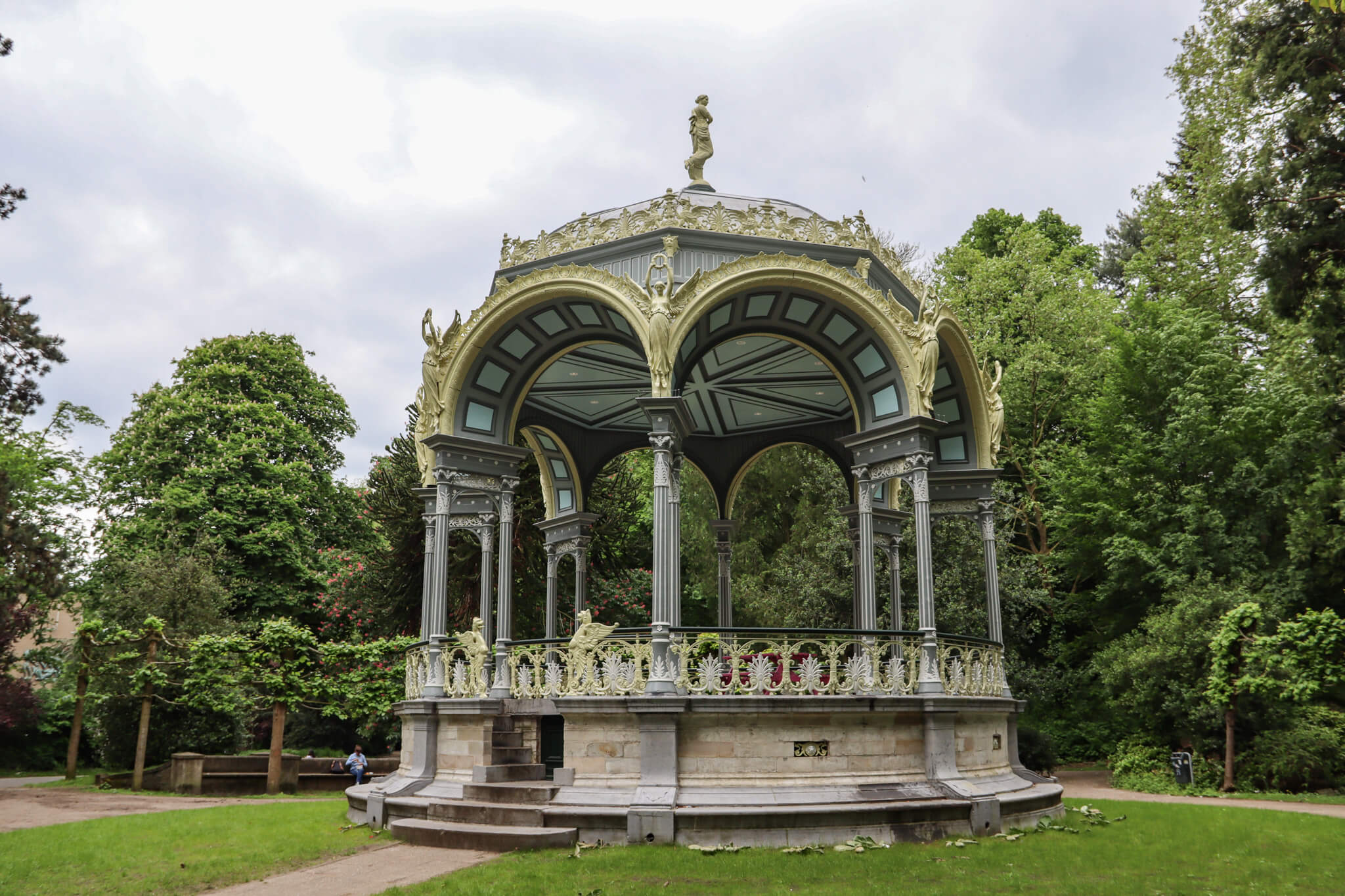 A random decision to take a shortcut from the train station to the Museum of Fine Arts in Ghent through the city’s Citadel Park rewarded me with this spectacular gazebo. Created in 1875 on the site of a Dutch citadel that itself had been completed in 1831, Citadel Park has been a protected landscape since 1984. Filled with 780 trees, a playground, walking paths, statues, and monuments, it makes for a pleasant stroll. It’s also the home of this wrought-iron music kiosk that sits on an octagonal base of natural stone. Designed by the 35-year city architect and built in 1885, the gazebo features 16 columns grouped radially in pairs, supporting high round arches that support the dome roof. Where the columns and arches meet, winged female statues occupy the spandrels, each holding a laurel wreath above her head. Both the roofline and the cast iron fence around the base sport highly decorative palm leaf motifs. In between those at the roof, you’ll find griffins in between the palmettes, and two larger griffins guard the staircase entry to the gazebo itself. For more than a century, it has been a lure for musical events and remains the highlight of the park.
#2 Bandstand (Halifax Public Gardens, Halifax, Nova Scotia)
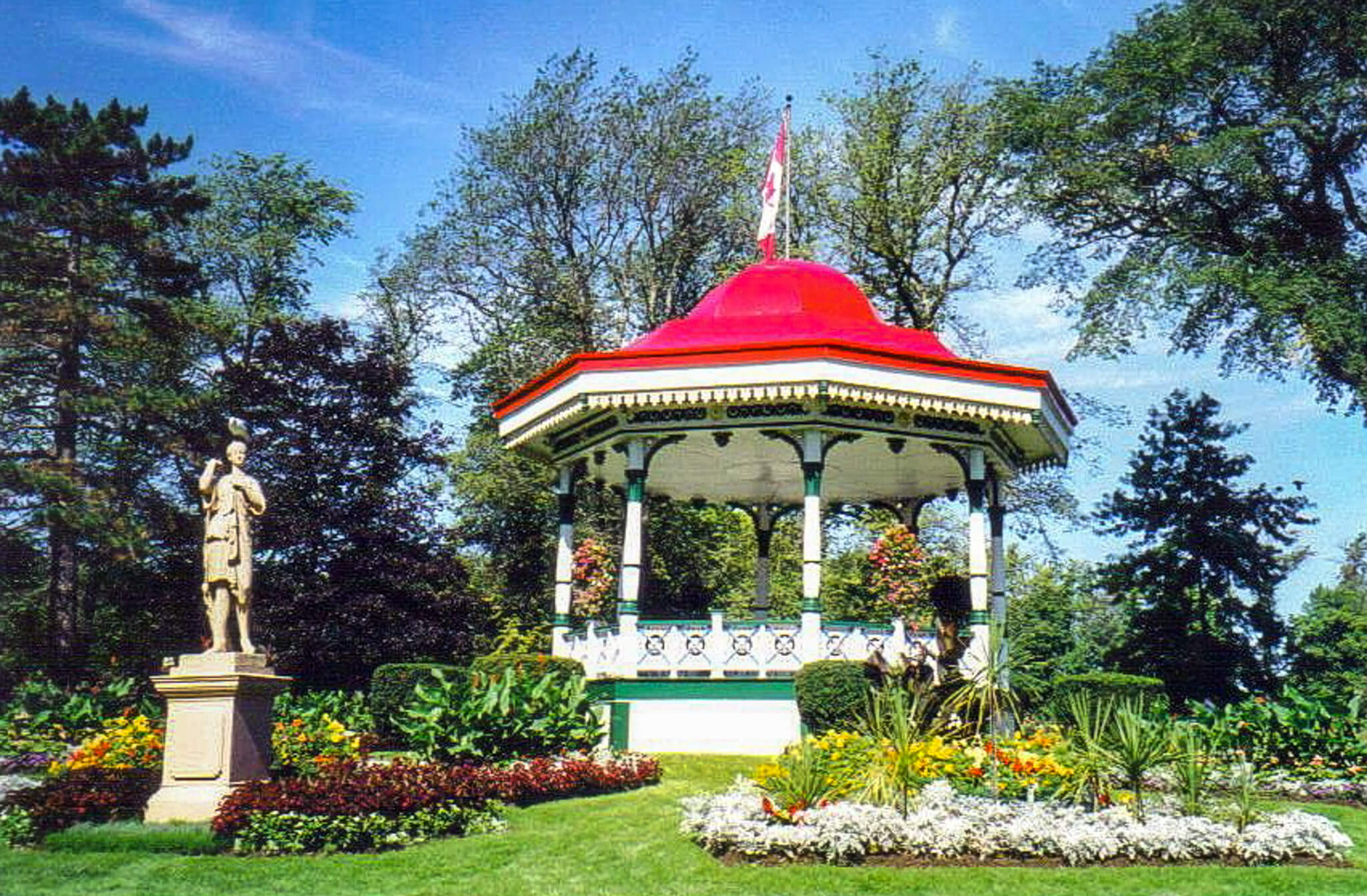 Halifax Public Gardens was established in 1867, and more than a century later, I was enjoying this 16-acre green space in the heart of Nova Scotia’s capital. I strolled around the Victorian gardens, admiring its statues, brilliant flowers, trees, friendly ducks and swans, an enormous goose, and a model of the Titanic anchored in Griffin’s Pond. I was utterly charmed by the gorgeous gazebo that stands right in the center of the gardens, next to a statue of the goddess Diana. Built in 1887 to commemorate Queen Victoria’s Golden Jubilee, the ornate octagonal gazebo boasts some intricately carved wooden trim. A staircase leads up to the platform above handsome latticework, and the Canadian flag flies proudly from the little domed roof. It’s a lovely spot from which you can look out at the gardens and colorful flower beds, and if you’re here during the summer, you can enjoy some live music when it doubles as a bandstand for free public concerts.
#3 Music Pavilion (Bergen, Norway)
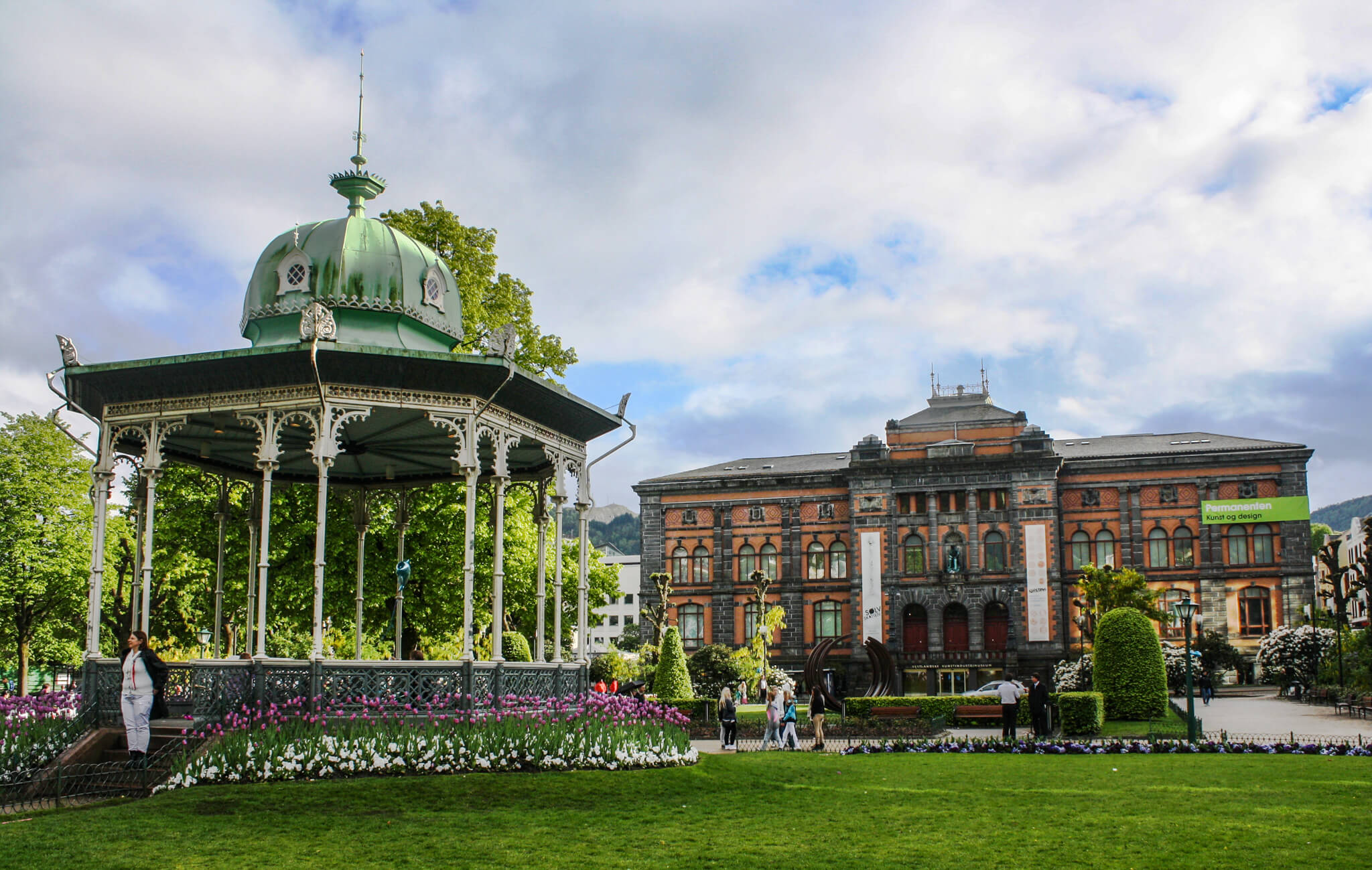 I was recovering from celebrating Norway’s Constitution Day festivities (and marching in its parade through the heart of Bergen) the night before. On my way to the museums flanking the lake, I passed through the large city park Byparken, a rectangular green space created in 1865. Smack in the center stands the exotic gazebo called the Musikkpaviljongen, the Music Pavilion. Gifted to the city in 1888, the cast-iron Moorish gazebo features a fine lattice railing from which rise slender columns capped with lacey brackets. Eight antefixes circle around the roofline, and the verdigris green dome spots little dormer windows. Its setting is just as glorious as the gazebo itself, surrounded by rings of flowers and facing the West Norway Museum of Decorative Art, one of the most beautiful buildings in Bergen, a statue of Norwegian composer Edvard Grieg, and, across the street, past the open paved plaza, the fountain playfully spouting in the lake.
#4 Bandstand (Brussels Park, Brussels, Belgium)
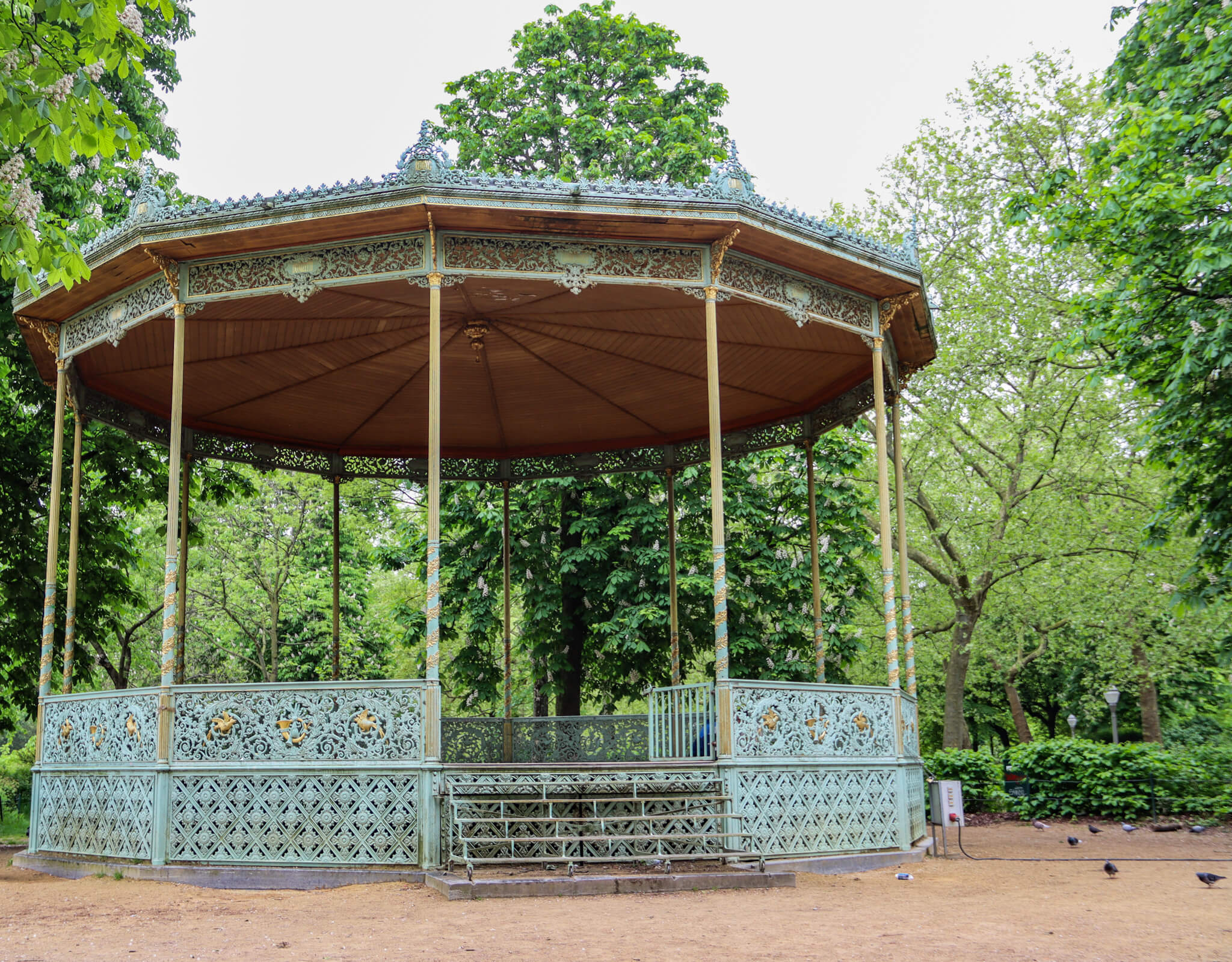 Created in 1841 to house celebrations of national holidays in Brussels’ largest park, the elegant bandstand in Brussels Park has been hosting concerts and orchestras for more than a century. This 12-sided gazebo brings new levels of refinement to cast-iron. Along the roof, acroterions circle the entire gazebo. Names of composers like Cherubini and Donzetti appear in lacy panels above and below them. Slender columns support the roof, the fluting on their upper halves giving way to plain bottoms wrapped with gilded leaves. The bottom features a very regulated display of beautiful latticework. And in the railing around the floor of the gazebo, amid all the swirls and curls, looking for gilded horns and winged creatures.
#5 Domain Bandstand (Auckland Domain, Auckland, New Zealand)
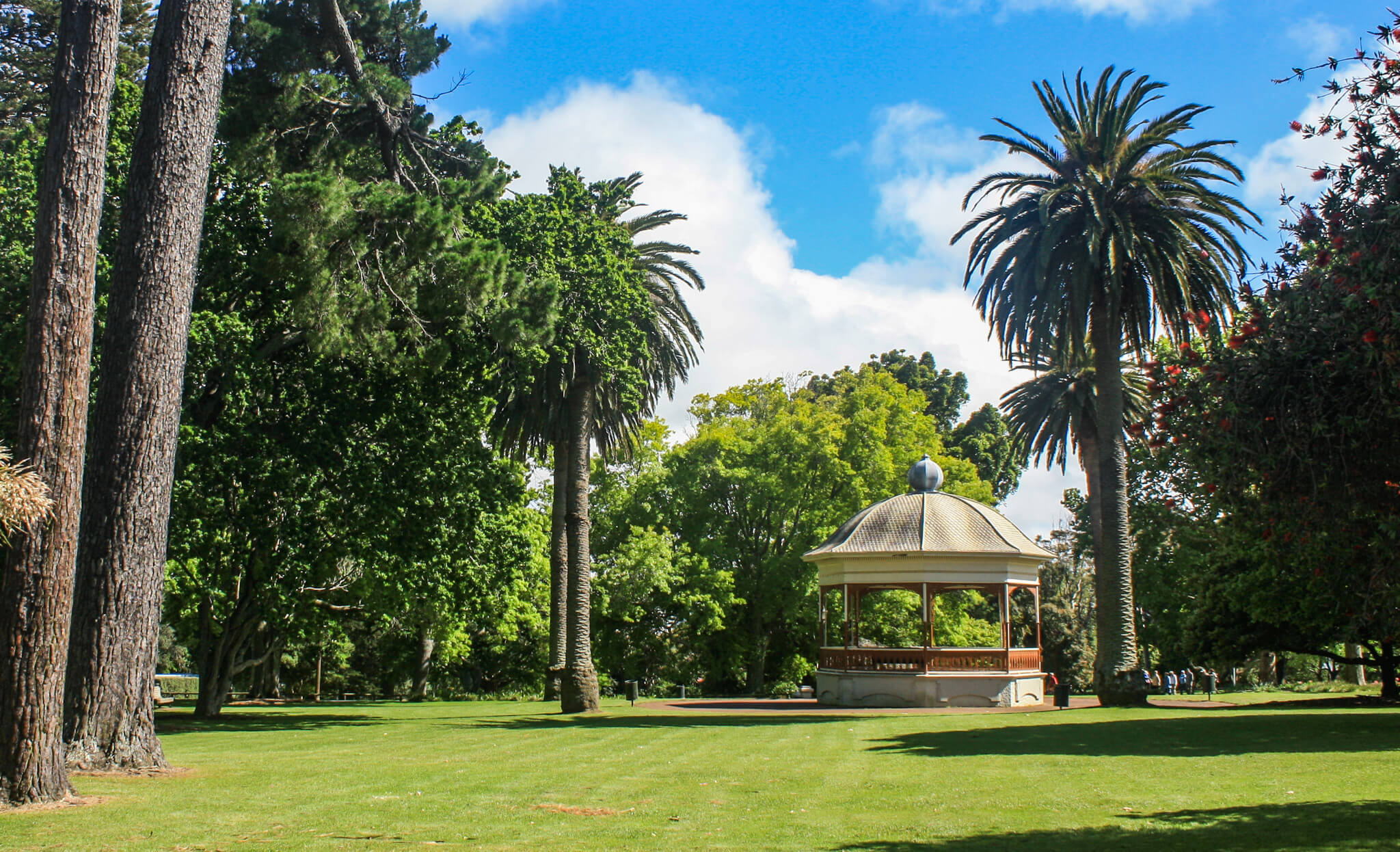 I finished an outstanding breakfast at Alphabet Bistro (pancakes with sliced peaches, grilled bananas, raspberry coulis, maple syrup, and cream Chantilly) on my first morning in Auckland and decided it was time to enjoy the beautiful day with a long stroll through Auckland Domain, the oldest park in Auckland. This green expanse is the remnant of an ancient volcano and today is filled with fountains, ducks, trees, gardens, a pond (the city’s first water supply), a café, and a museum as well as terrific views of the Sky Tower. Established in the 1800s as a 200-acre public reserve, it has since expanded to 340 acres and has been used for everything from a testing ground for exotic fish and plant species to a campground for American troops during World War II. The vast Domain’s lovely Edwardian gazebo, the Domain Bandstand (aka “the Rotunda”), is a pale yellow octagonal structure, set off by brown wood columns and railings. Above the dentils at the top, the thatch-like roof is topped by an onion-shaped ball. The city received the gazebo in 1912, when a prominent Auckland biscuit manufacturer presented it as a gift.
Five Runners-Up
- Marigot Market Gazebo (Marigot, St. Martin)
- Main Plaza Bandstand (New Braunfels, Texas)
- Parkman Bandstand (Boston Common, Boston, Massachusetts)
- Palmse Manor (Lahemaa National Park, Estonia)
- Philbrook Museum of Art (Tulsa, Oklahoma)
Leave a Comment
Have you been here? Have I inspired you to go? Let me know!


 Stephen Travels