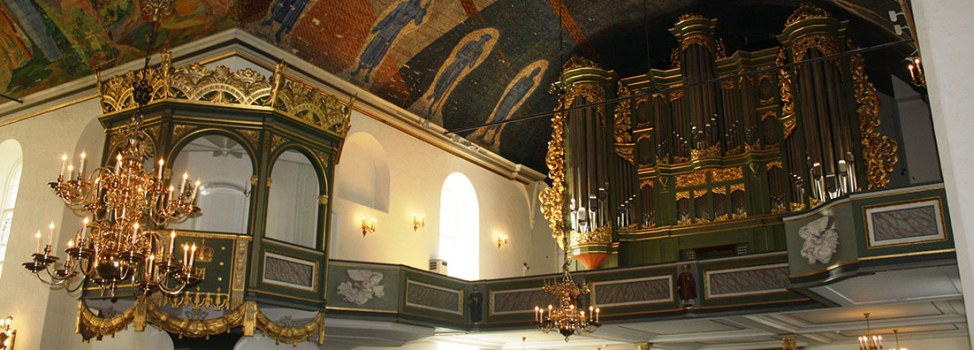
In highly secular Norway, only about 2% of the population attends religious services on a regular basis. That leaves a lot of space inside the churches if you should show up at one. And even if you’re not here for a service in this mostly Lutheran nation, you’ll want to check out the country’s gorgeous church buildings, which you’re likely to have all to yourself. These are my favorites.
#1 Gol Stave Church (Gol stavkyrkje, Oslo)
 Since I first saw a photo of a Norwegian stave church, I had wanted to see one. Discounting the re-creation in Epcot in DisneyWorld, I finally had the chance to see an authentic one in Norway. In Oslo, I boarded a ferry and sailed through Oslofjorden to Bygdøy, a peaceful and well-off residential area, and then walked about 15 minutes to the Norsk Folkemuseum. This terrific open-air museum, the second-oldest one in the world, is filled with more than 150 buildings that have been transported from all over Norway to create both urban and rural areas that represent life in Norway since 1500. One of those is the stave church, or stavkirke, built in 1212 in the town of Gol and one of only 28 survivors of the estimated 1,900 stave churches that used to be in Norway. Stave churches—medieval churches built solely of wood (basically pine)—are architecturally unique, with their slanted roofs, dragonheads, and crosses on the gables. This one, when it was ready for replacement by a new church around 1880, was purchased by the Society for the Preservation of Norwegian Ancient Monuments, which presented it to King Oscar II, who, in turn, paid for its re-erection in its current spot in 1884. Inside there are Middle Age runic inscriptions and carvings of animal figures, humans, and geometric symbols. A somewhat faded painting of the Last Supper behind the simple altar adds a touch of color to the browns of the sturdy woodwork. Make sure to stop and chat with the pleasant Norwegian woman, dressed in traditional garb and greeting visitors, to get some insights into the church.
#2 Bergen Cathedral (Bergen Domkirke, Bergen)
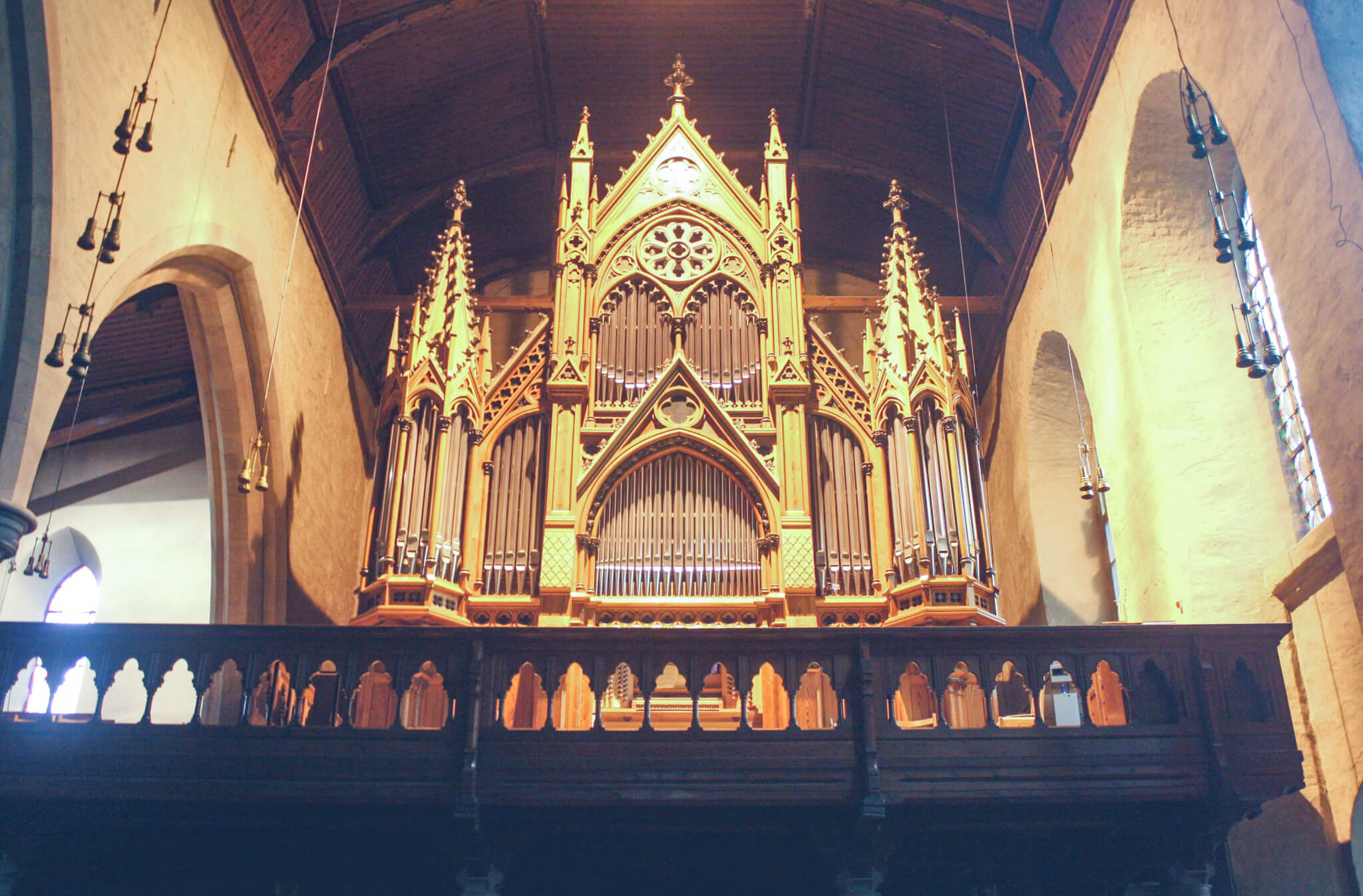 The Bergen Cathedral, also known as St. Olaf’s Church thanks to its ancient dedication to the 11th-century Norwegian king, traces its origins way back to 1181. But after a string of devastating fires that made me wonder if there were serial arsonists roaming about the city for centuries, the church was rebuilt multiple times. The current incarnation rose after the fires of 1623 and 1640, but that wasn’t the final version. A steeple was added later; another fire in 1702 led to extensive renovations completed in 1743; and even more renovations in the 1880s did away with the Rococo interiors and restored the medieval appearance. You would think that the watchmen who used the tower from 1624 until 1903 to keep an eye out for fires might have prevented at least one of these conflagrations. With all that building and destruction and rebuilding, with some parts surviving and incorporated into each successive structure, it’s nice to see some permanence: A cannonball fired in the port during a war between the English and the Dutch in 1665 remains embedded in the exterior wall. Look also for the stone carvings in the walls, of crosses, stylized representations of tools like angles and axes, and medieval runes. The recessed arch at the entrance with simple archivolt is mirrored in the taller window directly above it, and above that five windows surround a clock, leading up to the steeple with tiny windows and a ball and cock vane. Inside, the cathedral can seat about 1,000 people. There are some lovely stained-glass windows and stone sculptures, but I think the highlight is the organ up in the choir loft, the fifth one here. Installed in 1997, it’s a fairly spooky-looking instrument, like the garish face of a not-so-lifeless toothy skull on a movie poster for a chilling horror flick.
#3 Oslo Cathedral (Oslo domkirke, Oslo)
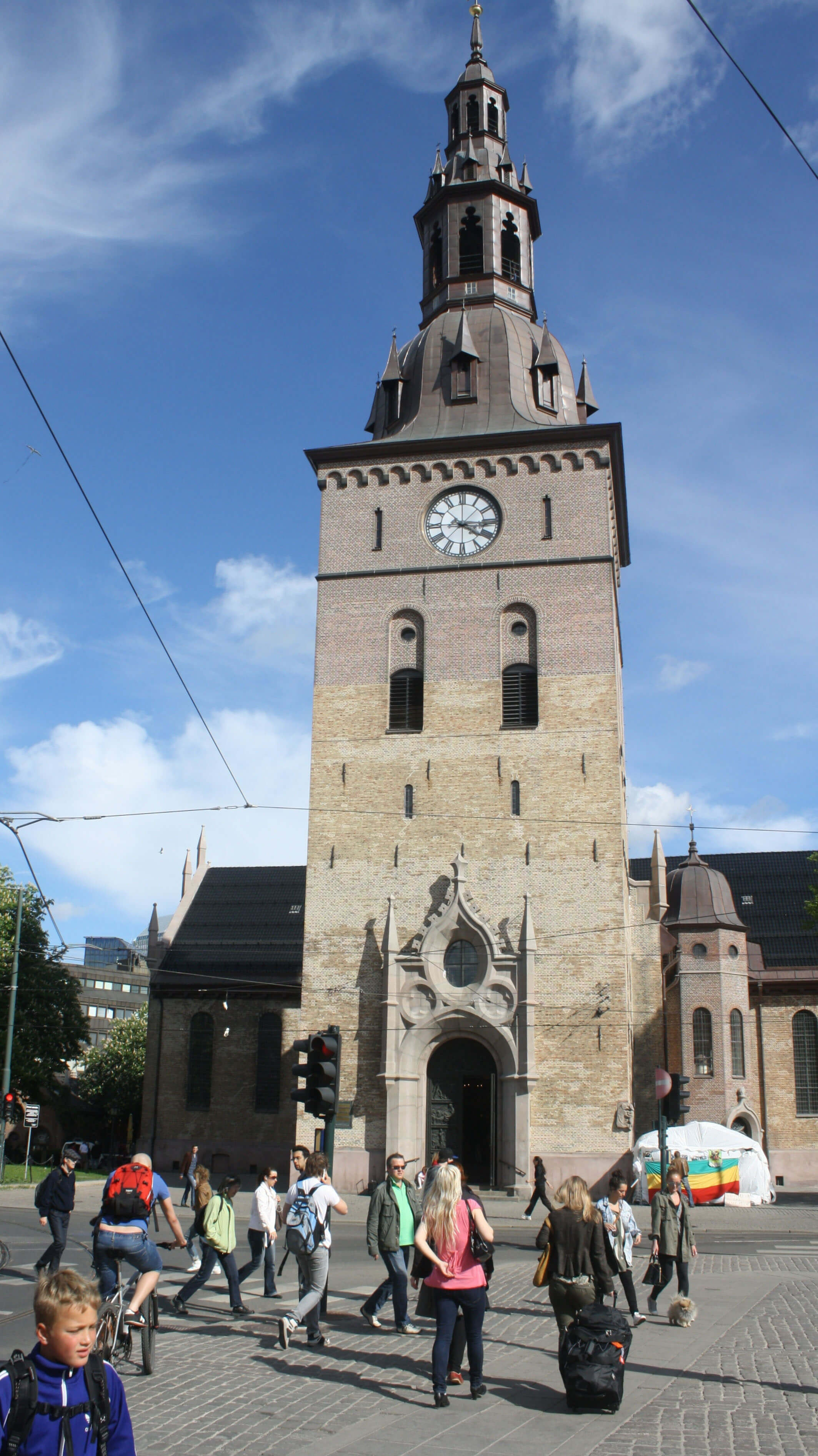 Anchoring a large cobblestone square, Oslo Cathedral was started in 1694 and built and renovated in several stages over the course of nearly three centuries. This brick beauty sports an abundance of towers, none more prominent than the main central tower, topped with a Nordic fairy-tail steeple above the four clock faces. I passed through the bronze door and entered the baroque interior. There’s much to admire here, starting with the green organ façade. Completed in 1727, it’s the only part of the interior that has been here since the beginning. Near the organ, raised up at a corner, hangs the royal throne, a covered gazebo-like structure where the royals would sit during services, looking down on the congregation. The masterful altarpiece, from 1699, is divided into three sections. At the top, a pair of angels flank a victorious Christ. The middle holds a Crucifixion scene, with Mary and John on either side, and with two female figures at its base—the one representing the Gospel holds palm branches and a victory banner; the other, symbolizing the Law, holds a whip and a tablet with the Roman numerals I through X, for those well-defined Commandments. The bottom level holds a wood carving of the Last Supper, with a very obvious Judas turned away from the table, holding his bag of silver coins. The anomaly is the flashy ceiling, finished only in 1950 when it, unfortunately, destroyed the original paintings. The new creation is a riot of figures in bright colors—murals depicting Jesus’ ministry, condemnation, and crucifixion as well as the Twelve Apostles. Back outside, I made sure to look for The Devil of Oslo, stuck to a corner at the bottom of the central tower. Like a wasp nest attached to a building, this curiosity predates the cathedral by centuries. It was removed from the ruins of another cathedral built about 900 years ago. It depicts a man being attacked by both a dragon and a lion—a good warning for believers who wouldn’t want to meet that hellish fate at the end of their lives.
#4 St. John’s Church (Johanneskirken, Bergen)
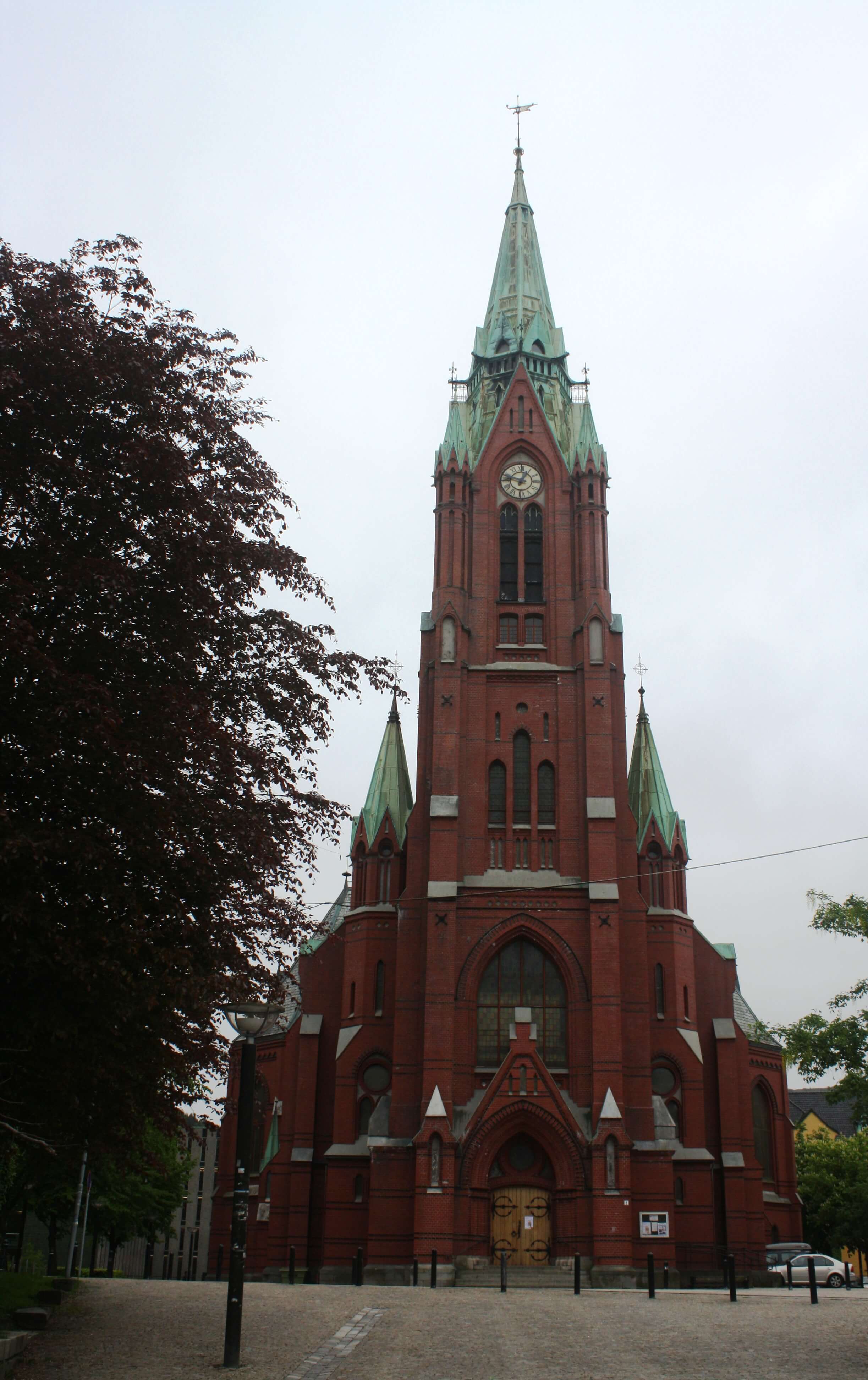 I climbed up the steep street (so steep it has staircases on the sidewalk) and then up the steep staircase to reach St. John’s Church, which soars high above its surroundings. Indeed, its tower, at just over 200’, can be seen from all around Bergen’s city center. It’s a curious church—the front is tall and tapered, the rear is squat and short. It was completed in 1894, a red-brick Gothic beauty with room for more than 1,200 people. The steeple is a verdigris green work of art, but be sure to walk around the entire church to see all the other, shorter steeples. Inside, there’s very little ornamentation, except for an 1894 painting of a pensive Christ in prayer, in a large neo-Gothic oak framework, behind the altar. Rather, the church is fun to explore for the structure itself. The ceiling is a masterwork of woodworking, but so are the pews, galleries, and the pulpit and its sounding board. The organ simply couldn’t be more elegant. The church’s newest addition, from 2014, is its carillon, which weighs more than 33,000 lbs. When it’s played, eight windows in the main tower open automatically, for everyone nearby to enjoy its performance.
#5 Trinity Church (Trefoldighetskirken, Oslo)
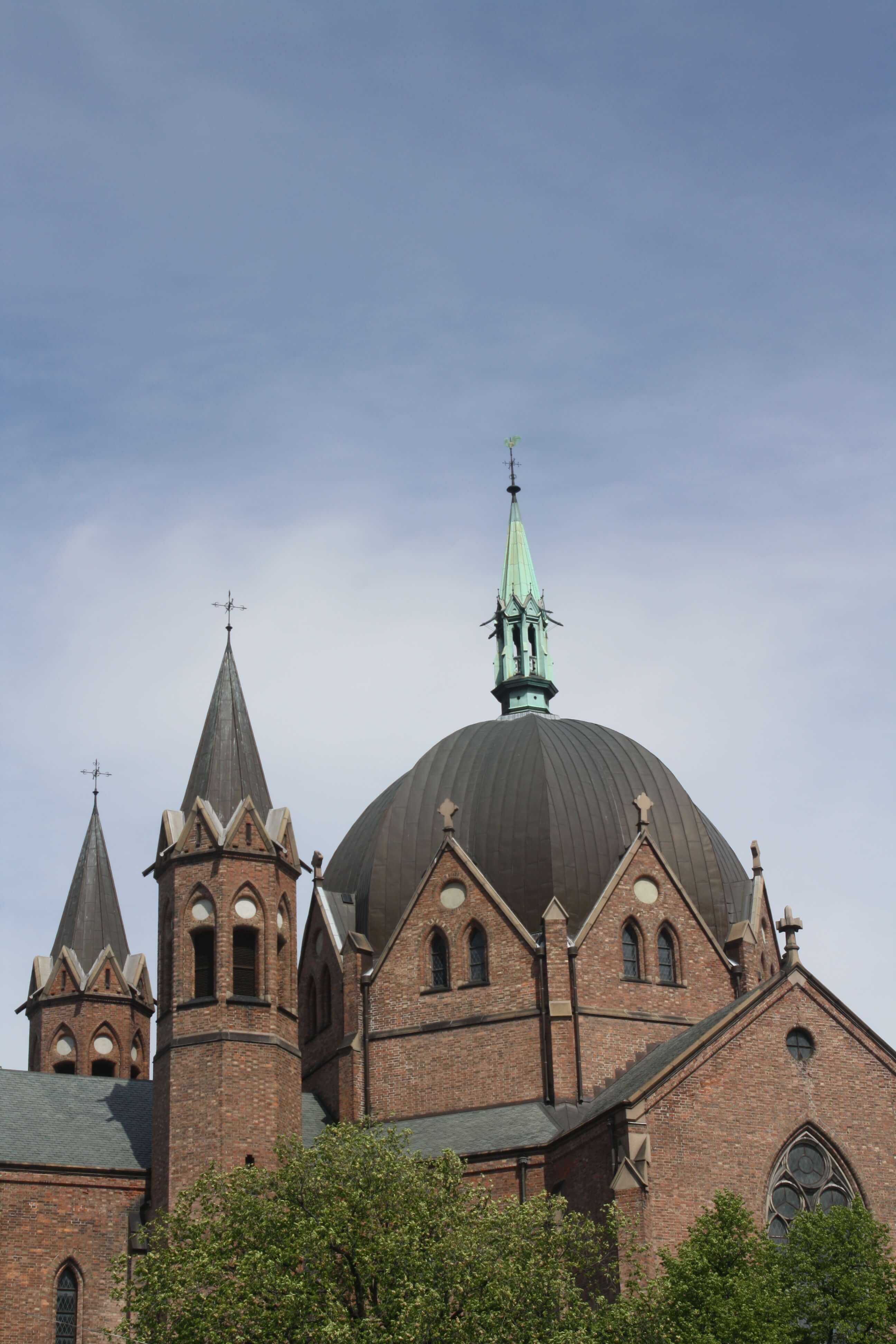 Trinity Church is bold and big; in fact, it’s the city’s largest church, with 1,000 seats. It’s a little spiky, with lots of gables and pointed-arch windows, and it has been making a statement since it was consecrated in 1858. Constructed almost entirely with red brick, the neo-Gothic church has an octagonal shape with a Greek cross superimposed. Two slender octagonal bell towers with lancet windows flank the entrance. I loved the massive eight-sided dome, topped with a verdigris-green spire. Inside, the central room dominates the space, with the dome above and surrounded by arcades and galleries. Each column capital is slightly different from the next. The lovely reredos, with statuettes of Peter and Paul, features an altarpiece painting of the baptism of Jesus. A single column supports the elegant, elevated pulpit, original to the church. Over the decades, fine additions have been made, including stained-glass windows in 1936 and the 1980s, and a highly unusual chandelier, with an angel holding the baby Jesus in his arms, in 1923. Make sure you head up to the altar, where a marble life-size angel holding a shell filled with holy water serves as the baptismal font.
Five Runners-Up
- Frogner Church (Frogner kirke, Oslo, 1907)
- The New Church (Nykirken, Bergen, 1763)
- Holy Cross Church (Korskirken, Bergen, 1150)
- St. Olav’s Cathedral (Sankt Olav domkirke, Oslo, 1856)
- St. George’s Church (Sankt Jørgen kirke, Bergen, 1706)
Leave a Comment
Have you been here? Have I inspired you to go? Let me know!


 Stephen Travels