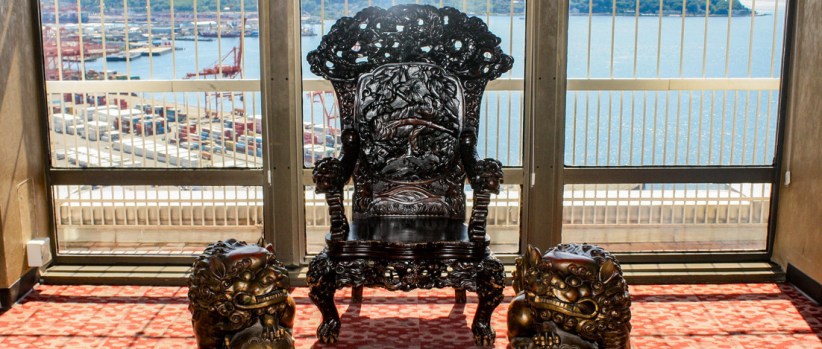
A basic piece of furniture: a backrest, a seat, and four legs, sometimes with arms. The chair is as simple as you can get. But the chair is often elevated to works of art, far beyond where you sit at your desk or in an atmospheric restaurant. I’ve seen some spectacular chairs around the world, but for the most part I was not allowed to sit in any of them. These are my favorites.
#1 Emperor’s Throne (National Museum of Finland, Helsinki, Finland)
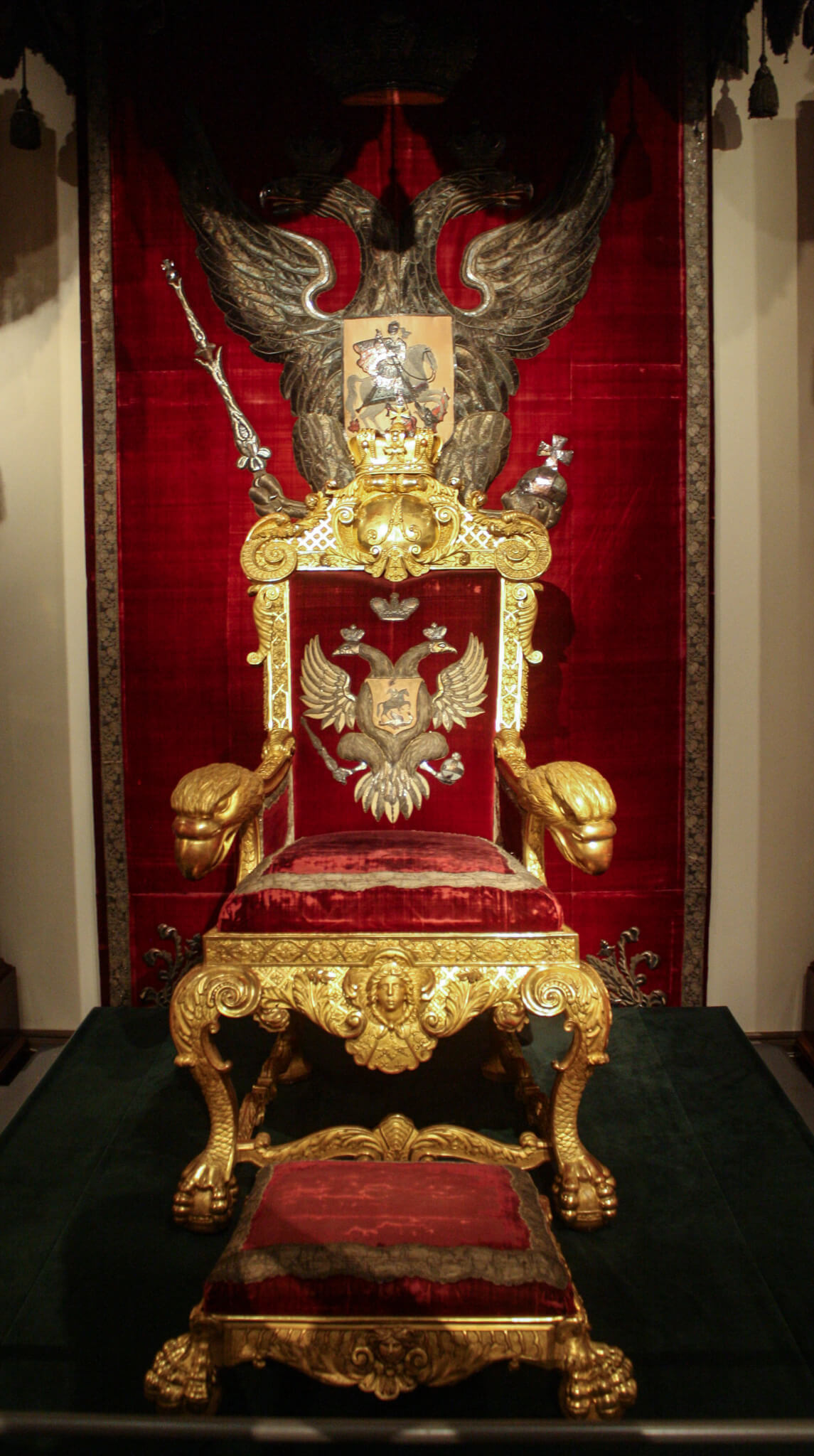
The excellent National Museum of Finland, completed in 1910, is housed in a fantastic building in Helsinki that celebrates National Romanticism, conjuring up references to both Finland’s medieval churches and castles with its turrets, granite rock-faced walls, carved sandstone, and a stone and brick tower roofed with copper, and Art Nouveau, the prevalent style of the time that can still be found in abundance in the city. Its collections are spread out over 33,000 square feet of floor space and include everything Finnish, from Middle Age coins to 1960s jukeboxes, as well as the vibrant 1928 frescoes right at the entrance that feature themes from the Kalevala, a 19th-century work of epic poetry stemming from Finnish oral folklore and mythology. One particularly outstanding object is the Emperor’s Throne. In 1809, Russian Emperor Alexander I declared that he would maintain the areas conquered from Sweden as part of Russia (sound familiar today?) and added “Grand Duke of Finland” to his title. This imperial throne was then brought from Russia to Finland, and after moving around a bit, it landed at the National Museum. Made in St. Petersburg in 1799, the ornate throne, comprising the chair, baldachin, and stool, is constructed of gilded linden wood. The throne’s back is topped with a crown. Armrests terminate with predatory-looking bird heads, and the legs are finished with ball-and-claw feet. Upholstered with plush red velvet, the backrest is embroidered with the Russian coat of arms—a double-headed eagle holding a scepter and an orb in its talons, with a shield depicting St. George slaying the dragon. I’m sure “President” Putin would feel right at home parked on this ornate throne.
#2 Bishop’s Chair (Cathedral of St. Matthew the Apostle, Washington, D.C.)
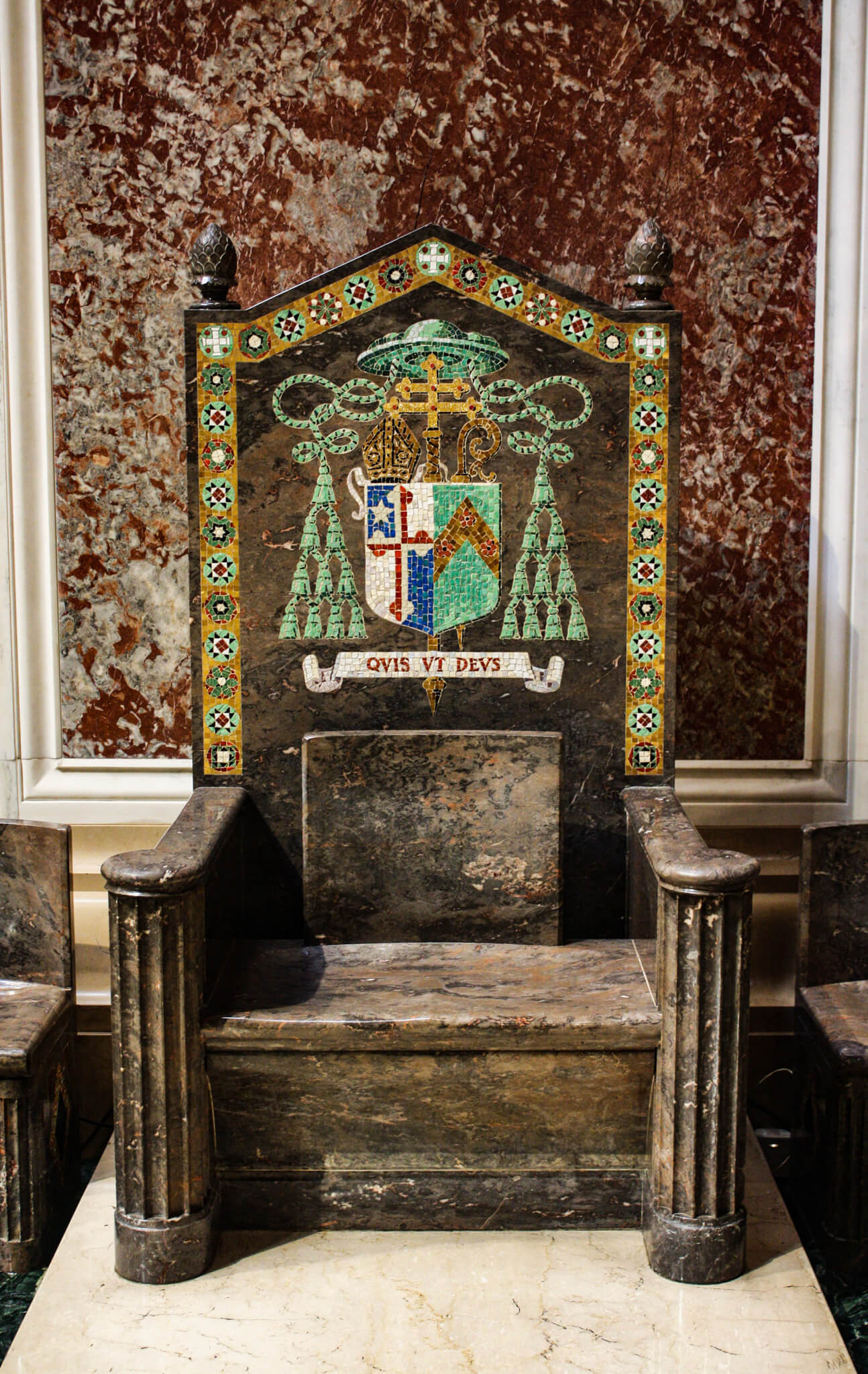
One of the most beautiful churches in Washington, D.C., holds both one of the world’s best depictions of St. Mark as well as one of the best chairs. One of the key elements of any cathedral where a bishop regularly celebrates Mass is the cathedra—a special chair used only by the bishop during liturgical ceremonies. The cathedra in the Cathedral of St. Matthew the Apostle is a stone treasure with a low seat and a stone lumbar support at the back. A pair of pine cones—symbols of hospitality and new life—top the backrest. Mosaics of abstract design, plus three crosses, frame the sides and pointed top of the backrest. The backrest itself features a gorgeous mosaic in greens and yellows of the coat of arms of the Archbishop Michael Curley, the first archbishop of Baltimore–Washington, with all the symbols of a bishop: pectoral cross, mitre, crozier, saturno. At the bottom, the Latin inscription “QVIS VT DEVS” (“Who is like God?”) reminds us of St. Michael the Archangel’s powerful declaration that no one, including Satan, can be compared to God.
#3 Coronation Chair (Westminster Abbey, London, England)
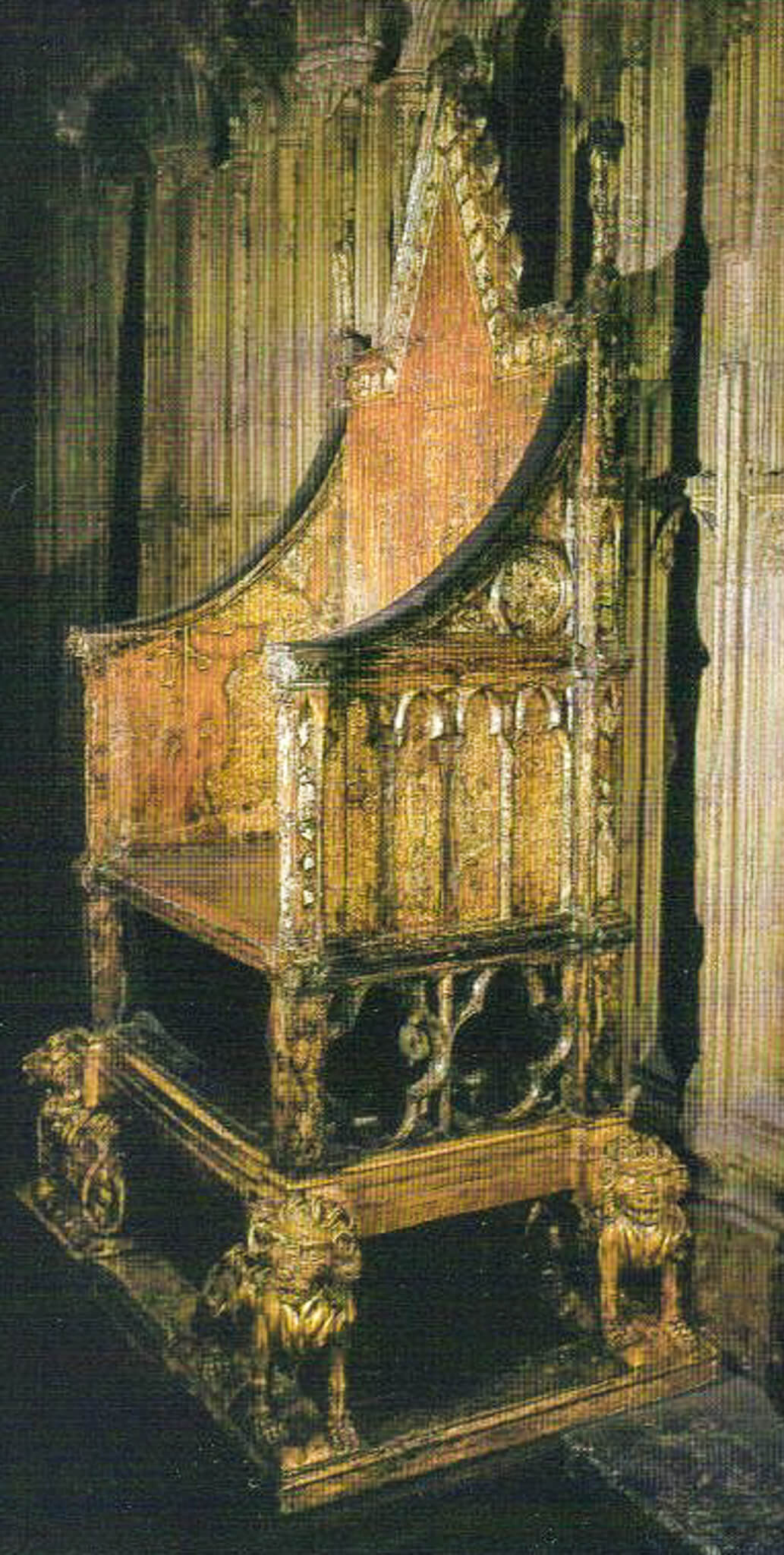
One of my favorite places in London, and one of its most beautiful churches, teems with graves and memorials to centuries of British celebrities, including Queen Elizabeth I, Mary Queen of Scots, Geoffrey Chaucer, Charles Dickens, Thomas Hardy, John Milton, Percy Shelley, William Makepeace Thackeray, William Pitt, Benjamin Disraeli, Isaac Newton, Charles Darwin, Rudyard Kipling, and kings Henry VII, James I, and George II. Within the complex interior, countless details clamor for attention: the ribbed vaulted ceiling over the nave, the magnificent organ, the elegant choir stalls, the stunning stained-glass windows, the chapels and halls, the peaceful cloisters, and the 68 misericords—hinged oak seats with expertly carved figures. Amid all that, I found the Coronation Chair, in St. George’s Chapel. Since 1308 it has been the centerpiece of English coronations. Ordered by King Edward I, the chair—taller than me, at 6 feet 9 inches—was made in 1301 from oak. The chair sits on four lions, recreations from 1727 that replaced the originals, which themselves were not added to the chair until the early 1500s. Above it, the seat rests on an open base with quartrefoils that used to house the Stone of Scone (an oblong block of red sandstone that was used in the coronation of Scottish monarchs until the 13th century, returned to Scotland in 1996). The plain back of the oldest dated piece of English furniture made by a known artist and one of the most revered pieces in the entire country reveals why you’re not allowed to sit on it today: In the 18th century, tourists could sit on the chair for a small fee and would then vandalize it by carving their initials, names, and other graffiti into it, just like choirboys and boys of Westminster School did.
#4 Egyptian Chairs (Fox Theatre, Atlanta, Georgia)
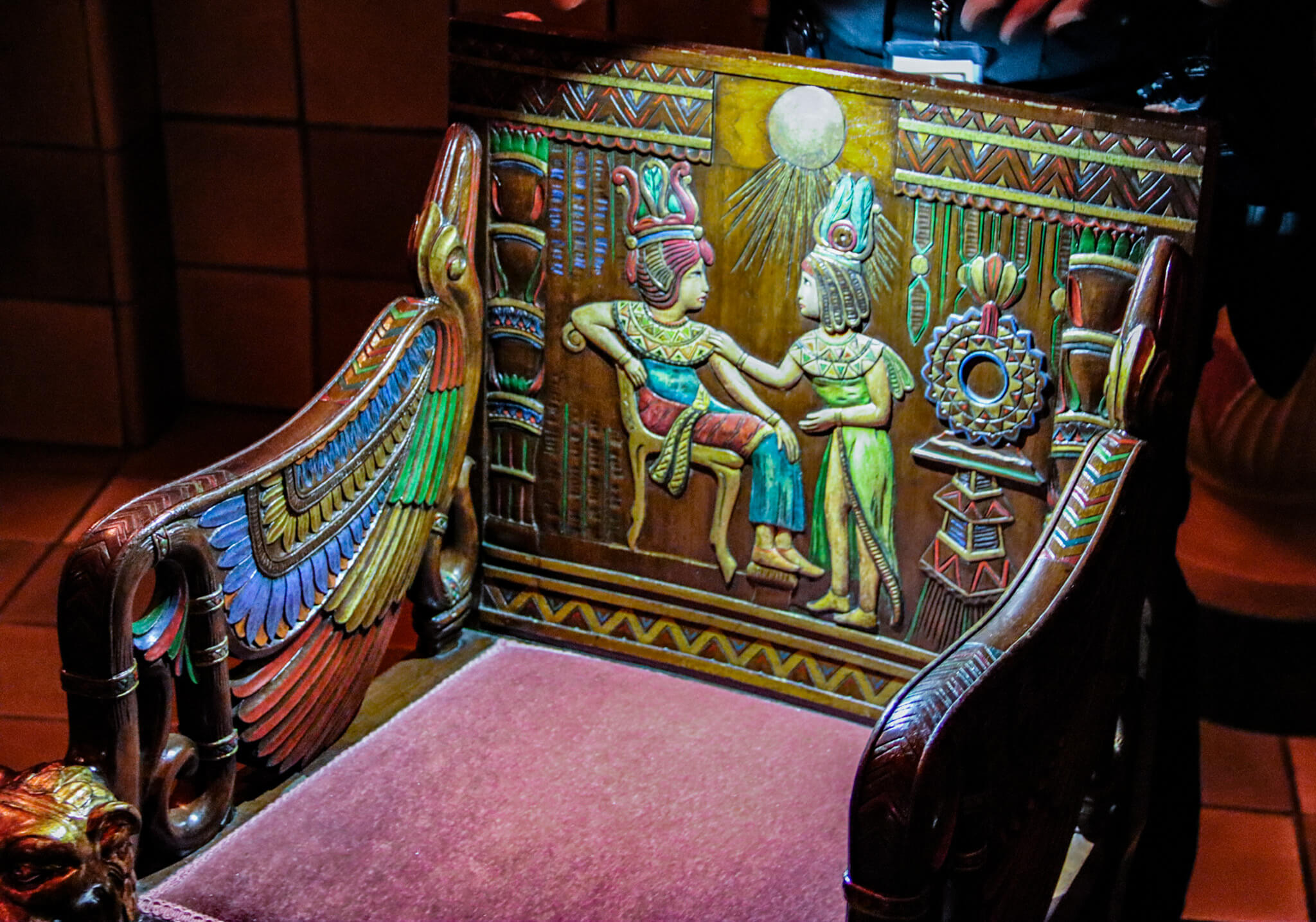
I wasn’t attending a show at Fox Theatre, but I knew I had to see the inside of this Atlanta landmark. Originally constructed in the 1920s as a headquarters for the Shriners (an offshoot of the Masons), who were running out of money for the build, the Shriners teamed up with movie mogul William Fox for him to pony up more than $3 million to complete the building. In return, Fox got a magnificent theater, styled in exotic themes. The Egyptian Ballroom, for instance, is designed after a temple for Ramses II at Karnak. In the mezzanine Ladies Lounge, two replicas of the throne chair of King Tut grabbed my attention. The wooden pair are embellished in vibrant reds, greens, yellows, and blues, and depict Tut sitting down, with, perhaps, his wife before him, gently placing a hand on his shoulder while strong sunbeams radiate down upon them from the bright orb. The substantial arms join the back in the form of a bird’s head, from which colorful feathers extend almost to the arms’ edges. These chairs are definitely not for sitting—they’re valued at about $45,000 each.
#5 Italian Chariot-Form Armchair (Maymont, Richmond, Virginia)
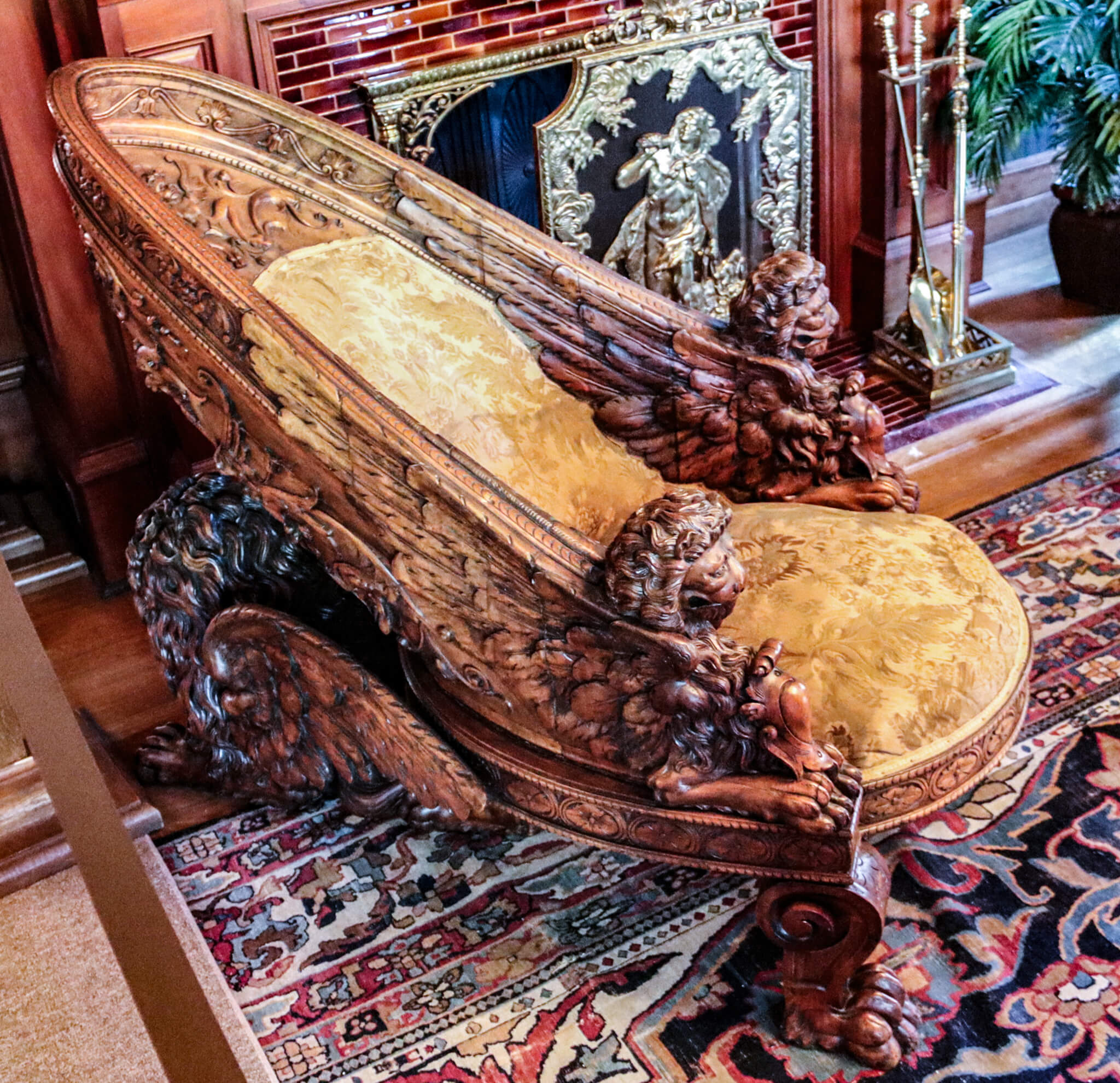
Just under three miles from my hotel in Richmond, The Commonwealth, stands the magnificent home of lawyer and philanthropist James H. Dooley. Completed in 1893, Maymont Mansion (on 100 acres of grounds that include an arboretum, Italian and Japanese gardens, a carriage collection, and nature center, all open to the public) is a striking Gilded Age pile. With more than 12,000 square feet, the mansion has lots to explore. As I made my way through its 33 rooms, two particular items stood out—the unique swan bed and this armchair. Created in the very late 19th century, this walnut armchair features an inclined, parabolic back, supported by a fully formed winged lion, hinting that the chair was made in Venice, which honors St. Mark as its patron saint, Mark’s symbol being said winged lion. The heavily carved arms terminate at the front half of a lion’s body, from which its wings spread upwards. The lion’s claw feet are repeated at the bottom of the two squat front legs. Golden-brown patterned silk fabric on the seat and back rest make the seat more comfortable, but it still seems like more of an objet d’art than a place to sink into with a good book.
Five Runners-Up
- Samuel Cupples House Chair (St. Louis University, St. Louis, Missouri)
- Seattle Wishing Chair (Smith Tower, Seattle, Washington)
- Two-Seated Teak Wood Couch (Lightner Museum, St. Augustine, Florida)
- Carved Chair (Old Courthouse Museum, Sioux Falls, South Dakota)
- Elkhorn Chair (Menor’s Ferry Historic District, Grand Teton National Park, Wyoming)
I’d Love to Hear From You!
Have you been here? Have I inspired you to go? Let me know!


 Stephen Travels