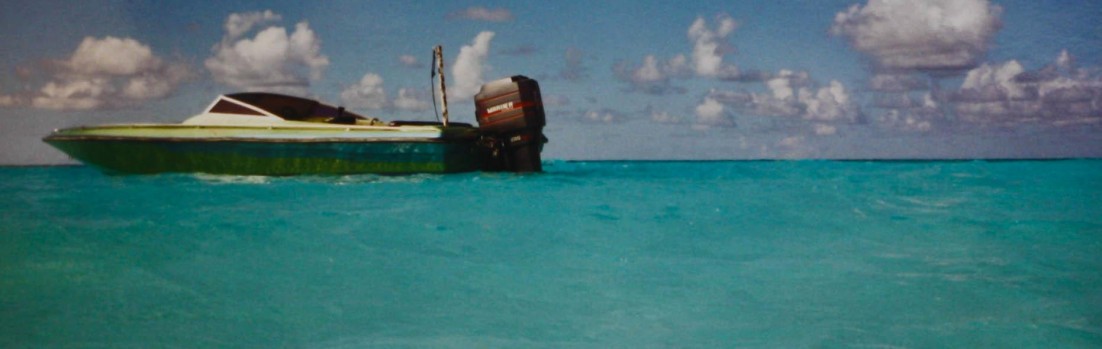
For me, the islands of the Caribbean strike the perfect balance between activity and total leisure. You can cram your days with boating, fishing, snorkeling, diving, hiking, forts, gardens, and shopping. Or you can just lie on some of the world’s most beautiful beaches all day, drink in hand, sand between your toes, with nothing more challenging to do than listening to the ebb and flow of gentle waves. The Caribbean islands offer that seductive option like no other place I’ve been. These are my favorites.
#1 St. Martin/Sint Maarten
 I utilized my friend’s family’s timeshare on St. Martin for my first venture to the Caribbean. Split in two in 1648 between the French St. Martin in the north and the Dutch Sint Maarten in the south, the island instantly had me hooked on this part of the globe. I was unprepared, and completely enchanted by, the explosion of color—the deep green mountains, the orange rooftops, the innumerable shades of blue in the water. Accustomed to New York City’s dull gray-water beaches, I instantly became a beach person when I stepped foot on the fantastic beach at Mullet Bay, and I loved how the rocks at Cupecoy Beach erupted in glorious orange hues at sunset. When I wasn’t being too idle, St. Martin offered more than enough to occupy my days. On the French side, the Butterfly Farm is filled with dozens of these colorful creatures, and the Marigot Market provides unique shopping as well as one of the world’s most beautiful gazebos. There’s plenty of excellent dining at the sidewalk bistros, and you can drive to the top of a mountain to check out the remains of Fort St. Louis, built in 1789 to defend Marigot’s harbor and warehouses from English raids. From this vantage point, I reveled in the unbeatable views of the island and the sea as I ambled around the cannons and the ruins. On the Dutch side, Sint Maarten Zoo introduced me to vervets, capybaras, peccaries, and golden lion tamarins. In the main town of Philipsburg, the pedestrian-only Old Street is lined with shops in pastel buildings. Guavaberry rum tasting is a wonderfully relaxing way to spend an afternoon. At night I won back my airfare at Lightning Casino—the perfect way to end a perfect week on this splendid island.
#2 Barbados
 With just under 300,000 people, Barbados is the most populous Caribbean island that I’ve been to, and it has plenty to see and do to support that number plus the tens of thousands of annual visitors. At the Barbados Wildlife Preserve, the staff handed me an umbrella for a sudden downpour as I walked among the free-roaming animals native to the Caribbean, including turtles and iguanas, as well as peacocks and rabbits. If you don’t get to see the green monkeys, the preserve invites you to return within the following two weeks, free of charge, to try again. When the weather was getting a bit too tropical, I escaped the heat and humidity with a cool underground exploration of Harrison’s Cave, complete with stalagmites, stalactites, and a waterfall. I had a fantastic lunch (flying fish [one of Barbados’ national symbols], pumpkin fritters, pickled breadfruit and bananas, and rice with pigeon peas) on the outdoor terrace of the Atlantis Historic Inn, overlooking the beach and Tent Bay, the white-crested waves tossing colorfully painted fishing boats and launching themselves onto the shore. My drive around the island took in banana plantations, beautiful views, quaint churches of different denominations (each parish in Barbados has its own church and post office), flamboyant trees, ripe breadfruit just waiting to be picked, Claudette Colbert’s old house, and goats and cows wandering along the road. The heart of the capital, Bridgetown, unfolds at the mouth of the Constitution River as it empties into Carlisle Bay. Two squares—Independence and National Heroes—flank both sides of the river, joined by a single-lane bridge. Around here, I found St. Michael’s Cathedral and its walled graveyard, the Dolphin Fountain, and the striking neo-Gothic Parliament Building with its iconic clocktower, now celebrating its 150th birthday.
#3 Grand Cayman
 For my week on the largest of the three Cayman Islands, I stayed along Seven Mile Beach. Every late afternoon, once the heat of midday had subsided, I would throw myself into the Caribbean and then set myself up on the soft sand to watch some of the world’s best sunsets before having yet another outstanding dinner at places like Beach House, Copper Falls Steakhouse, and Ferdinand’s. When I wanted to get off the beach (whether I was relaxing on Governor’s Beach or wading through the crystal-clear waters at Rum Point), I had my choice of options. I spent some time at Camana Bay, a mixed-use development with apartments, offices, shops, a movie theater, and restaurants, lined with native Cayman flora and small water features, wild poultry crossing the road at will, and skittish little iguanas scurrying about while larger ones took their time climbing up walls, trees, and fences. The 75’-tall Observation Tower offers a panoramic view, but the best thing is its mosaic of three million glass tessarae, reaching up the entire five flights of double-helix stairs. The mosaic depicts Cayman’s reefs and marine life; it’s the largest of its kind in the world. At the National Gallery, I took in a photography exhibit, installation art, and oil paintings by Cayman artists, and at the Cayman Turtle Centre / Island Wildlife Encounter, I watched several dozen enormous green turtles, at least 10 years old and up to 500 pounds, swimming about and walked around the grounds that contain a nature trail, a shark pool, and an aviary, with scarlet ibis, Cayman parrot, finches, and other tropical birds. History comes alive at Pedro St. James, a plantation house built by slave labor in 1780. It was the largest house, and the first stone house, on Grand Cayman, and remains its oldest building. At the 65-acre Queen Elizabeth II Botanic Park, keep an eye out for the island’s large blue iguanas and some scary-looking spiders motionless in the center of their intricate webs. Along the southern shore at Blow Holes, waves crashing into the shore force water into little caverns and send geysers shooting up as high as 20’. If you have a curious dark side, then you can go to Hell—an area of short black limestone formations, about the size of half a soccer field, with an occasional wooden figure of Satan. At the fire engine–red gift shop and post office, you can have your postcards stamped with “Hell” on the postmark.
#4 St. Kitts
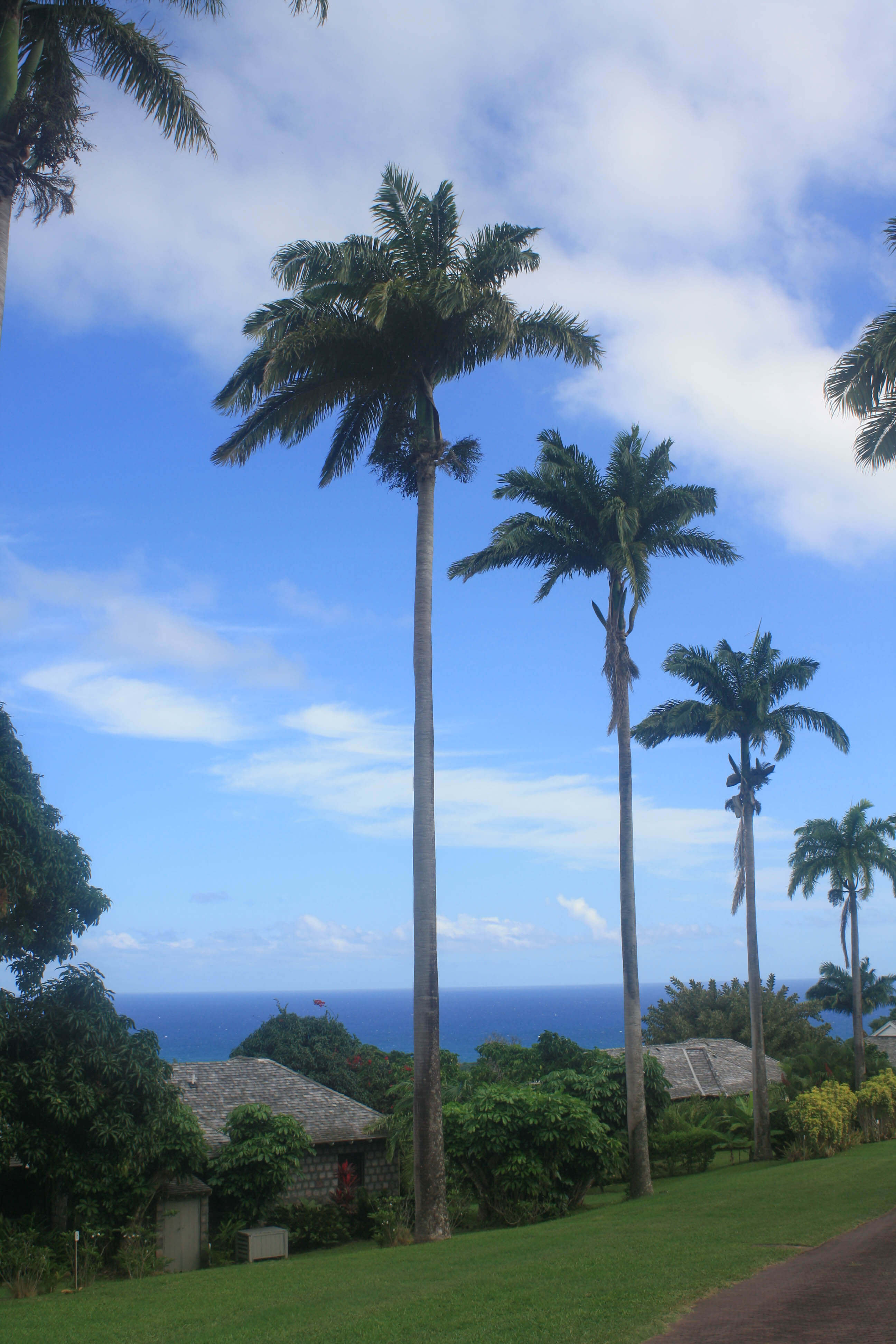 My accommodations, Ottley’s Plantation Inn, offered enough diversions to make it difficult to leave the property, but, at some point, I had to spend time checking out the rest of island’s 65 square miles. The 18-mile Scenic Railway is a five-car train that runs along a narrow-gauge railway—the only remaining train in the West Indies, a remnant of the sugar industry, built between 1912 and 1926 (and operated as such until 2005)—and offers beautiful views of the interior, Atlantic, Caribbean, and the neighboring island of St. Eustatius; four bridges; and ruins of old sugar plantations. Brimstone Hill Fortress National Park dates back to the 1690s. At 800’ above sea level, it boasts a commanding view of huge swaths of the island and the Caribbean. The expansive complex includes Fort George, designed by the British to defend against other European colonizers and built by African slaves; a couple of bastions; over a dozen cannons; and ruins of the hospital and officers’ quarters. Amid the crumbling masonry structures of the ruins of Wingfield Estate, archaeologists uncovered relics from the estate’s heyday as a tobacco and indigo plantation and as a sugar plantation and rum distillery. At Romney Manor, a sugar estate established in 1625 by Samuel Jefferson (Thomas’ great-great-great grandfather), the owner, in 1834, went against the British Parliament and freed his slaves, thus becoming the first estate in St. Kitts to do so. On the lush grounds is a 400-year-old Albizia saman tree (with a circumference of 23’ and a canopy that covers two-thirds of an acre, it’s one of the largest such trees in the Western Hemisphere) and Caribelle Batik, a company that has mastered the Indonesian batik art form of resisting dye with wax to create a host of products, from shirts to eyeglass cases. Organized nature can be found at the 20-acre St. Kitts Eco-Park, which includes the Herbal Garden, tropical fruit trees that produce fruit all year, a tea house, the Desert Garden, rose garden, and the largest multifunctional greenhouse in the Caribbean. Unspoiled nature abounds, too, including at Black Rocks—black volcanic cliffs and rock formations standing in the Caribbean that are the legacy of lava flow from a long-ago eruption of Mt. Liamuiga.
Over time, the capital of Basseterre, founded in 1627 by the French, has been ruined by colonial wars, fires, earthquakes, floods, riots, and hurricanes. Although fairly rundown, there are some gems here. The Palms Court Gardens features Roman statues and fruit trees, just down the road from the War Memorial, an obelisk honoring natives who served and died in World War I. The National Museum, in the old Georgian-style Treasury Building, provides a chronology of the island from its discovery through independence, in 1983, when it became the newest state in the Americas and the only nation with a seat in the United Nations that does not have a single traffic light. Near the semi-controlled chaos of the Circus, a roundabout centered with the Berkeley Memorial, a green clock tower that doesn’t work and a drinking fountain that does, is the handsome St. George’s Anglican Church, restored in 1869. Along Independence Square (ironically the former site of the slave market) stands the Basseterre Co-Cathedral of the Immaculate Conception, built in 1928 with two bell towers, a rose window, stained-glass windows, and a bizarre use of neon lights. Of course, Kittitian food is another of the island’s big draws. Whether it’s a scrumptious dinner at the restaurant at Ottley’s, or lunch at Ballahoo or Creole, it’s bound to be delicious. And one in particular comes with a view: From Frigate Bay, where you’ll find a casino, I took in one of the world’s most beautiful drives, down the Southeast Peninsula, with its stunning views of green mountains and impossibly blue water, to the road’s end at Cockleshell Bay Beach, where I enjoyed lunch at Spice Mill Restaurant while looking across The Narrows to St. Kitts’ sister island, Nevis. If you’re a strong swimmer, the two-mile strait invites you to swim from island to island.
#5 Antigua
 When your day starts with a complementary rum punch with a cinnamon kick, it can’t possibly go wrong. I was handed my morning elixir at Nelson’s Dockyard, the Western Hemisphere’s only working Georgian dockyard for ship repairs, created in the 17th and 18th centuries before being abandoned by the British navy in 1889. Antigua is a dramatically beautiful island, and I best appreciated its green mountains and irregularly shaped watery inlets (and a distant view of Eric Clapton’s house) from Shirley Heights Lookout. The island’s best viewpoint, a restored military lookout and gun battery, boasts views of English and Falmouth harbors, from a height of nearly 500’ above sea level. When it was time to relax, I was happy to learn that Antigua has 365 beaches along its 95 miles of shoreline—one for every day of the year. For my day here, I headed to Dickenson Bay on the island’s northwestern coast, where the shallow, calm, green-blue waters and the white sand lull your body into an incomparable state of bliss.
Five Runners-Up
- Anguilla
- St. Thomas
- St. Barts
- Aruba
- Nevis
Leave a Comment
Have you been here? Have I inspired you to go? Let me know!


 Stephen Travels