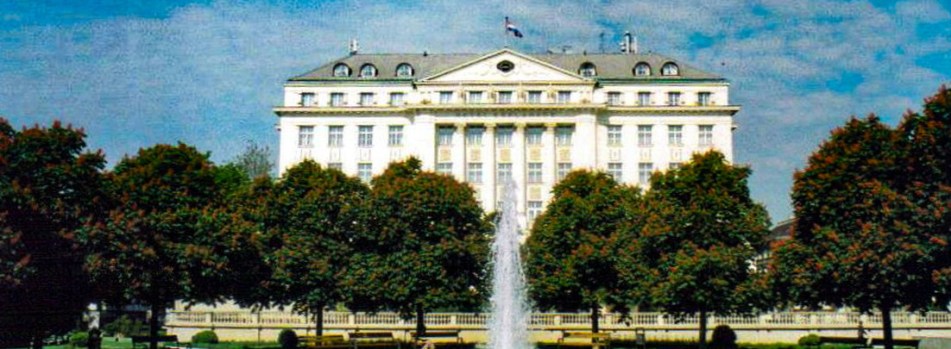
After I had spent a week soaking in the sights and sun of Dubrovnik and Split on Croatia’s spectacular Adriatic littorals, I turned inland for something completely different. As I emerged from the main train station in the heart of Zagreb, everything changed like a shot in a very dramatic fashion—this is one of the world’s best arrivals. The Mediterranean vibe instantly vanished, replaced by a pronounced Central European aura and a proliferation of Baroque architecture. Tourists became scarce, and just about all foreign languages dropped off the Croatian menus. I couldn’t understand why this mini-Vienna wasn’t more popular, but I was also glad that I had apparently discovered a place most people overlook. I reveled in the city’s uncrowded sites, rode the efficient streetcar to an outstanding cemetery, savored very fine red Croatian wine, and took in the museums and markets—all against a background of some very impressive buildings. These are my favorites.
#1 Croatian National Theatre
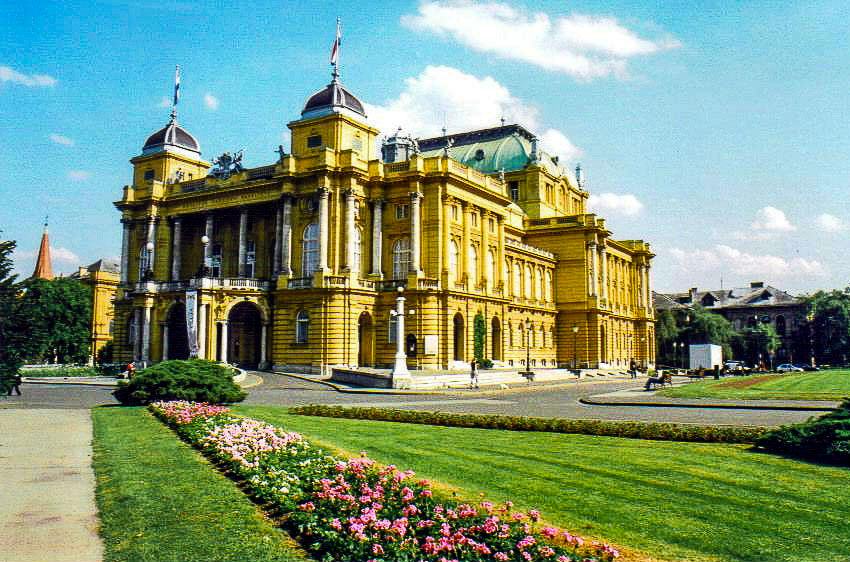 Surrounded by green grass and rows of pink and white flowers in the middle of Marshal Tito Square, the Croatian National Theatre in Zagreb is a neo-Baroque masterpiece. With the exception of the roof, some statues, and the columns, many of which contain the masks of comedy and tragedy in their capitals, the entire building is a bold yellow (one of the world’s best things that are yellow). After only a year and a half of construction, Austrian Emperor Franz Joseph I officially opened the theater in 1895. At the front entrance, two short twin towers rise above the porte cochère, and busts of four poets and composers look down at arriving patrons. Since its opening, the theater has been devoted to drama, opera, and ballet, and has hosted the talents of such performers as Sarah Bernhardt, José Carreras, Franz Liszt, and Sir Laurence Olivier, who have played to a capacity audience of just over 700 who probably admired the building as much as the artists. Make sure you go inside to check out the lobby, the ceiling murals, and the auditorium with its box seats and parade of identical caryatids. It’s one of the top five things to see in Zagreb.
#2 Cathedral of the Assumption of the Blessed Virgin Mary
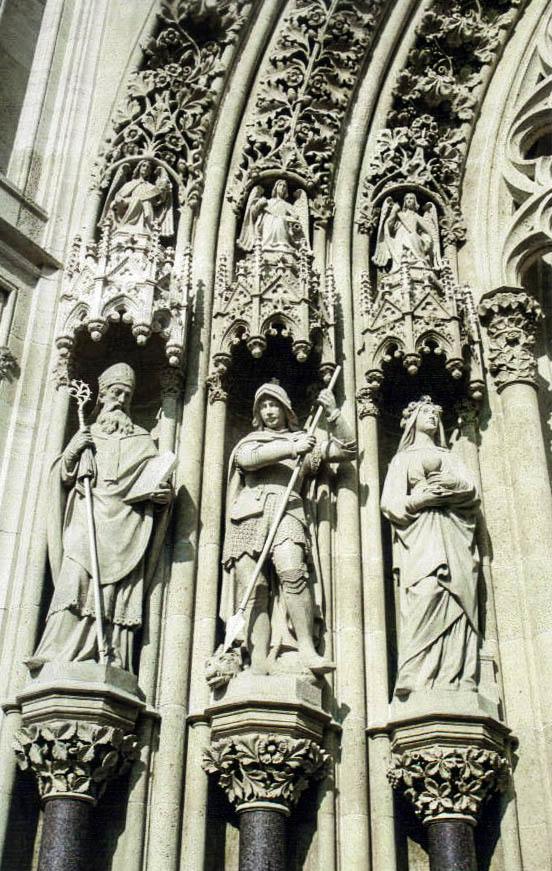 The tallest building in all of Croatia is neither of the usual suspects for most countries today—an office tower or a high-rise residential block. Rather, it’s the Cathedral of the Assumption of the Blessed Virgin Mary, originally dedicated to the Hungarian king St. Stephen and now more handily referred to as Zagreb Cathedral. One of the highlights in the Upper Town, Croatia’s largest house of worship was built in the mid-1200s. Throughout the centuries, it survived fires and Ottoman attacks, but it was the devastating earthquake in 1880 that almost put an end to it. An expansion project and repairs took a quarter century to complete, but in 1906 the cathedral emerged with its current neo-Gothic appearance and two spires that top out at 354’ and can be seen from countless spots throughout the city. Inside, you’ll find some finely sculpted statues, elaborate chandeliers, a baroque marble altar, a 13th-century cycle of frescoes, and an inscription of the Ten Commandments in 12th-century Glagolitic script, the oldest known Slavic alphabet and unique to Croatia.
#3 Arts and Crafts Museum
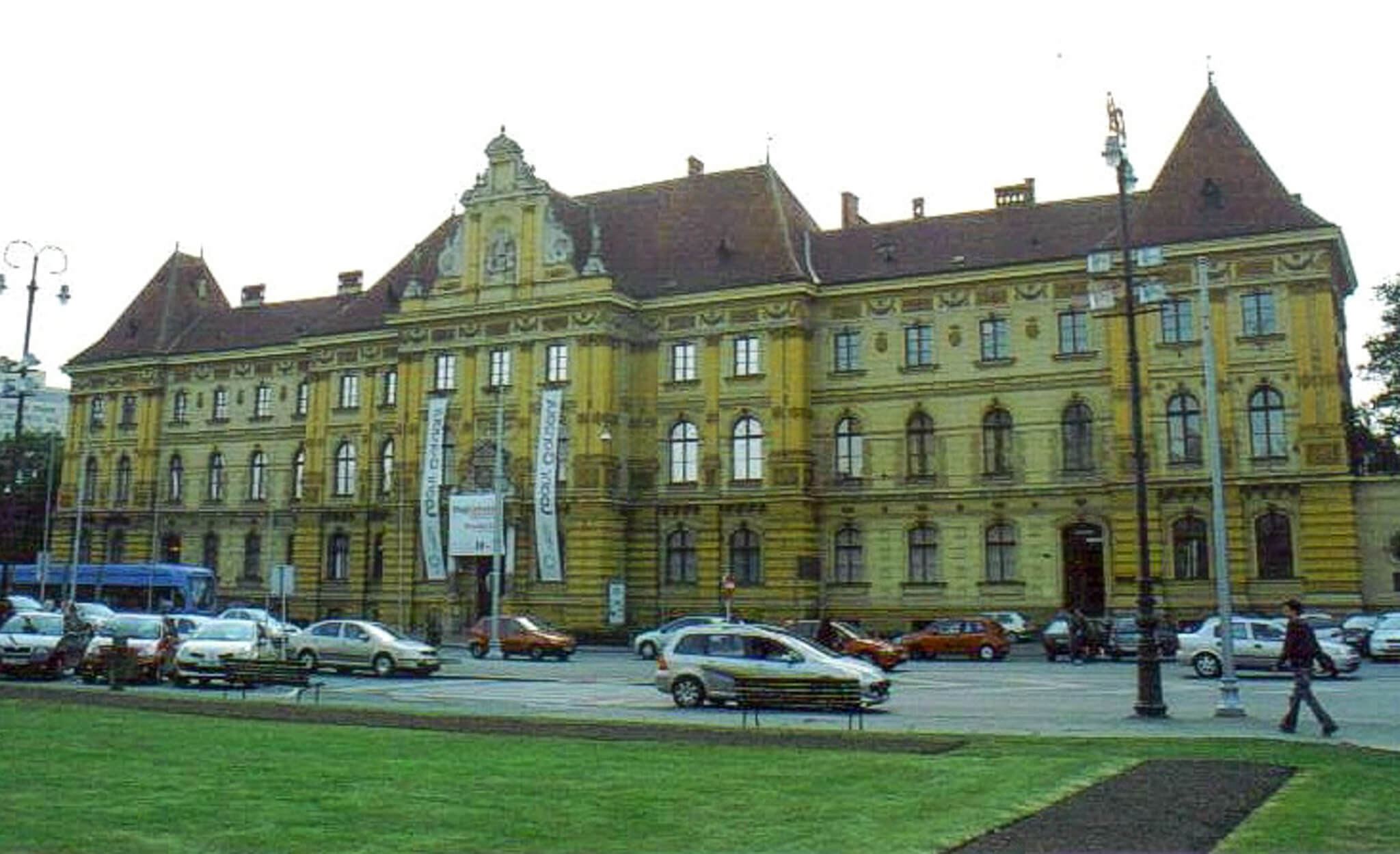 Across the street from the rear of the Croatian National Theatre, the Arts and Crafts Museum stands as the first purpose-built museum in Croatia, housing both the museum and a school. Initially conceived of as a museum for the Arts and Crafts movement in England, it included the potential for future (lower-case) arts and crafts movements. This grand historicist palace, completed in 1888, is large enough to hold 100,000 objects spanning from the 14th to the 20th century. Its handsome architecture captures the spirit of the German Renaissance. Two recessed wings extend from the central section, terminating in corner towers. In the central section, a pair of volutes above the entrance are repeated in the gable at the slanted red roof with tiny dormer windows. The entire building is united by recurring garlands and panels below the roofline, pilasters, and three styles of windows, a unique design for each floor.
#4 Croatian State Archives
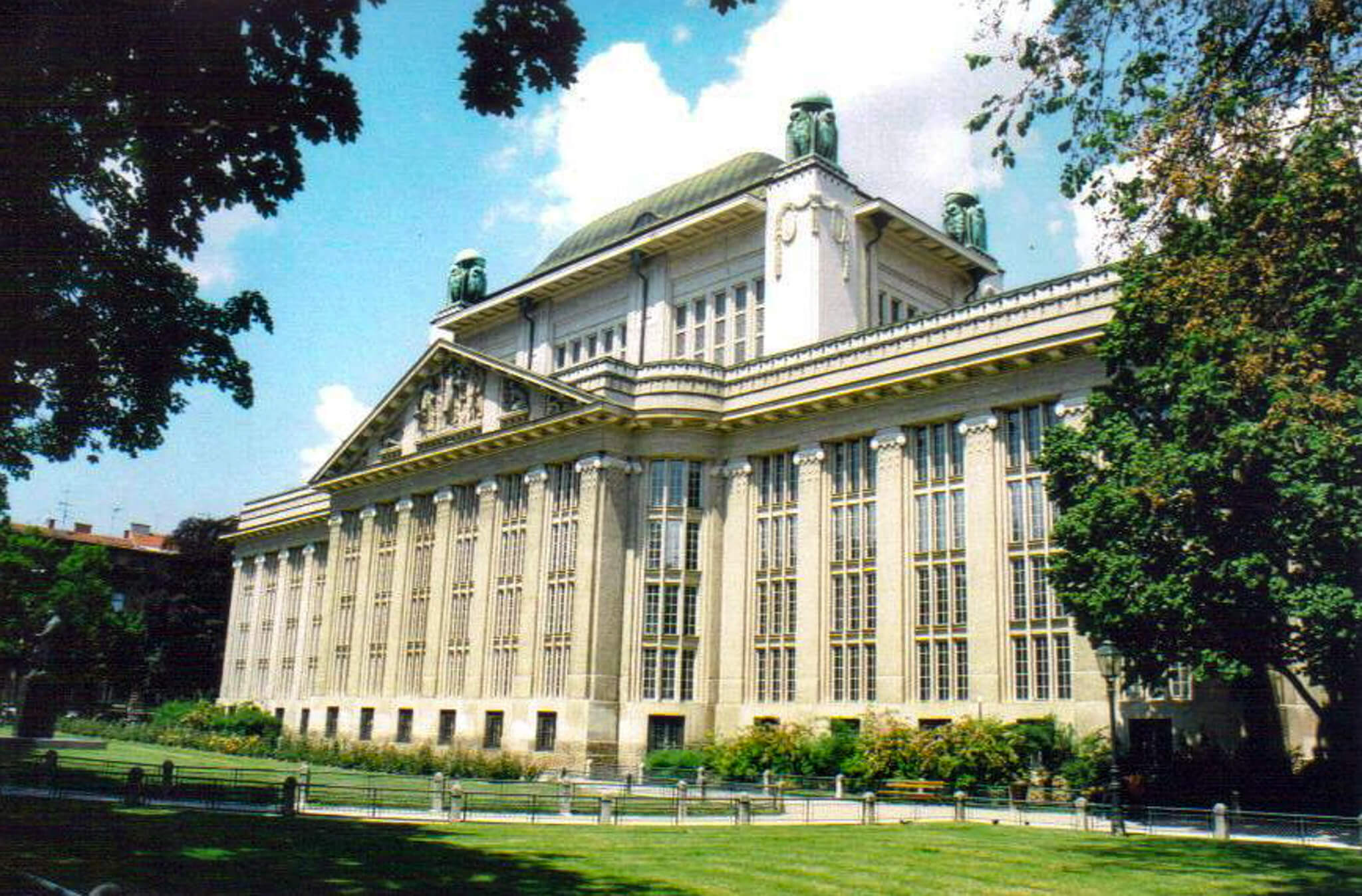 I had absolutely no reason to go inside the Croatian State Archives building, so I didn’t. That didn’t mean I couldn’t admire this building that I noticed on my way to the Botanical Garden across the street. Purpose-built for the University Library and the National Archives in 1913, this building is Zagreb’s most majestic art nouveau achievement. More than 260’ long and 150’ wide, the building features a high dome cornered by four pillars with four large verdigris-green owls each, supporting globes and referencing the wisdom held within the building. Above the rear entrance, sculptural groups allegorically represent philosophy, medicine, law, and theology. The front entrance sports a pediment with allegorical figures of education (while a lone cave-dwelling figure is bookless). In retrospect, I should have stopped in—the lobby and atrium are adorned with mosaics, marble, intricate ironwork, and sparkling leaded glass, and the Great Reading Room is filled with art nouveau chandeliers and desk lamps as well Development of Croatian Culture, a fine painting portraying major figures from Croatian history.
#5 Croatian Academy of Sciences and Arts
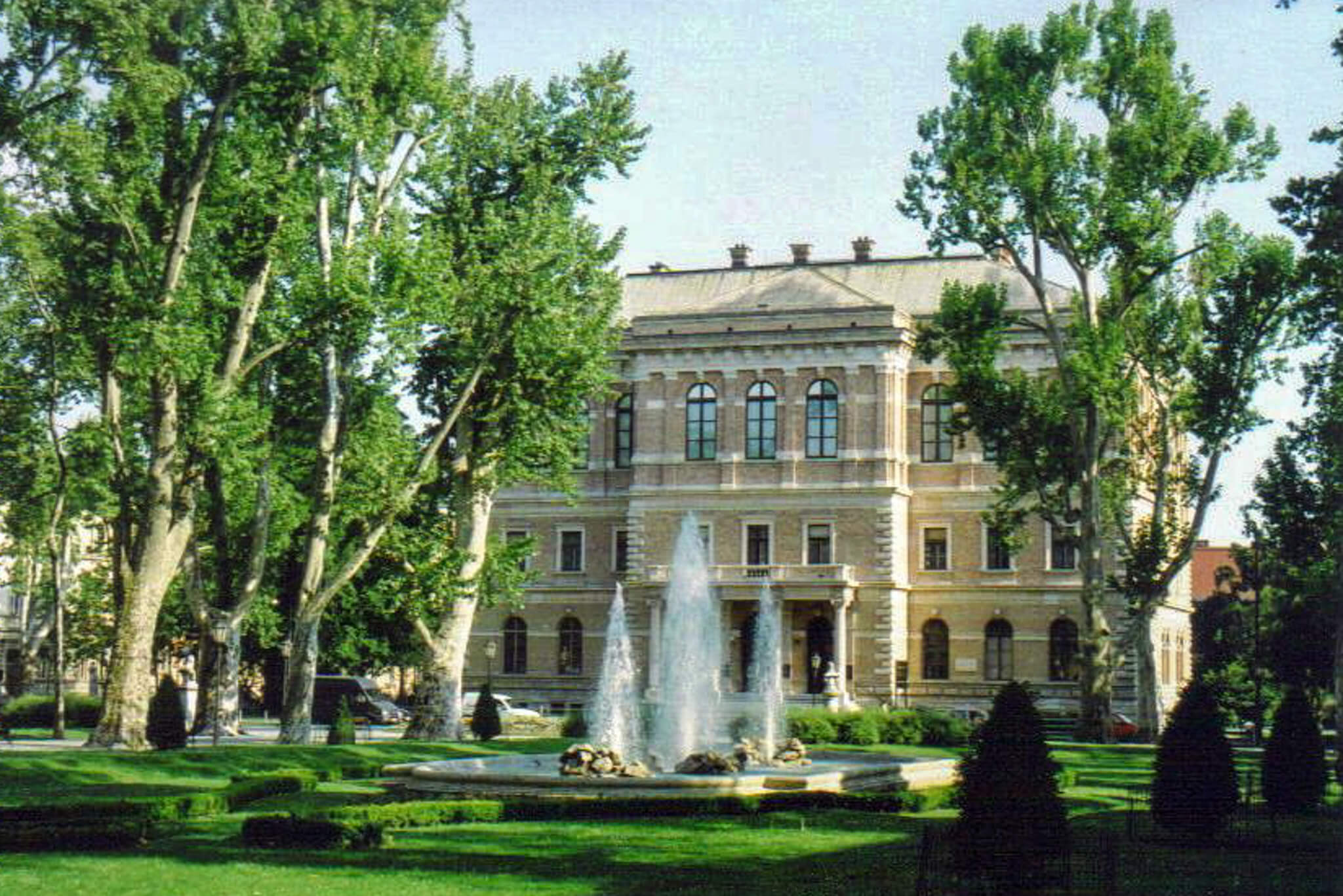 At the edge of one of the three adjacent parks that flow up from the city’s central train station, the neo-Renaissance Croatian Academy of Sciences and Arts building has been a firm fixture in the city’s cultural scene since 1880. A wide staircase, curved at the edges, leads up to the main entrance covered porch, with rusticated quoins and lionhead keystones above the three entrances, supported by four fluted Corinthian columns. Inside, you’ll love the elegant arcades and atrium, and the grand staircases. You’ll also want to head inside in order to visit the Strossmayer Gallery of Old Masters, with its collection of Italian, French, and Northern European painters from the 14th through the 19th century, with a little bonus smattering of Croatian artists. On your way out on the ground floor, don’t forget to take a look at the Baška Tablet, a stone slab from the 1200s engraved in Glagolitic.
Five Runners-Up
- Croatian Railway Headquarters (1903)
- Esplanade Zagreb Hotel (1925)
- Roman Catholic Church of St. Mark (14th century)
- Croatian School Museum (1901)
- Croatian-Slavonian Central Savings Bank (1905)
Leave a Comment
Have you been here? Have I inspired you to go? Let me know!


 Stephen Travels