All 16,700 residents of Vincennes, Indiana, seemed to be asleep when I arrived on a Sunday morning. Everything was closed. The streets were quiet, save for a passing car or two. Even the campus of Vincennes University was deserted. Vincennes has seen a shrinking population since 1980, when it peaked at just under 20,000. But that was okay for me. I was here on little day trip out of Indianapolis, and I felt like I had the entire city to myself. That’s a great way to enjoy the city’s collection of handsome buildings. These are my favorites.
#1 George Rogers Clark Memorial
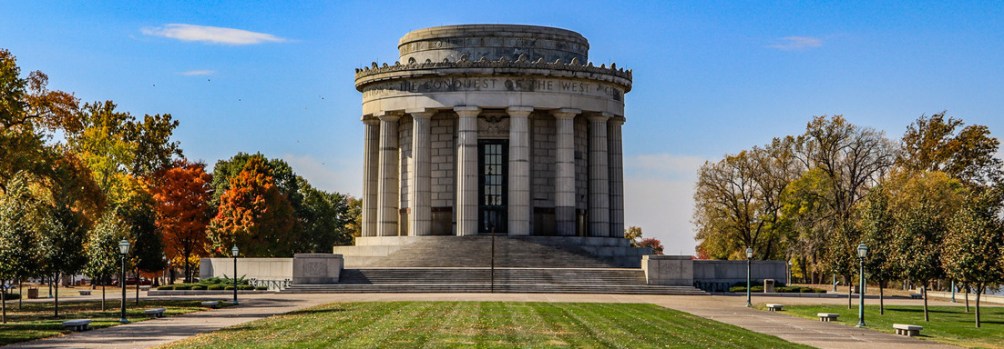
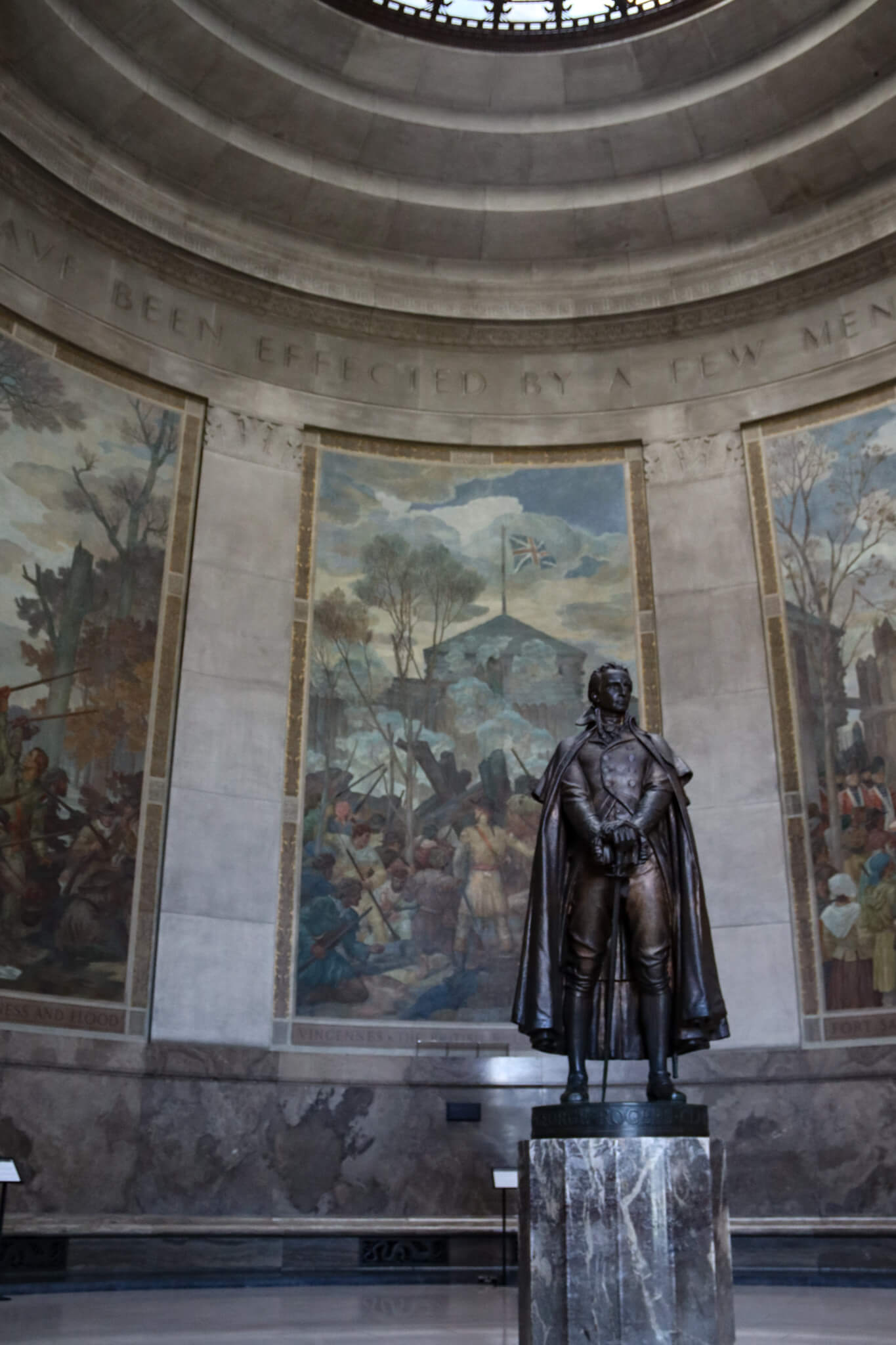 George Rogers Clark National Historical Park unfolds on the banks of the Wabash River, across from Illinois. After parking at the nearly empty visitor center, I sat down to watch the orientation film, a rather fascinating exploration of how, in 1779, Lieutenant Colonel Clark led the capture of Fort Sackville and British Lt. Governor Henry Hamilton as part of the celebrated (and top-secret) Illinois Campaign, which lasted from 1778 to 1779. The heroic march of Clark’s men from Kaskaskia on the Mississippi River in mid-winter through icy water and with little to no food and the subsequent victory over the British remains one of the most memorable feats of the American Revolution and opened up the Northwest Territory to American expansion. After the film, I had to fetch one of the rangers to escort me to the centerpiece of the park, the George Rogers Clark Memorial, that honors this pivotal figure whom I had previously known nothing about. Completed in less than two years by 1933 and dedicated by Franklin D. Roosevelt in 1936, the memorial is approached by a broad staircase of 30 steps. The circular Beaux-Arts marble and granite temple, ringed by fluted Doric columns, reaches 80’ high and 90’ across, and features formidable 2’-thick walls. After the ranger unlocked it and granted me access, I checked out the bronze statue of Clark in the rotunda under the glass saucer dome and the seven tall murals (16’ wide and 28’ high) depicting the key events of Clark’s campaign. It’s a striking building, perfectly appropriate for one of the Revolutionary War’s most important figures.
#2 Basilica of St. Francis Xavier
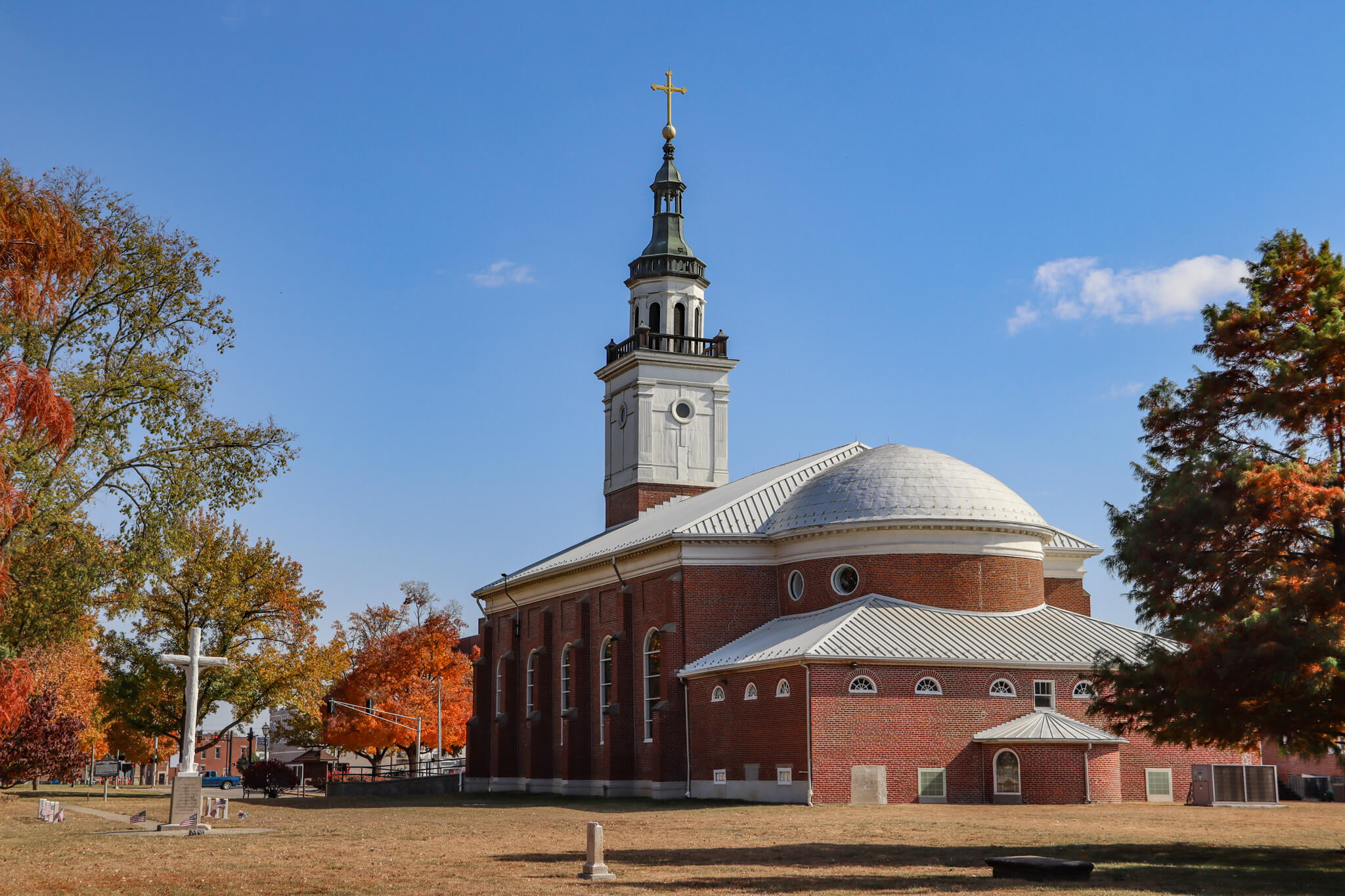 Opposite from George Rogers Clark National Historical Park, the Basilica of St. Francis Xavier has been standing proudly since 1826, although the parish itself is much older, dating back to about 1734, making it the oldest Catholic parish in Indiana. I approached it from the rear, through the adjacent cemetery in which more than 4,000 early citizens of Vincennes rest in peace, noting the dome over the apse, and the circular and lunette windows. The simple front of the brick Greek Revival–style basilica features three entrances at the top of the wide staircase, each with a statue above it in an arched niche: St. Joan of Arc, St. Francis Xavier, and St. Patrick. There’s a simple bull’s-eye window in the middle of the dentil pediment. Inside, be sure to check out the 14 oil paintings of the Stations of the Cross, added in 1883 from France; the 1908 stained-glass windows depicting the Four Evangelists; and the large Doric columns made of yellow poplar, encased in plaster and painted to resemble marble. In the 1830s, a slightly oversized bell tower with a clock and topped by a cross was added for the unthinkable price of a mere $1,566.
#3 Former Second National Bank
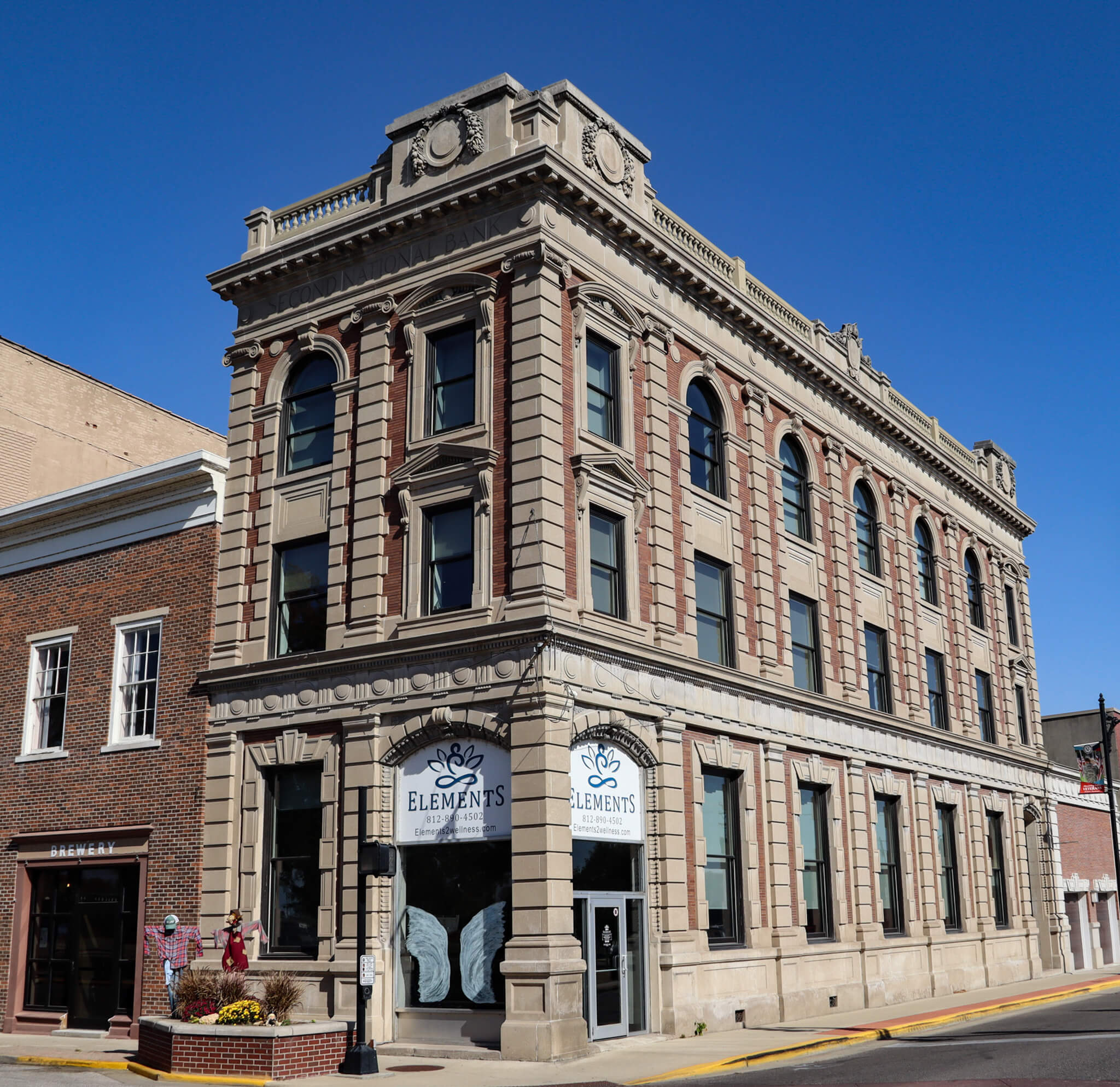 Occupying a corner lot in downtown Vincennes, Second National Bank began with a bang—quite literally. It was preceded on the same location by the Vincennes National Bank, organized in 1865. On July 5, 1892, the then bank president Wilson M. Tyler drove his horse and buggy to the cemetery to visit the grave of his daughter, who had died four years prior. At the grave, Tyler shot himself. Shortly after his suicide, the bank was found to be insolvent, having suffered massive losses, and was placed into receivership. Thus, the rise of the second bank. Built in 1912 by local architects, the neo-Classical Second National Bank incorporates a heavy use of Greek-inspired elements, such as repeated use of square stone pilasters topped by ionic capitals. Ten different window designs and hoods were included by the architects to make a statement—and to draw new clients to their offices on the third floor. Although the bank didn’t operate in this building for very long, you can still see its name inscribed high on the façade on two sides, just below the roofline balustrade.
#4 Former First Presbyterian Church
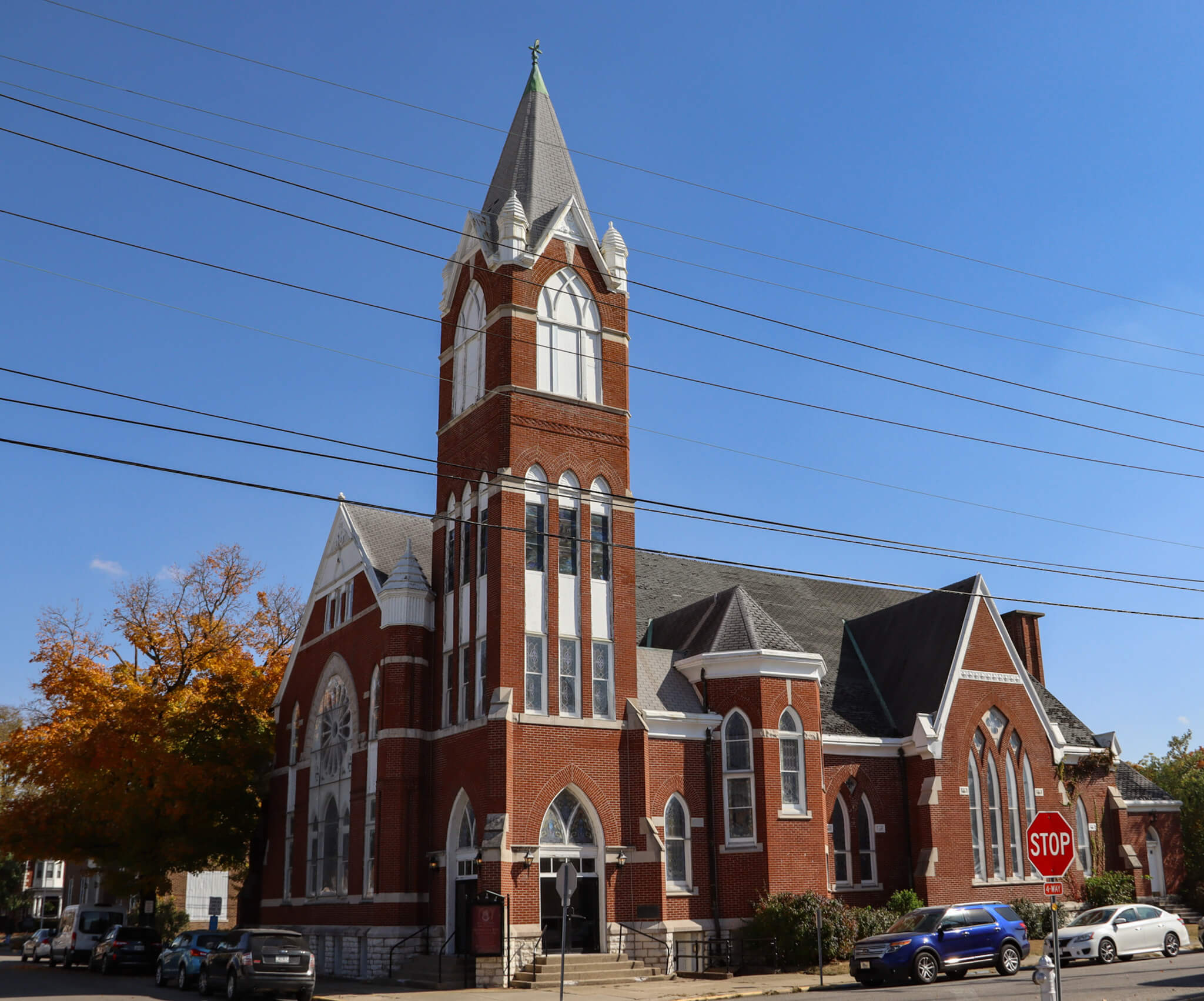 Now the New Life Holy Cathedral, this corner building began in 1899 as First Presbyterian Church (1899). A creation of Vincennes architect John W. Gaddis (who also designed the Vincennes Masonic Temple), the brick church is a typical example of the Romanesque Revival style. There are plenty of windows with lots of pointed arches and a rose window on one side. The façade is an irregular pattern of recessed and projected sections that make it visually curious. Entrance is through the corner tower. Look way up to the top of the steeple to see the verdigris-green decorative element that may be a flower but looks, to me, more like an ocean liner propeller.
#5 Former First Baptist Church
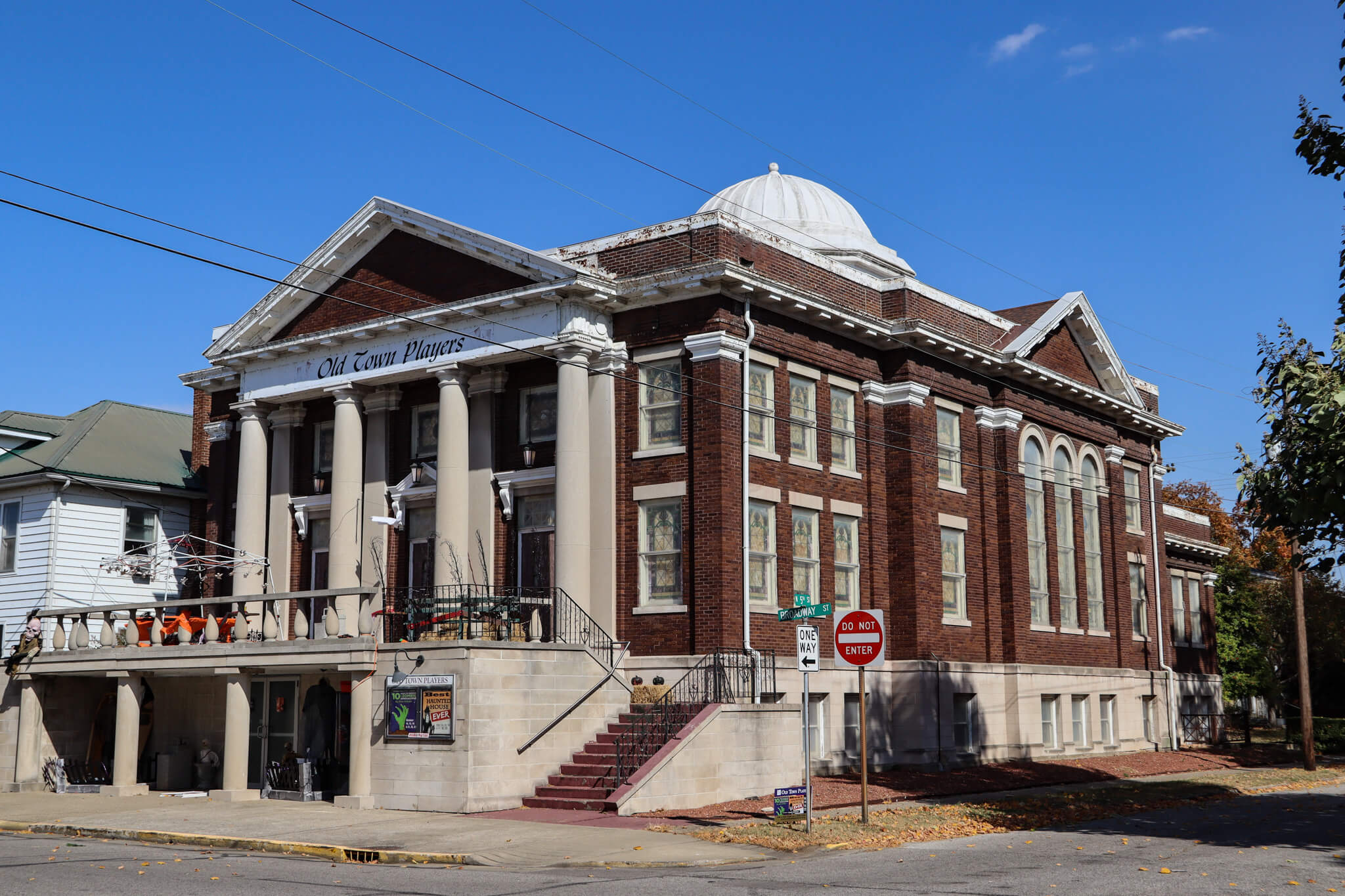 Designed by the same architects as the Second National Bank, First Baptist Church was completed in 1913 in the Classic Revival style. This temple-like brick structure sports lots of stained-glass windows and a large central dome. The front entrance features large stone pillars supporting a plain triangular pediment. Originally, entrance was gained at the top of a long flight of steps, but in 1964, to increase accessibility, most of the stairs were removed and replaced by a street-level entrance, now topped with a broad platform with a balustrade, with one staircase remaining on the right. After the congregation constructed a new church, the building was acquired by the Old Town Players Theatre & Arts Center in 1966. OTP still holds its productions here. The building needs a little TLC, but you can contribute to that effort by attending one of the OTP performances and sit in one of the original church pews.
Five Runners-Up
- Knox County Courthouse (1874)
- Brevoort House (1883)
- Former First National Bank (1913)
- St. James Episcopal Church (1907)
- Grouseland (President William Henry Harrison Mansion) (1804)
Leave a Comment
Have you been here? Have I inspired you to go? Let me know!


 Stephen Travels