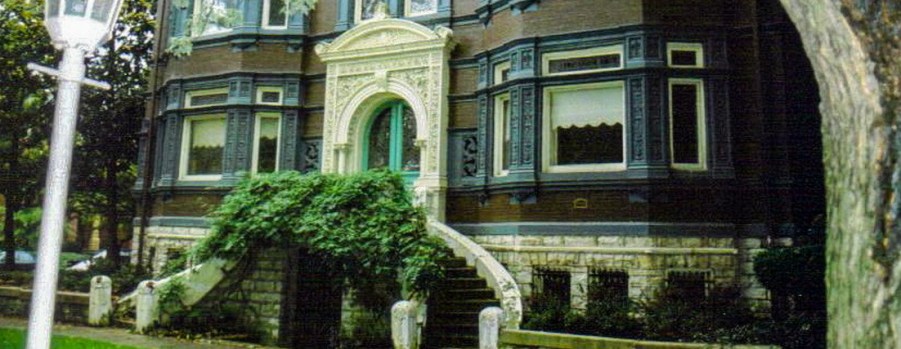
One of my biggest surprises in Louisville was the diversity of the city’s architecture. It wasn’t what I expected when I planned to spend a day or two here, and such unanticipated delights is one of the joys of travel. Throughout downtown and especially in Old Louisville, one of the most beautiful historic districts in the United States, I was consistently awed by some truly gorgeous manmade structures. These are my favorites.
#1 Conrad-Caldwell House
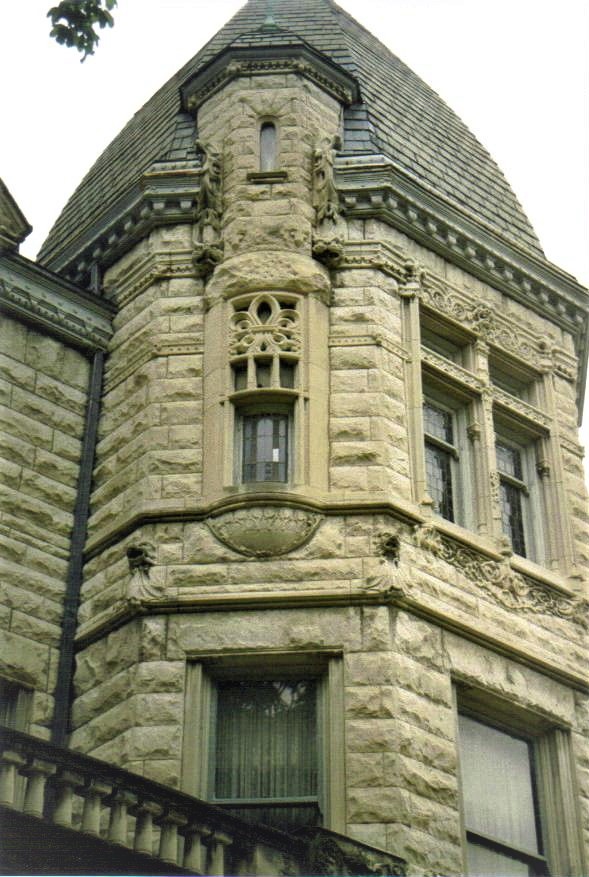
With a lion resting on a stone base at either end, St. James Court epitomizes the gentility of the 1,200-acre Old Louisville Historic District, one of the most beautiful historic districts in the United States. A wide, grassy meridian with lampposts and a fountain (a replica of the 1892 original) guarded by a circular wrought-iron fence centers the refined tree-lined street. Some of the district’s most impressive houses flank the court, anchored at its southern end by Central Park and the castle-like Conrad-Caldwell House. This Richardsonian Romanesque limestone pile was completed in 1895 with such neoteric inventions as electric lighting, natural gas piping, and indoor plumbing for a tannery owner, who lived here for only 10 years, until the time of his death. Since then, the house has been occupied by a wooden and steel tank manufacturer, the Presbyterian Church, a home for elderly women, and, since 1987, a museum. With its heavy double arches and columns at the entrance, towers, carvings of animals and gargoyles, intricate foliation, and wide variety of fenestration, “Conrad’s Castle” is a masonry masterpiece. Step inside for the tour and you’ll be awed by outstanding stained-glass windows, parquet floors, custom-made radiators, more than 120 carved fleur-de-lis on the first floor alone, coffered wainscoting, and spectacular woodwork, crafted from seven different types of wood—birdseye maple, cedar, cherry, cypress, golden oak, spruce, and walnut. You’ll be duly impressed.
#2 City Hall
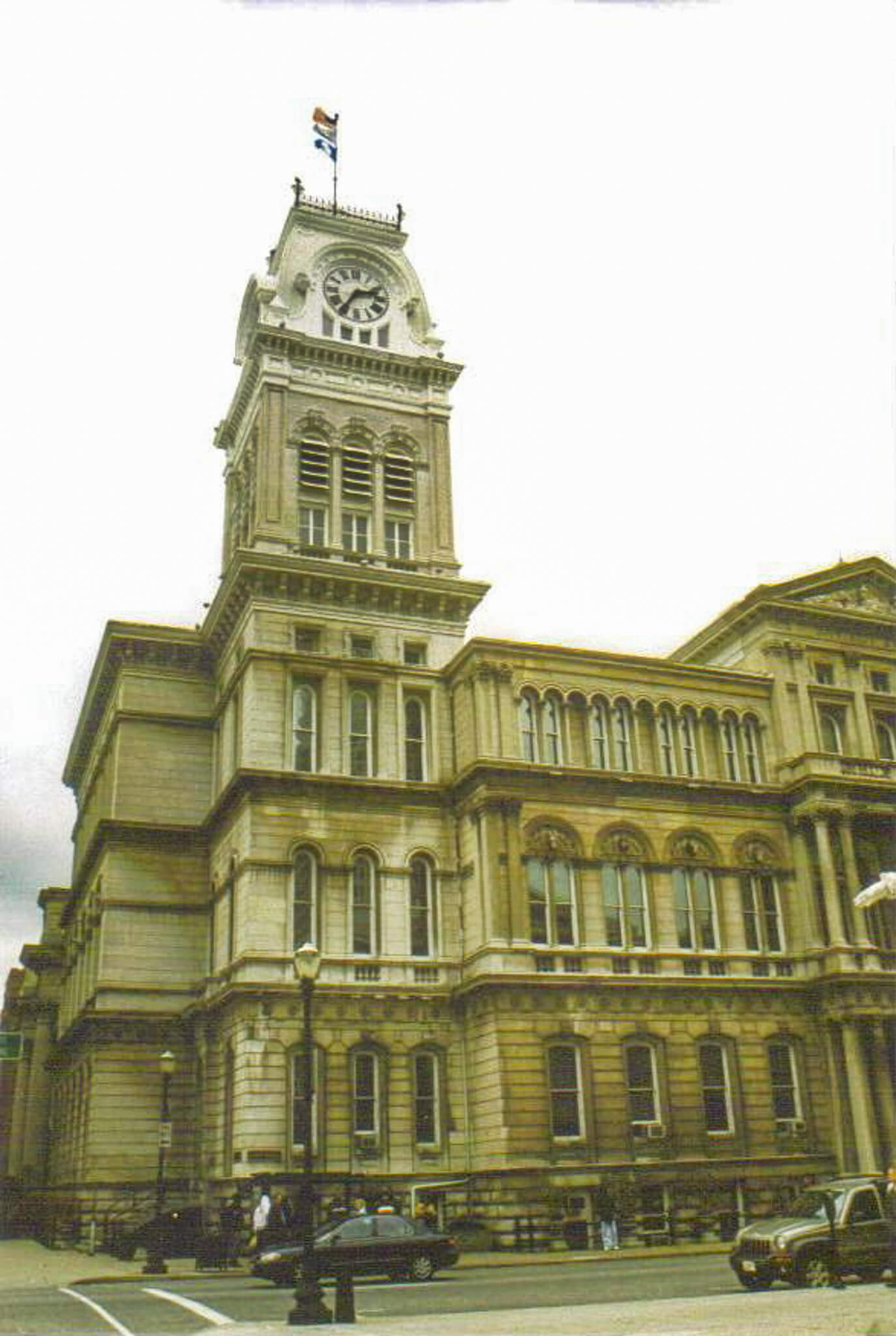
Louisville’s City Hall began with a design competition in 1867. Plans were finalized in 1870, construction began in 1871, and in 1873 City Hall was open for business, totaling a hefty price tag of $464,778. The three-story limestone building with a raised basement is a blend of Italianate and French Second Empire styles, both prominent in post–Civil War civic buildings. There’s a lot to admire here. At the corner rises a beautiful 196’-high, four-faced clock tower with a mansard roof and three-ton bell, completed in 1876 after the original was damaged by fire the year before. There’s a liberal use of columns and pilasters. And you’ll enjoy the search for the abundant use of symbolic ornamentation. Stone livestock carvings along the sides of the building reflect the importance of the city’s stockyards as a major contributor to Louisville’s economic prosperity. And my favorite element is high up over the main entrance, the bas relief in the pediment—an old-fashioned locomotive plowing through the wilderness of Southern flora and a palm tree, bearing the slogan “Progress 1871.” Placed on the National Register of Historic Places in 1976, City Hall remains as impressive today as it was more than a century ago.
#3 Ferguson Mansion
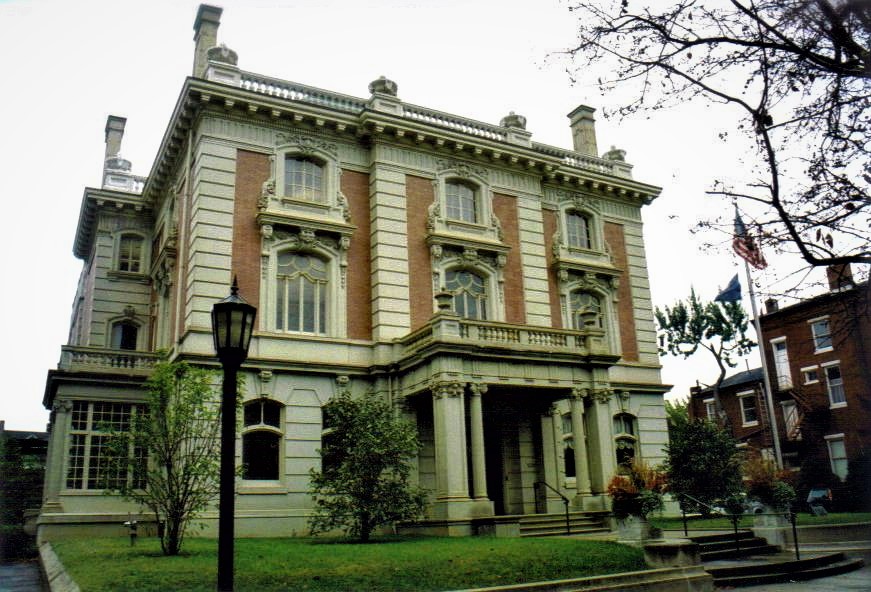
My stroll around Old Louisville also brought me to Ferguson Mansion, one of this historic district’s most impressive homes. Indeed, when it was completed in 1905, the 30,000-square-foot, five-story building cost $100,000, the most expensive mansion in town. This Beaux-Arts beauty features flat roofs, pediment windows with balustrade sills, roofline balustrades, pronounced quoins, and a beautiful covered entrance approached by a tripartite staircase. The mansion was built for a local industrialist, Edwin Hite Ferguson, whose cottonseed-oil business grew to become the second-largest of its kind in the world. When Ferguson moved in with his wife and daughter, they were outnumbered by the six servants who also resided there. Ferguson spent his fortune lavishly, with some furnishings that were custom made and others that were purchases during his trips to Europe. Inside, the family would have made use of a dressing room with a bronze Tiffany Art Nouveau dragonfly light fixture, multiple bedrooms with fireplaces, a staircase complete with a Persian rug, a dining room with a glass tile fireplace and a mural depicting several hunting scenes, a reception room with sconces, a library with a mantel with built-in bookcases and a bronze bas relief, and a main hall with a custom-built octagonal table, oak paneling, a grand staircase, and a Renaissance Revival Caen fireplace carved as one solid piece in France, adorned with the coats of arms of Ferguson and his wife’s families. The Fergusons didn’t enjoy their opulent home for very long: In 1907, Ferguson was ousted from his own company, and his fortune dwindled, forcing him to sell the house in 1924. The new owners operated a funeral home here until the 1970s, when they sold it. After two more owners, the current occupant, the Filson Historical Society, moved in in 1986, and it has done a remarkable job of keeping his fantastic building in tip-top shape.
#4 Seelbach Hilton Hotel
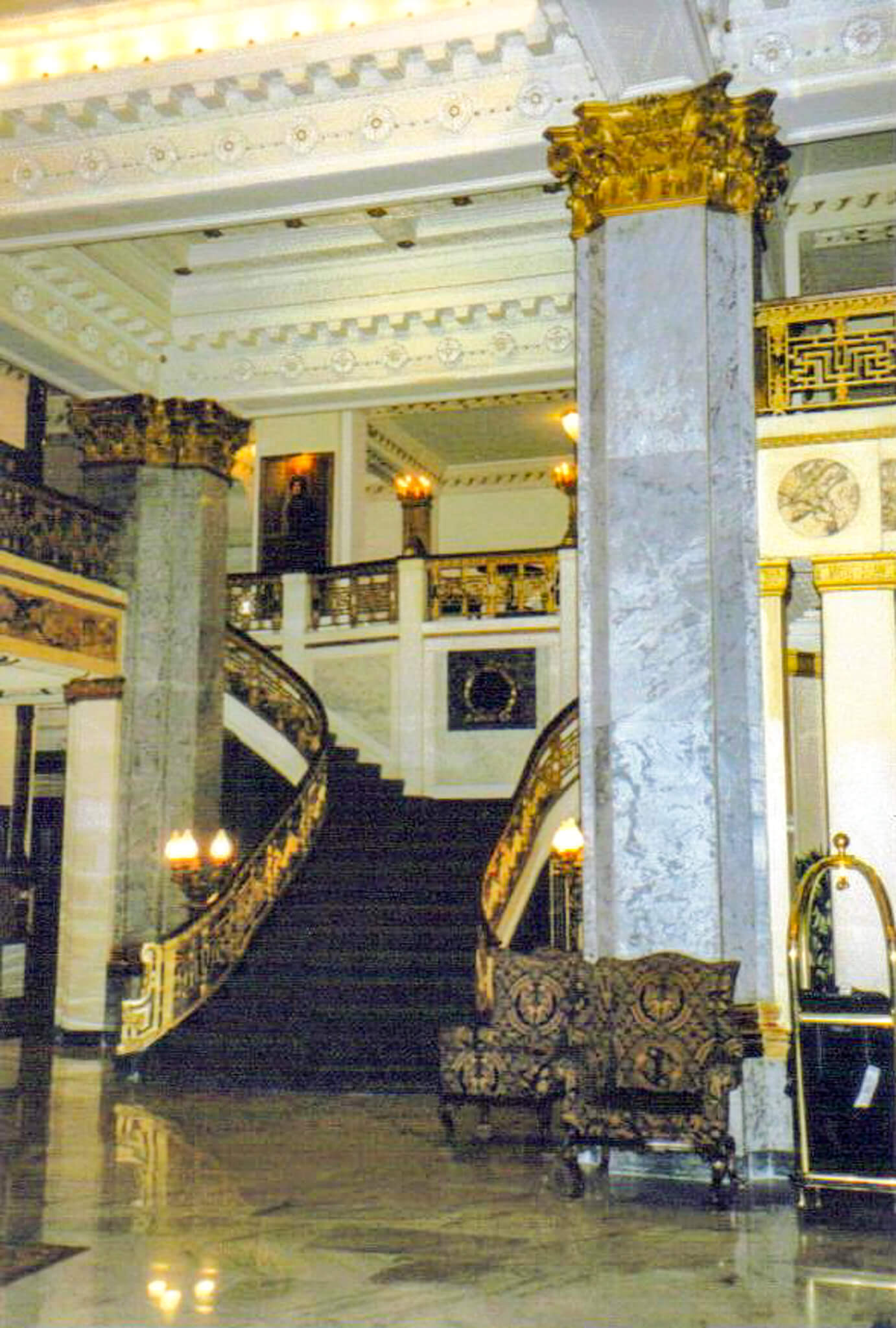
Even if you don’t stay here at the Seelbach Hilton Hotel, you’ll want to visit this historic hotel, founded by Bavarian-born immigrant brothers Louis and Otto Seelbach and opened in 1905 as the city’s first grand hotel. The brothers spared no expense in creating their Beaux-Arts–style hotel. Opening day brought in 25,000 visitors. The 10-story building is faced with stone on the lower floors, while the upper floors, capped with a bracketed cornice, is brick. The twin marquees at the entrance (once manned by doormen in top hats and coat tails) welcome you inside the opulent hotel that embodies the Old World style of Parisian hotels. Italian and Swiss marble abounds in the lobby, which also features a vaulted dome of 800 glass panels, a magnificent grand staircase, and an abundance of rosettes and dentils around the coffered ceiling. Clearly, this was built to impress and to attract an A-list clientele. Indeed, over the years guests have included nine U.S. presidents; gangsters Lucky Luciano, Al Capone, and Dutch Schultz; musical talents The Rolling Stones, Billy Joel, Whitney Houston, and Elvin Presley; actors Robin Williams and Russell Crowe; chefs Julia Child and Wolfgang Puck; and one of my favorite authors, F. Scott Fitzgerald, who was ejected from the hotel after a night of too many bourbons and cigars and who went on to use the hotel as his inspiration for the hotel for Tom and Daisy Buchanan’s wedding in The Great Gatsby; his encounters at the hotel with gangster George Remus provided the inspiration for the character of Gatsby himself. Alas, all good things come to an end, and the building was sold following the deaths of the Seelbach brothers, in 1925 and 1933. The hotel closed in 1975 as the result of a dramatic loss in revenue. A new owner spent more than $28 million to renovate the hotel, which reopened to much fanfare in 1982, successfully maintaining the architectural integrity of the building. One such survivor is the Rathskellar, the Bavarian-influenced restaurant that now serves as the ballroom. It’s the only surviving room in the world completely encrusted in Rookwood pottery. Glazed tiles and decorations include dozens of pelicans (a symbol of luck), apples (symbol of prosperity and richness), and German village scenes. End your visit here at the bar and order the cocktail named after the hotel—the Seelbach is a concoction of bourbon, triple sec, and two types of bitters, topped with a brut sparkling wine or Champagne.
#5 Palace Theater
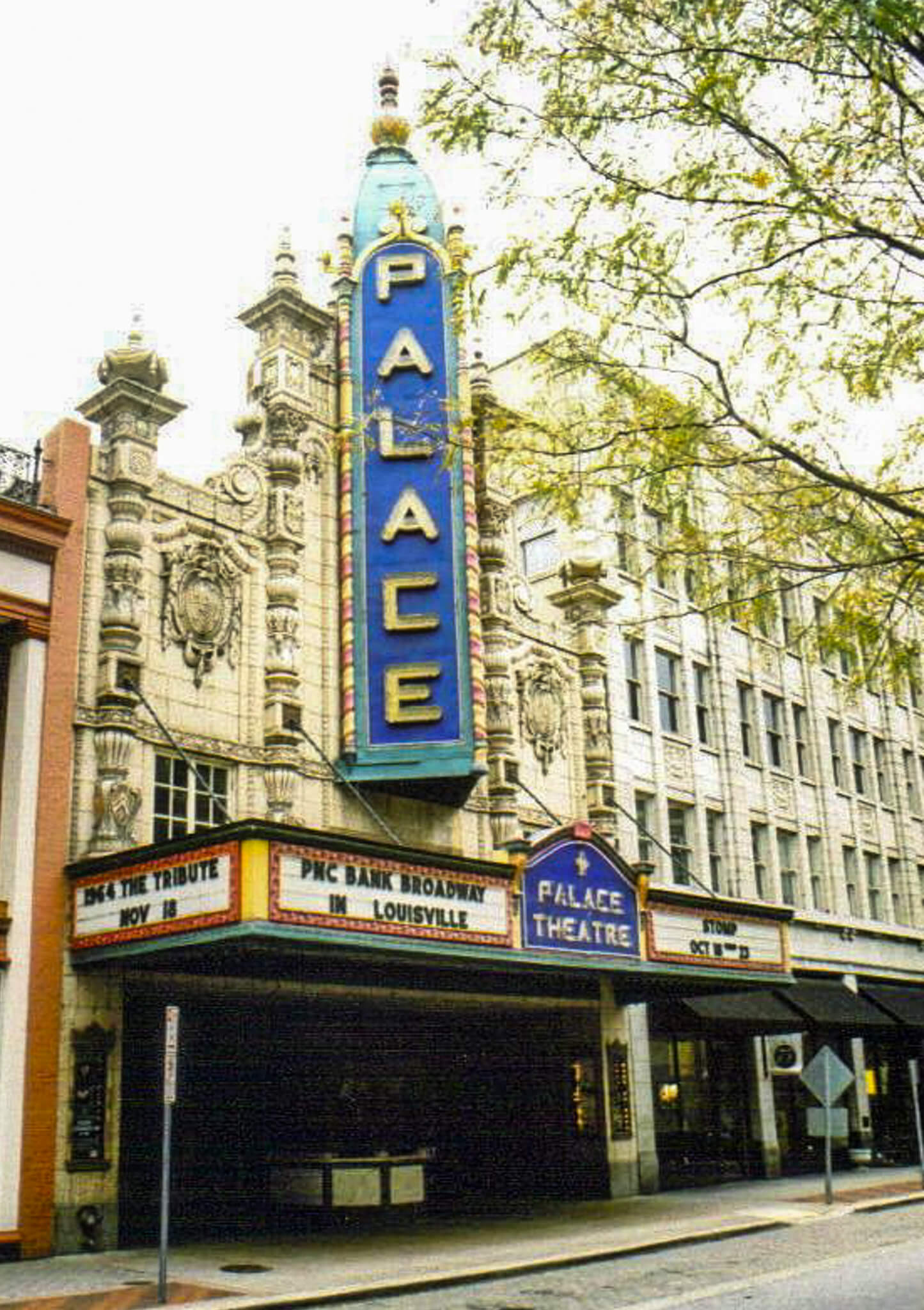
In downtown Louisville, the Palace Theater has been a beacon of entertainment since its grand opening in 1928, when it bore the name “The Loew’s and United Artists State Theatre.” It’s the only remaining cinema of its era in the city, and it’s a remarkable one at that. Architect John Eberson’s goal was to entice moviegoers by creating a fantasy world, which remains evident both outside and in. The Spanish Baroque façade is awash in terra-cotta niches, cartouches, pilasters, and finials. A copper-clad pyramidal dome tops the blue vertical blade sign, which proudly spells out PALACE in lighted syncopation. The marquee that projects over the sidewalk protects the utterly charming glazed ticket booth. Inside, you’re immediately transported to an ornate Spanish courtyard in the lower lobby, swathed in richly decorated ornamental plasterwork, vivid colors, and wall niches filled with plaster copies of Italian Renaissance sculptures. Upstairs, the vaulted main lobby features double columns, a strongly delineated cornice, and a richly decorated ceiling with coffers filled with 139 busts of composers, writers, and philosophers, such as Bach, Beethoven, Dante, Listz, Mozart, Shakespeare, and Socrates—as well as Eberson himself, who attended the grand opening (along with a live macaw, the Loew’s company mascot). In the auditorium itself, a ceiling painted a midnight blue with twinkling stars spans the seating area that can accommodate more than 2,700 people, surrounded by grottos and architectural elements of a Spanish courtyard. In the 1970s, competing movie theaters ate away at the Palace’s profits, and the theater closed. About two decades later, the abandoned theater was purchased, and the new owner spent $4.4 million (more than twice the theater’s original cost) to restore it. Although the restoration was successful, the ongoing costs of maintaining such a historic building bankrupted the owner. Now under different ownership, the Palace continues to offer movies as well as live performances in this incredible setting.
Five Runners-Up
- Brown Hotel (1923)
- William Wathen House (1896)
- Gilmer Speed Adams House (1899)
- Cathedral of the Assumption (1852)
- Frank M. Lampton House (1892)
I’d Love to Hear From You!
Have you been here? Have I inspired you to go? Let me know!


 Stephen Travels