When I visited the Copenhagen City Museum, in its former location, a giant outdoor pottery model of the entire city, complete with fortresses, churches, houses, canals, and islands, graced the entrance. It was a beautiful re-creation of what the city looked like in 1500. Things have certainly changed since then, and as the city grew, its buildings became larger and larger, grander and grander. These are my favorites.
#1 Rosenborg Castle (Rosenborg Slot)
 Surrounded by gardens, cobblestone paths, and outbuildings, gorgeous Rosenborg Castle has been a Copenhagen fixture since 1624 (although it was absent for a bit, when it burned down in 1859 and was then quickly restored). Built as a country summerhouse in the Dutch Renaissance style by King Christian IV, the mostly brick castle boasts an abundance of towers, gable ends to its wings, and a steeply pitched roof with prominent dormers. The castle is filled with some of Denmark’s most important treasures, including the crown jewels. I took my time wandering around its many rooms, impressed by the entire structure and all its details, including the sumptuous furniture; the fine brassware, silverware, and porcelain; and the priceless paintings. The over-the-top Marble Room features walls covered with artificial marble (which, at the time of construction, was actually more exclusive than real marble). The ceiling is awash with heavy stucco that looks like finely sculptured, hardened meringue, with inset panel paintings of chubby putti and heart-shaped fields with bright paintings of individual parts of the coat of arms. Blue and white Dutch tiles from 1706 adorn the walls of the bathrooms. A stucco barrel ceiling spans the entire Long Hall, also called the Knight’s Hall. Twelve fine tapestries depicting Danish victories during the Scanian War in the second half of the 1670s line the walls. The coronation chair of the kings and the throne of the queens, with three life-size silver lions protecting it, can be found at the ends of the room. After I took it all in, I stopped at the castle’s outdoor Garden Café for a lunch of roast pork, hummus, and tabouli (hardly a traditional Danish meal)—and great views of the castle.
#2 Christiansborg Castle (Christiansborg Slot)
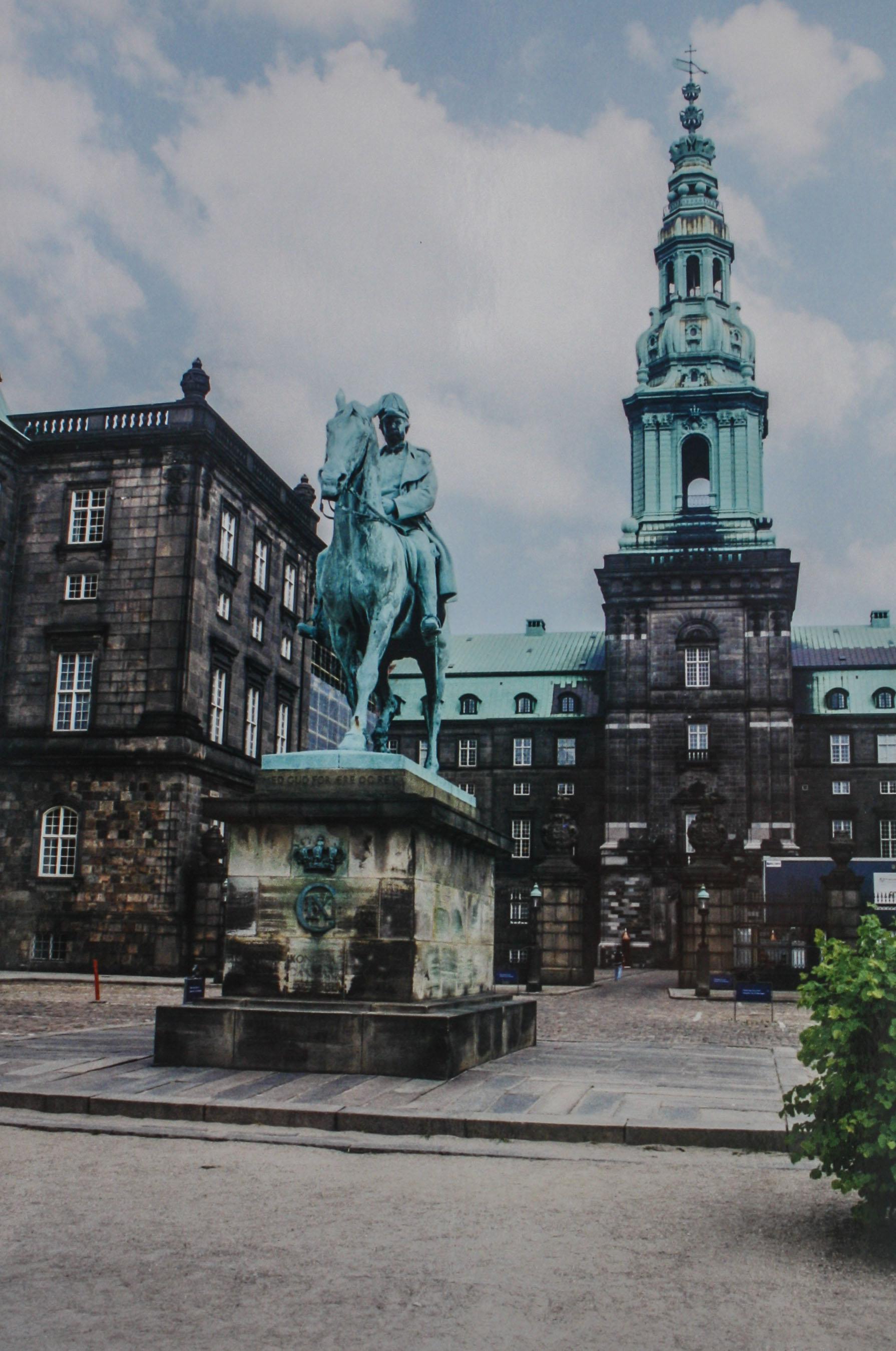 The current castle is actually in its fifth incarnation. The first was a fortress built in 1167 that stood until 1369, when it was demolished and replaced by a castle, which, in turn, lasted until 1731, when King Christian VI had it torn down. He built the first castle called Christiansborg the following year, but a fire destroyed most of it less than a century later. A second Christiansborg went up in 1803, and in 1884, it, too, burned down. Given that history of messiness, I was sure the Danes wanted Christiansborg 5.0 to last so as not to undergo all that demolition, sweeping up, and rebuilding again, and they keep it rather well preserved. After all, it’s their country’s most important building—the only building in the world that houses all three of a country’s branches of government: executive, judicial, and legislative. The royal family maintains a presence here as well, and their rooms truly stand out. The Queen’s Library houses 10,000 books (a small percentage of the full royal collection) in a two-story room with gilded bookcases, crystal chandeliers, an elaborate plaster ceiling, and a ceiling mural of swirling cranes against a light-blue, partly cloudy sky. In the Palace Chapel, members of the royal family are baptized and married under the coffered dome and amid the deceptive scagliola walls and columns. The heavily ornamented Alexander Room features “Alexander the Great Enters Babylon,” a frieze with hundreds of figures that wraps around the entire room. Portraits of Danish kings line the walls of the tremendous Dining Hall, anchored by a table that can comfortably seat 50 for a lavish dinner under two tremendous crystal chandeliers.

A little feature in the Throne Room reminded me that, once upon a time, men (and certainly women) were definitely not equal. In the center of the room, a singular design in the wood floor indicated where those addressing the royals should stop before greeting their highnesses on their throne and giving obeisance. When they concluded their business, they would walk in reverse so as not to show the king and queen their back as they left. In the Great Hall, 17 tapestries in dazzling colors were created in honor of Queen Margrethe II’s 60th birthday, and the faux marble on the walls contain, among the striations, a profile of the queen as well as a crown with “M2” under it. After the tour concluded, I ventured on my own to the subterranean levels to see the remnants of the two earliest versions of the castle. I found myself alone, wandering amid the ruins along dimly lit passageways and chambers. Small spotlights illuminated key displays, such as the relics of an early indoor plumbing system: a hollowed-out log. I could almost hear the ghosts of 900 years of Danish history as I walked around, my footsteps echoing in the unoccupied space. The whole experience would have been rather eerie if not for the fact that the entire section of archaeological and historical ruins was kept as tidy as the rest of the castle.
#3 Frederik’s Church (Frederiks Kirke)
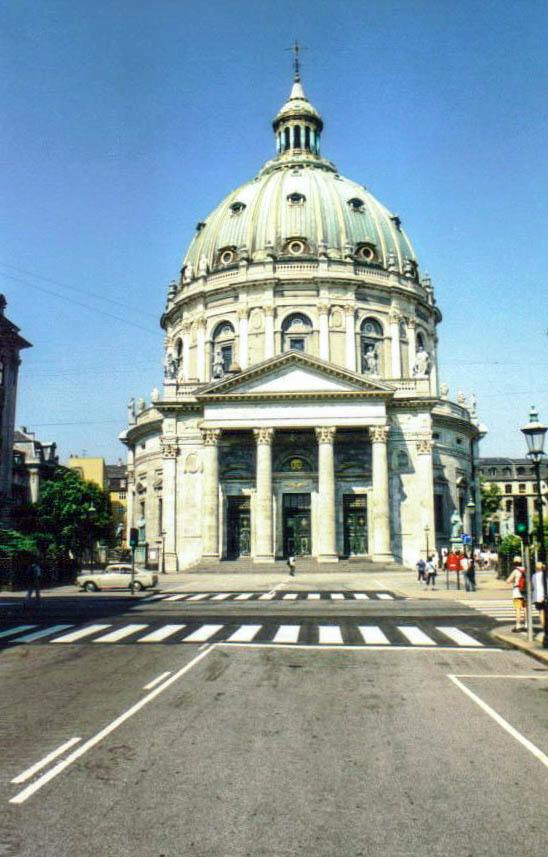 Frederik’s Church lured me through the expansive square that’s home to the 18th-century Amalienborg palace. The closer I got to this Evangelical Lutheran church, the more impressive it became. Originally designed in 1740, the “Marble Church” (or Marmorkirken) wasn’t completed until 1894, long after the architect’s death and countless delays that shunted it aside as an abandoned ruin for more than a century. The main component of this captivating structure is Norwegian marble (hence its nickname), but when the funds for construction ran out, other materials, including Danish Faxe marble, were eventually used. Statues of famous Danes, including Søren Kierkegaard and St. Ansgar, Denmark’s patron saint, surround the outside of the church at street level. A shallow staircase rises to the entrance, with four Corinthian columns supporting a pediment with dentils and brackets. It all leads up to one of the most beautiful domes in the world. Resting on a dozen pairs of columns and modeled after the dome at St. Peter’s Basilica in the Vatican City is Scandinavia’s largest dome. The gold and verdigris-green dome boasts a span of just over 100’. At the bottom, windows rest above balustrades and pairs or urns along with more statues. A series of lucarnes punctures the circumference of the middle of the dome, and another series of windows circles around the top. An almost playful lantern stands atop the dome, with wreaths and garlands ringing the walkway around it and with its own dome that echoes the major one below it, all capped with a metal cross atop yet another metal copper cross. Inside the mostly round body of the church, murals of the 12 Apostles occupy the panels between the dome’s ribs, and rays of golden light beam out from the oculus against a blue background. Make sure you look for the ivory crucifix and especially the beautiful organ with two lovely swans among its pipes.
#4 City Hall (Rådhus)
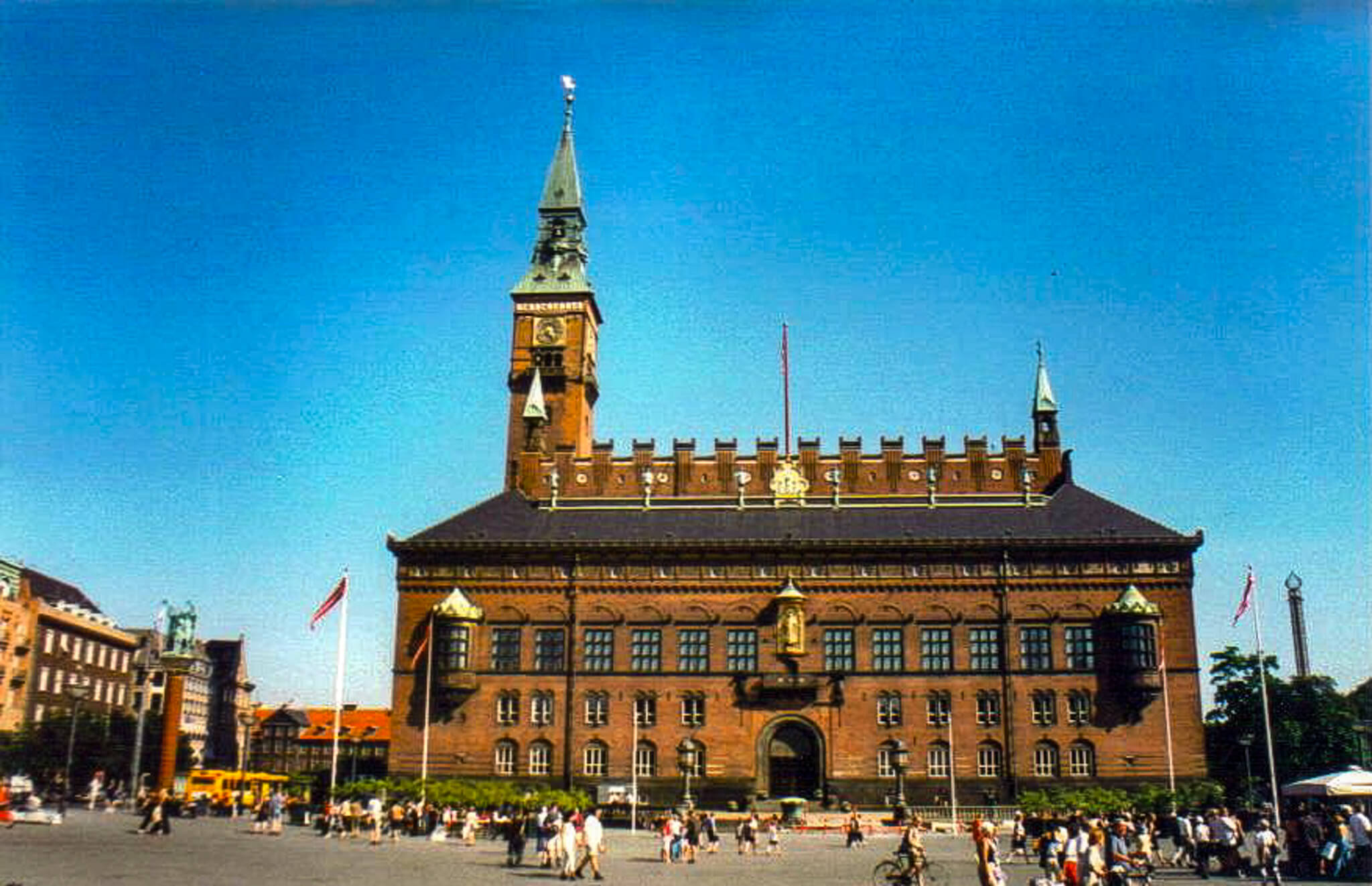 Completed in 1905 after a dozen years of construction, with the city hall in Siena, Italy, as its inspiration, the Rådhus stands in the heart of the city, across the street from Tivoli Gardens, Copenhagen’s glorious amusement park. Built in the National Romantic style, City Hall utilized locally sourced brick, wood, and granite. Approached via a wide terrace with a lengthy balustrade, the front of the building features a façade with a pair of oriel windows and a gilded statue of Bishop Absalon, who founded the city in 1167, above the little balcony above the main entrance. Different statues line up along the roofline, and it’s fun to look for bears and walruses, too. The symmetry is thrown off by the bell tower on the left, which features four clock faces and a carillon that chimes every 15 minutes. Reaching a height of 350’, it’s one of the tallest buildings in the city. Take in all of the Rådhus’ grandeur by claiming a bench in the open plaza it faces, the bustling City Hall Square, and watch lots of blond Danes go about their daily routine with this as their backdrop.
#5 Stock Exchange (Børsen)
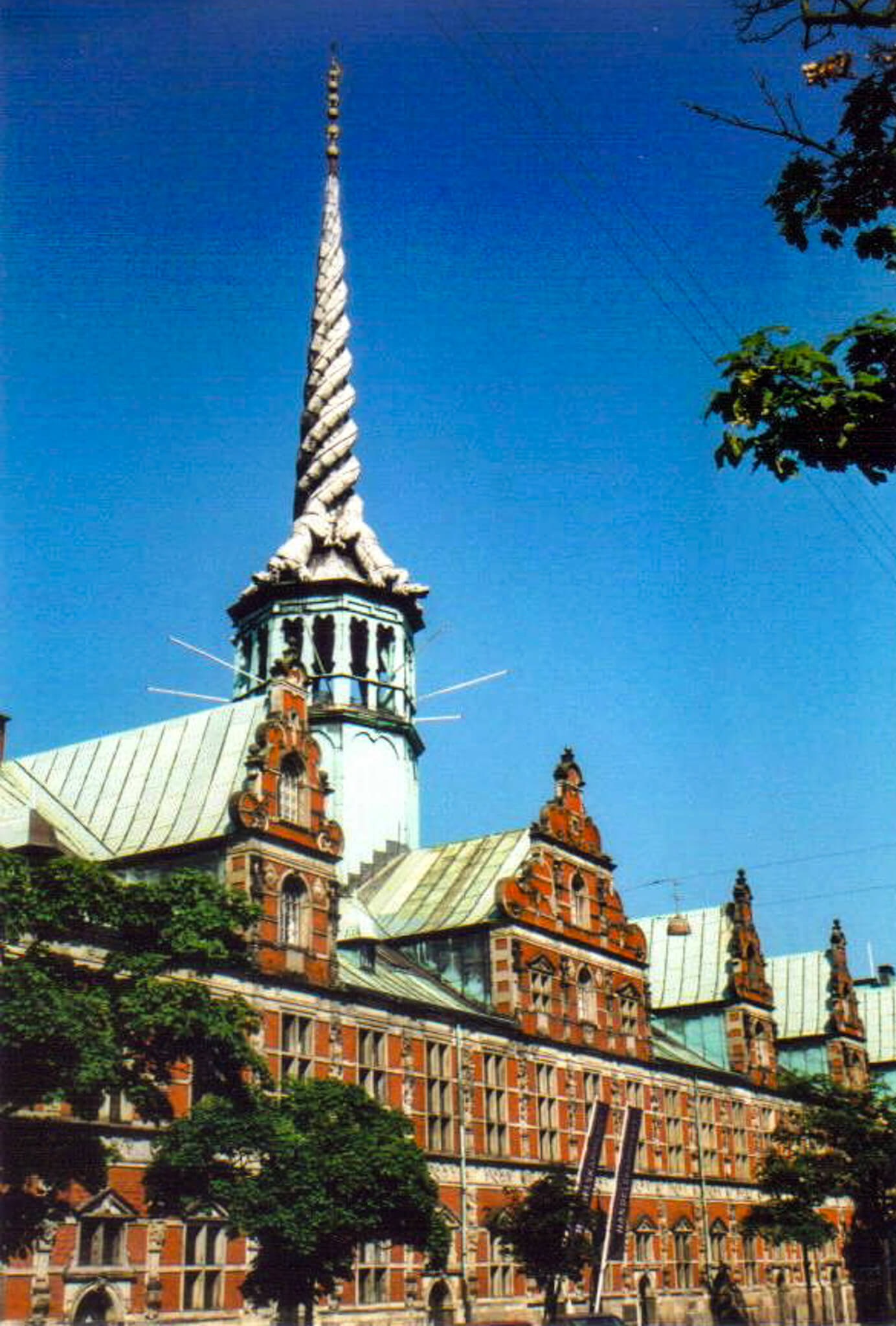 The best view of Copenhagen’s former stock exchange is from the bridge that crosses the canal right in front of it. From here, I was able to truly appreciate the length of this vast low-rise building. Only a block away from Christiansborg Castle on the island of Slotsholmen, the Børsen received its final construction touches in 1640. Built under the reign of King Christian IV, who wanted to strengthen the city’s role as a center for commerce and trade in Northern Europe, it’s not only one of Copenhagen’s oldest buildings but also one of the earliest stock exchanges in Europe. It contained 40 trading offices on the ground floor and one massive room on the floor above it. The stock exchange, or bourse, operated here until 1974; it’s now the home of the Danish Chamber of Commerce (the oldest one in Europe). Although I was unable to enter the building, I was still able to be thoroughly impressed by the exterior. The stone and red brick building is a leading example of the Dutch Renaissance style in Denmark, clearly expressed by the heavily embellished gables at the two shorter ends, the smaller gables at the center of the longer sides, and the gables at the very pronounced dormers. All around its many windows, I found atlantids and caryatids, and each window pediment on the ground floor houses a different human face. During the Swedish occupation of the city in the late 1650s, much of the original lead roof was removed to produce cannonballs. In the late 1800s, the building received a new copper roof, now turned verdigris green. Its most distinctive feature is the one that enchanted me the most. The nearly 184’ spire, installed in 1625, consists of the intertwined tails of four dragons at its base. At the very top, the tails give way to golden balls and three crowns that symbolize the closely bound Scandinavian countries of Denmark, Norway, and Sweden. Aside from being an amusing and lovely element of the city’s skyline, the spire is accompanied by an urban legend—the spire protects the building against enemy attacks and fires. True? Probably not. But maybe: Despite many fires in neighboring buildings over the centuries and as recently as 1990, the Børsen has always emerged unscathed…until 2024, when it tragically went up in flames, and the spire tumbled to the ground, during renovations.
Five Runners-Up
- Amalienborg (1760)
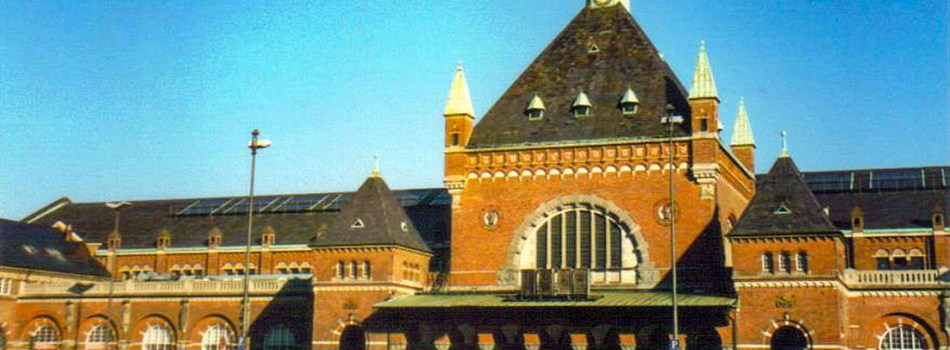
- Copenhagen Central Station (Københavns Hovedbanegård, 1911)
- Holmen Church (Holmens Kirke, 1619)
- St. Alban’s Church (Den Engelske Kirke, 1887)
- Round Tower (Rundetårn, 1642)
Leave a Comment
Have you been here? Have I inspired you to go? Let me know!


 Stephen Travels