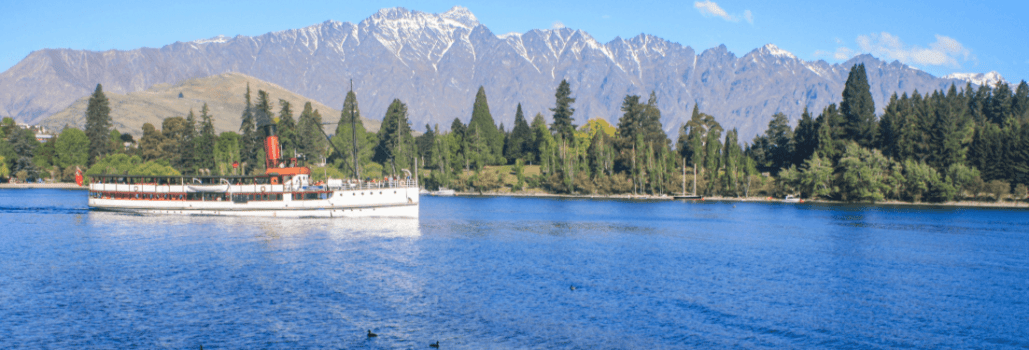
Its myriad shades and hues are legion. My favorites, cobalt blue and the color of lapis lazuli, show up in my bedroom, while a host of others can be found in my closet. Move to my kitchen and you’d find blueberries and blue potatoes and, when necessary, an ice pack. Step outside, and it’s all around you, from a clear sky and Neptune to glaciers, bluebonnets, blue jays, your neighbor’s pool, the eyes of a husky, and someone’s sapphire necklace. The versatility of blue is expansive, but no matter what your favorite shade is, unlike excitable red it’s guaranteed to settle you down. These are my favorites.
#1 Caribbean Sea
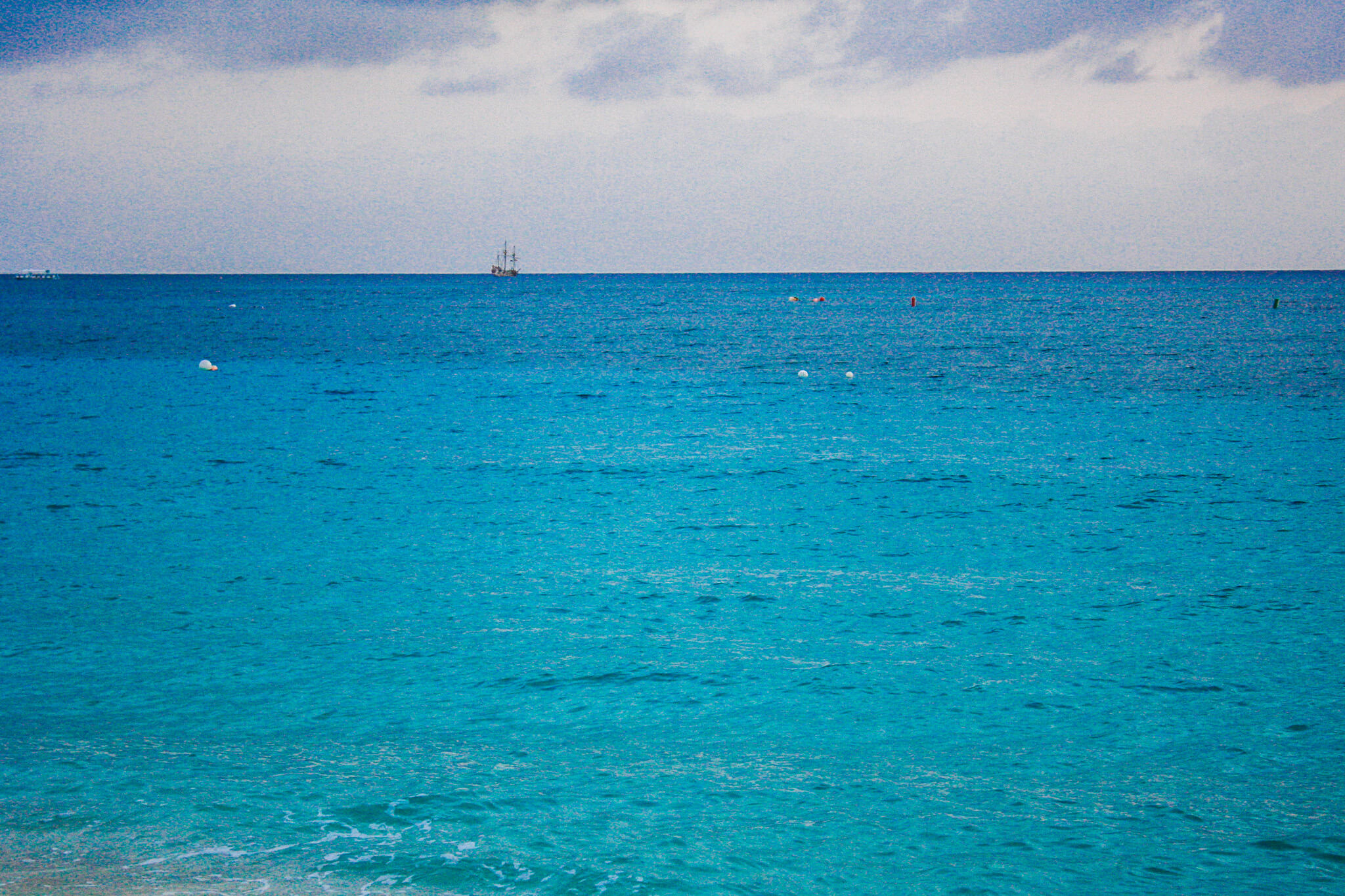 Growing up in New York City, I was accustomed to a uniform gray in my local waters, so the Caribbean was a revelation. Now that I’ve been to nearly a dozen Caribbean islands, I can honestly say that the color of the water never fails to impress me. From my very first beach in St. Martin to my most recent one in Nevis, the blue colors of the Caribbean consistently draw me into the water and make me, at least for a week, a devout beach person. I’m always astounded by how many shades of blue show up in just one vista—aquamarine and teal here, azure and cerulean over there. Whether you’re appreciating it from the beach at Shoal Bay in Anguilla, from the deck of a sailboat passing by the Pitons in St. Lucia, or from Brimstone Hill Fortress National Park atop a mountain in St. Kitts, the blue of the Caribbean is guaranteed to beguile you.
#2 Crater Lake (Oregon)
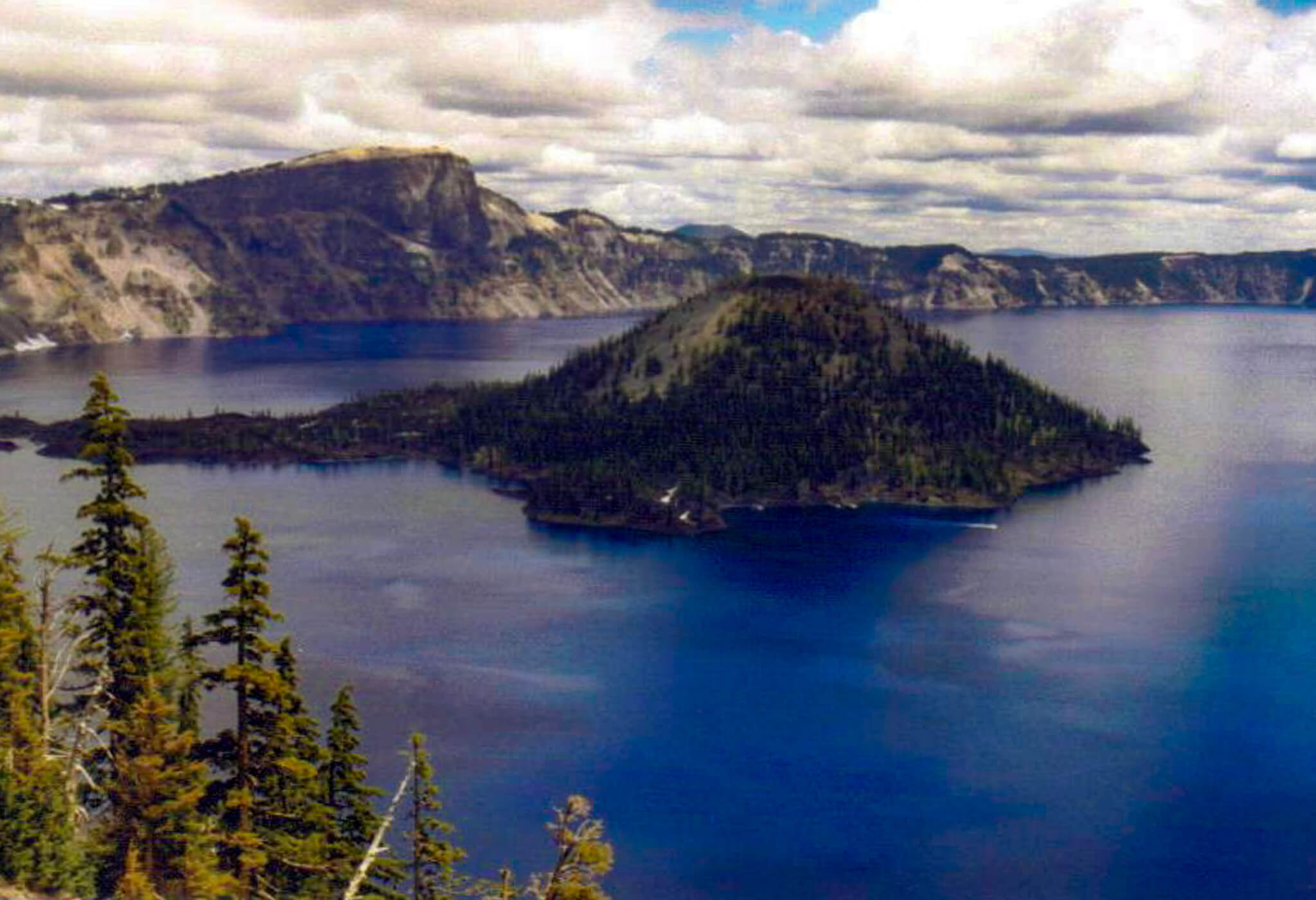 After about an hour’s drive on the nearly empty Rogue-Umpqua Scenic Byway in Oregon, I arrived at Crater Lake National Park. I deposited my car at Crater Lake Lodge, completed in 1915, and walked down to the Sinnott Memorial Overlook for my first glimpse of the deepest lake in the United States, the second-deepest lake in North America, and the seventh-deepest in the world, reaching a depth of 1,949’. It’s five miles wide and ringed by cliffs almost 2,000’ high. Fed entirely by rain and snow, its purity is astounding. The lake—a magnificent, striking deep blue—rests in the shattered remnants of a volcano called Mount Mazma, which erupted and collapsed into itself 7,700 years ago with 21 times the force of the 1980 eruption of Mount St. Helen’s, its not-so-distant neighbor. After I finished taking in this spectacular vista, I headed out on Rim Drive, which loops around the lake for 33 miles, offering dozens of turnoffs to appreciate different views of this gorgeous body of water and its 316-acre cinder-cone Wizard Island.
#3 Adriatic Sea
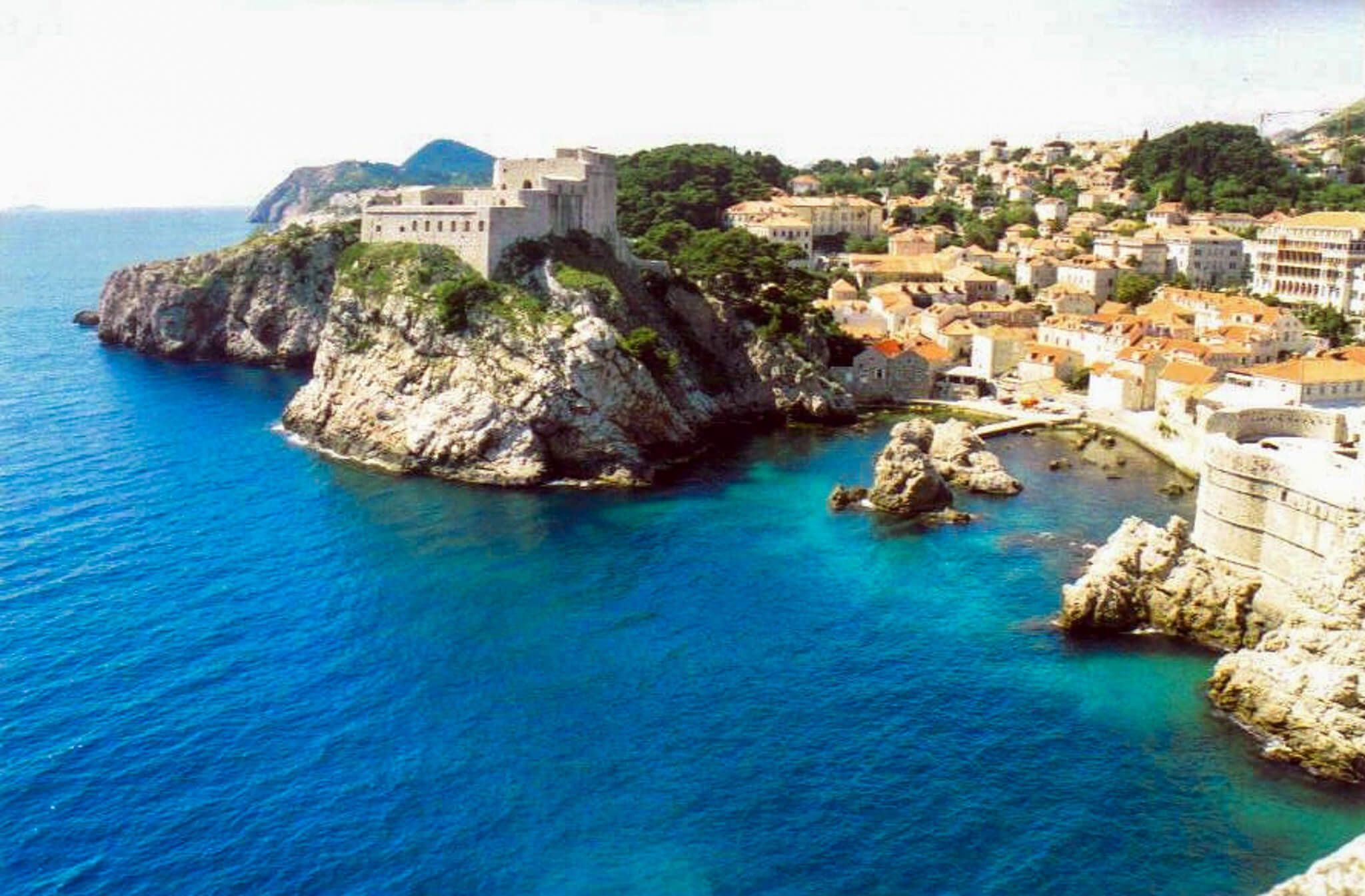 My flight from Vienna to Dubrovnik took me along the coast of Croatia and granted me my first view of the Adriatic Sea. The striking contrast between the brown mountains, the orange rooftops of Dubrovnik, and the gorgeous blue of the Adriatic makes for a truly memorable descent. Once I was settled in town, the sea was at my doorstep, whether I was at the beach just outside of Old Town, or clambering on top of the defensive walls that encircle Old Town and offer vast views of the Adriatic. One of the best ways to appreciate it and truly soak in its glorious color is to hop on the ferry to nearby Lokrum Island, which you may very well have all to yourself, and then look back at this enchanting sea and the iconic city of Dubrovnick at its edge.
#4 Plitvice Lakes National Park (Croatia)
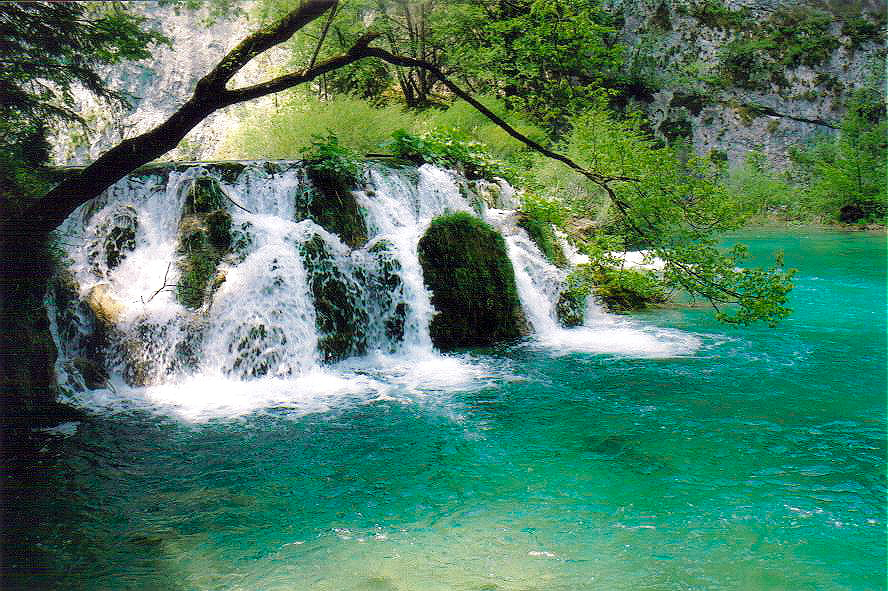 One of the world’s most beautiful waterfalls greeted me within minutes of entering Croatia’s Plitvice Lakes National Park. Veliki Slap drops an impressive 254’. I was standing at eye level with the top of the falls, flanked by rocky outcrops and forested slopes but with an unbeatable view from my vantage point across the canyon separating us. The falls marks the point where the Plitvica River plunges down to the last of 16 interconnected lakes that cascade into one another in Croatia’s largest (73,000+ acres) and oldest (1949) national park. These gorgeous lakes are part of the reason why Plitvice was declared a UNESCO World Natural Heritage Site in 1979. I hiked down to the Lower Lakes, where I had close-up views of the enchanting turquoise lakes. The lakes result from the confluence of small surface rivers and subterranean karst rivers that are all interconnected. Their brilliant color arises from the process of the algae that blooms in the water releasing gases as they grow and decompose; those gases react with the water and create their fantastic color. Depending on the angle of the sunlight and the amount of algae in the water, the lakes changed color as I moved through the park, with the turquoise ones being the most breathtaking. Grouped into four Lower Lakes and the 12 less-visited Upper Lakes, these lakes spread out over nearly five miles, yet they and the rivers make up less than 1% of the entire park’s area; the rest is forest (about three-quarters) and meadows. And after five hours of hiking here, this Balkan jewel had become one of my favorite national parks.
#5 Azulejo Tiles (Portugal)
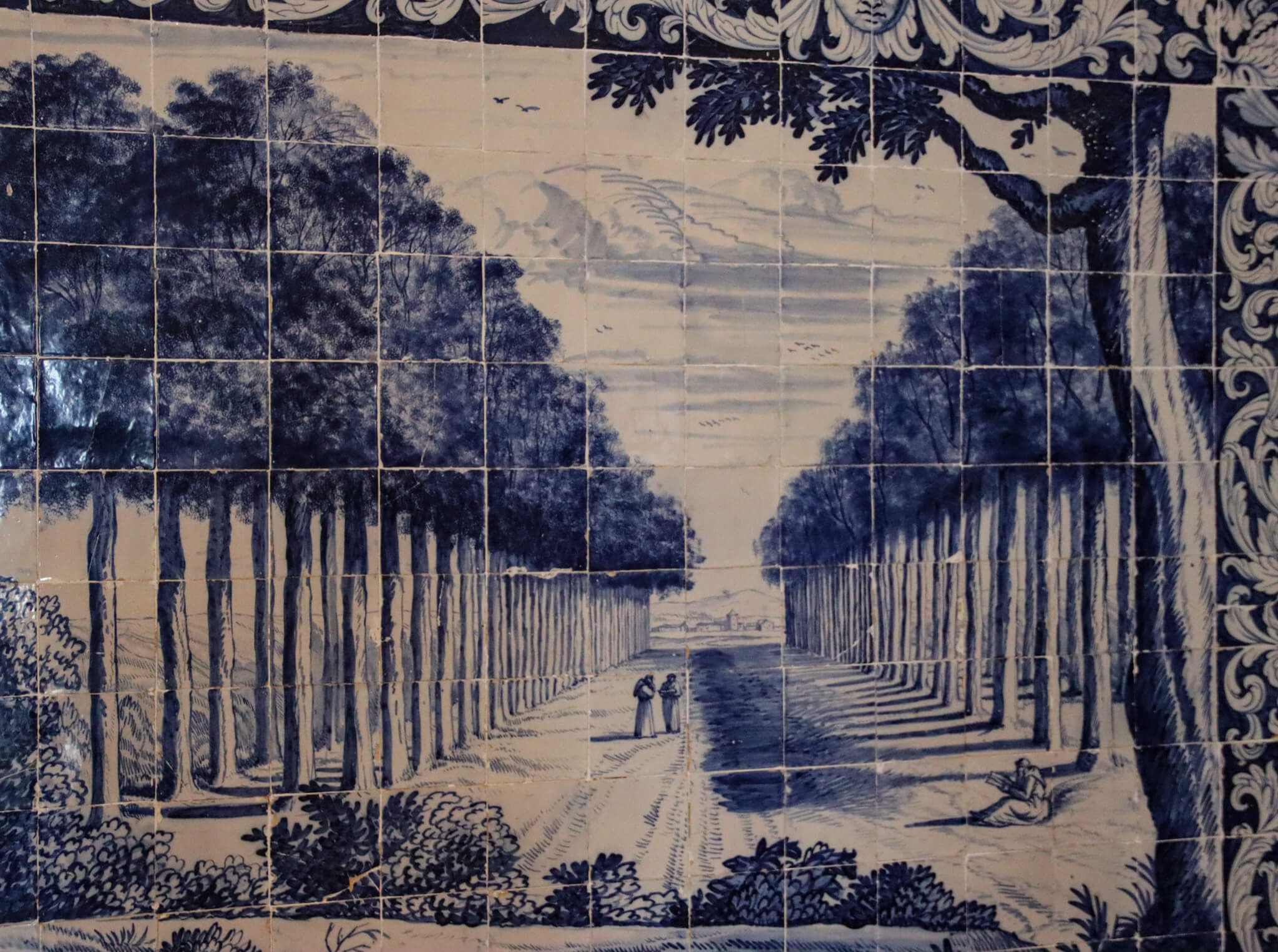 I found them everywhere in Portugal: on the façades of buildings, on the walls of train stations, in museums, on your dinner table. The art of azulejo—traditional tilework of Portugal and the Portuguese Empire—is remarkably detailed, and spectacularly beautiful. The mostly blue and white tiles can contain abstract designs, but the most impressive are the pastoral and religious scenes that slather the walls of buildings, particularly in Lisbon and Porto. The best place to learn more about them is at the National Tile Museum in Lisbon, where you will be completely captivated by the Great Lisbon Panorama Before the Earthquake of 1755, a blue-and-white composition of 1,300 tiles that measures 75’ in length—the longest tile piece in Portugal.
Five Runners-Up
- Manhattan Bridge (Manhattan and Brooklyn, New York)
- Lake Wakatipu (New Zealand)
- Delftware (The Netherlands)
- Peyto Lake (Alberta, Canada)
- Minton-style lidded exhibition urn (Lightner Museum, St. Augustine, Florida)
Leave a Comment
Have you been here? Have I inspired you to go? Let me know!


 Stephen Travels