The central administrative offices of the State University of New York system, in Albany, was originally the Delaware & Hudson Railroad Company Building. It’s a massive structure, one of the top five buildings in Albany, and, as such, it’s easy to overlook some lovely details, like the coats of arms of early Dutch families who were influential in the region, a stone owl, and a working copper weathervane that replicates Henry Hudson’s ship, Half Moon. There’s also a very unusual architectural curiosity—a bizarre figure attached to the corner at the southern end of the building, a lion-demon being wearing something Madonna might have donned in her prime, with its legs suggestively spread and apparently giving birth to a reptilian creature. It’s these fascinating ancillary details that bring buildings to life and make them memorable. These are my favorites.
#1 Doorways (Dubrovnik, Croatia)
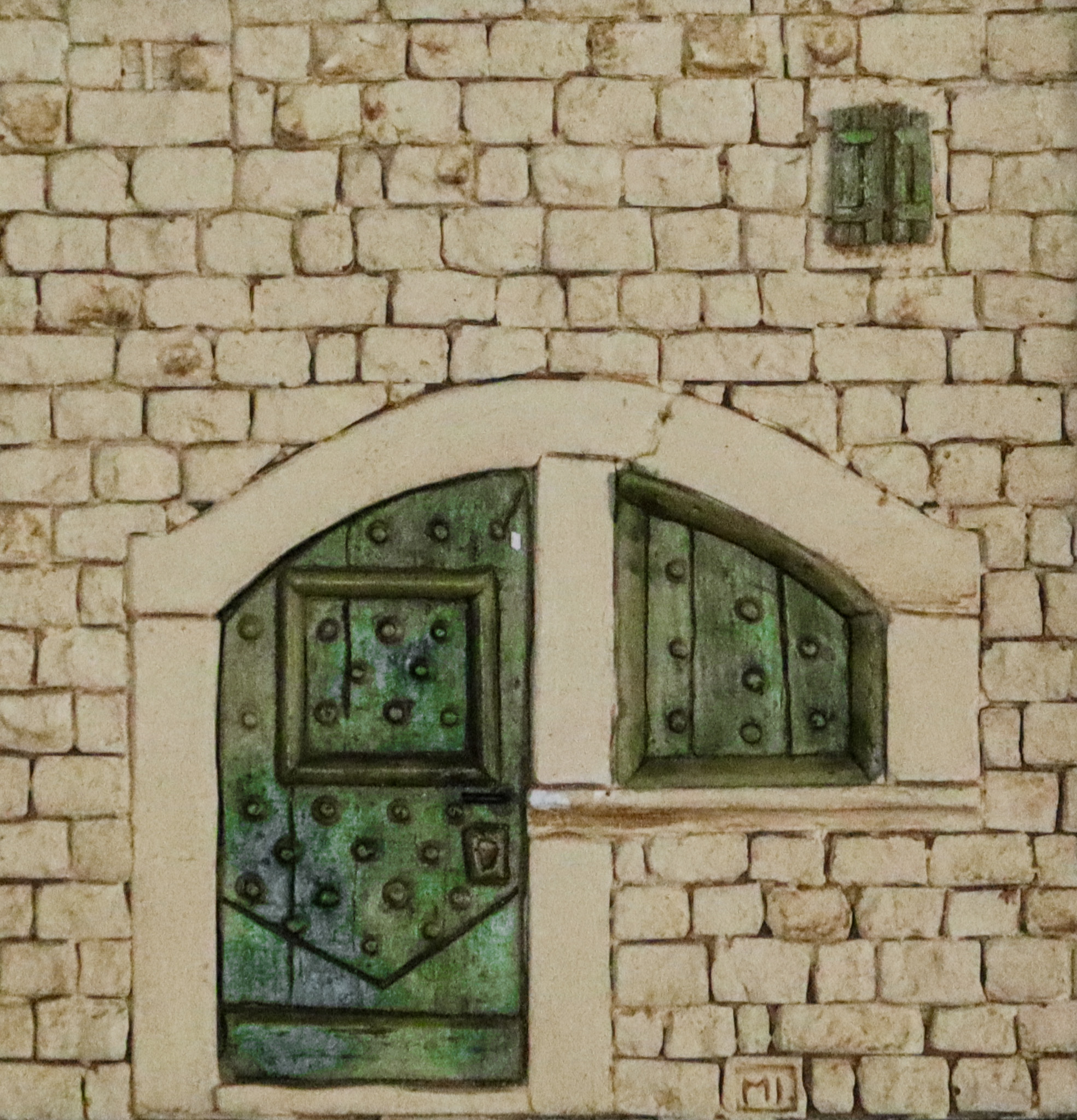 I spent many hours strolling along Old Dubrovnik’s irresistible main strip, called Placa, or Stradun, except when it was overrun by cruise ship tourists pouring in for the day and I made an escape to the nearby island of Lokrum, which I shared with only a handful of people and just as many peahens (and one lucky peacock). Placa was once a channel separating the mainland (everything east of it) from an island (everything west). Filled in during the 1100s, its length now runs about 1,000’, and tourists regularly jam every inch of it. I would safely bet that most did not notice, in their search for knickknacks, the fantastic doorways to many of the shops and restaurants they were popping into and out of like manic cuckoos. Each doorway consists of a stone arched entrance framed by pilasters of uneven heights and with a simple keystone. It’s split into three sections, horizontally and vertically. The door itself occupies one half, either the right or left. The other half is split horizontally between a window on the top two-thirds, sometimes with a shallow serving shelf, and the building itself in the lower third. They’re utterly and charmingly unique, and the Croatians have wisely turned them into little takeaway souvenirs for those of us in the know.
#2 Royal Letters and Numbers (Denmark)
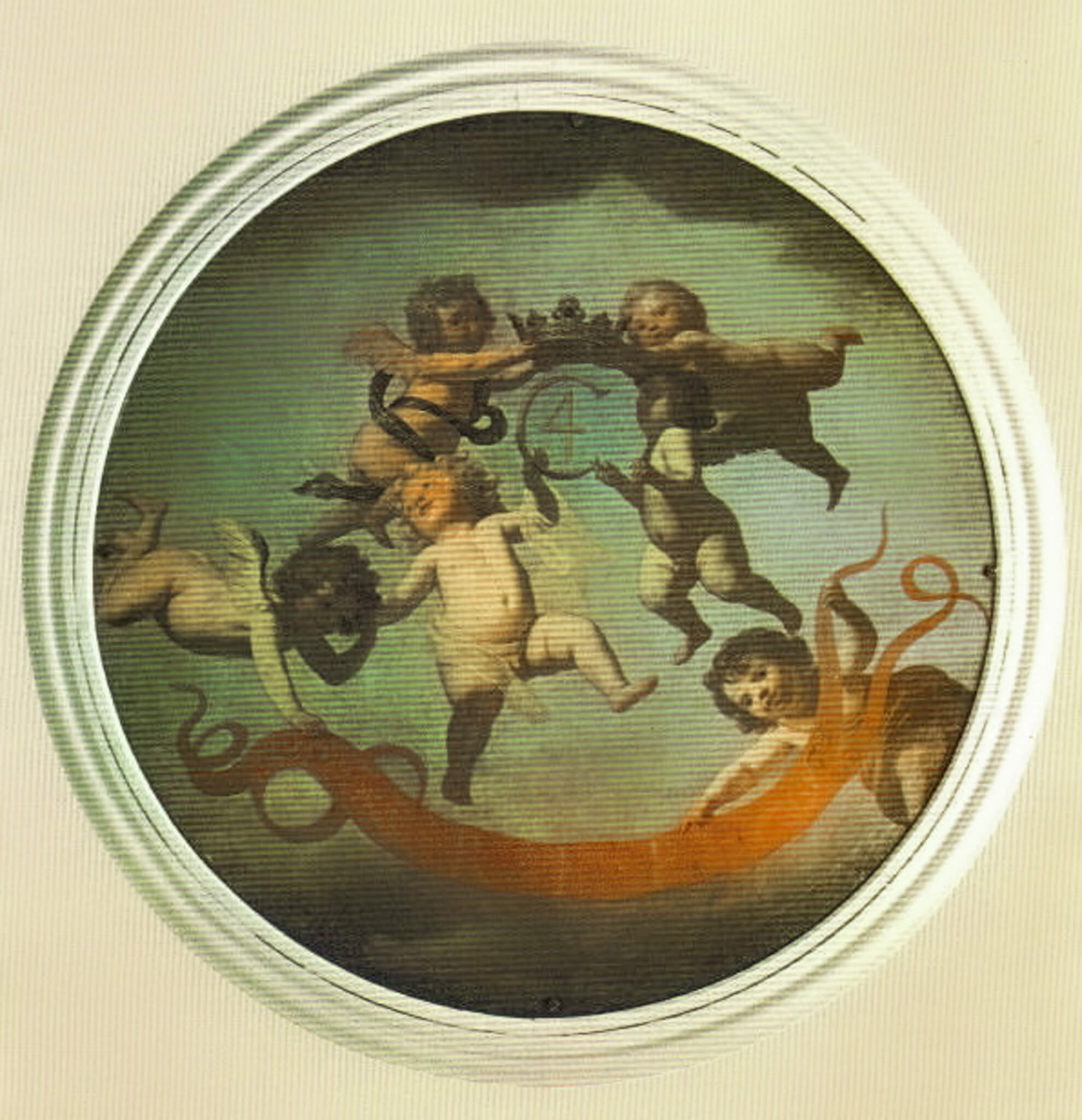 I had been seeing them all around the country, on building walls, arch keystones, statues, and paintings. It wasn’t until I visited Rosenborg Castle, one of the most beautiful buildings in Copenhagen, that I learned what they meant. The little detail I was seeing turned out to be royal recognition. Since 1440, all the Danish kings (with one exception) have been called Christian or Frederik. The current king is Frederik X; the last Christian was also the X. An uppercase C or F would be intertwined with or accompanied by a number. This represents which royal was in charge when, for instance, a building was constructed. It’s a handy little history lesson and helps put things in context. A C4, for instance, means that Christian IV was the top man at the time; F7 means it was Frederick VII. If you’re looking for this symbol for one of the most recent monarchs, Queen Margrethe II, who reigned from 1972 until she abdicated in January 2024, head to Christiansborg Castle in Copenhagen. In the Great Hall, one of the striations in the faux marble walls of the Great Hall features a crown with M2 underneath it—but unless the guide points it out, it’s virtually impossible to locate.
#3 Sunlight Chambers Building Frieze (Dublin, Ireland)
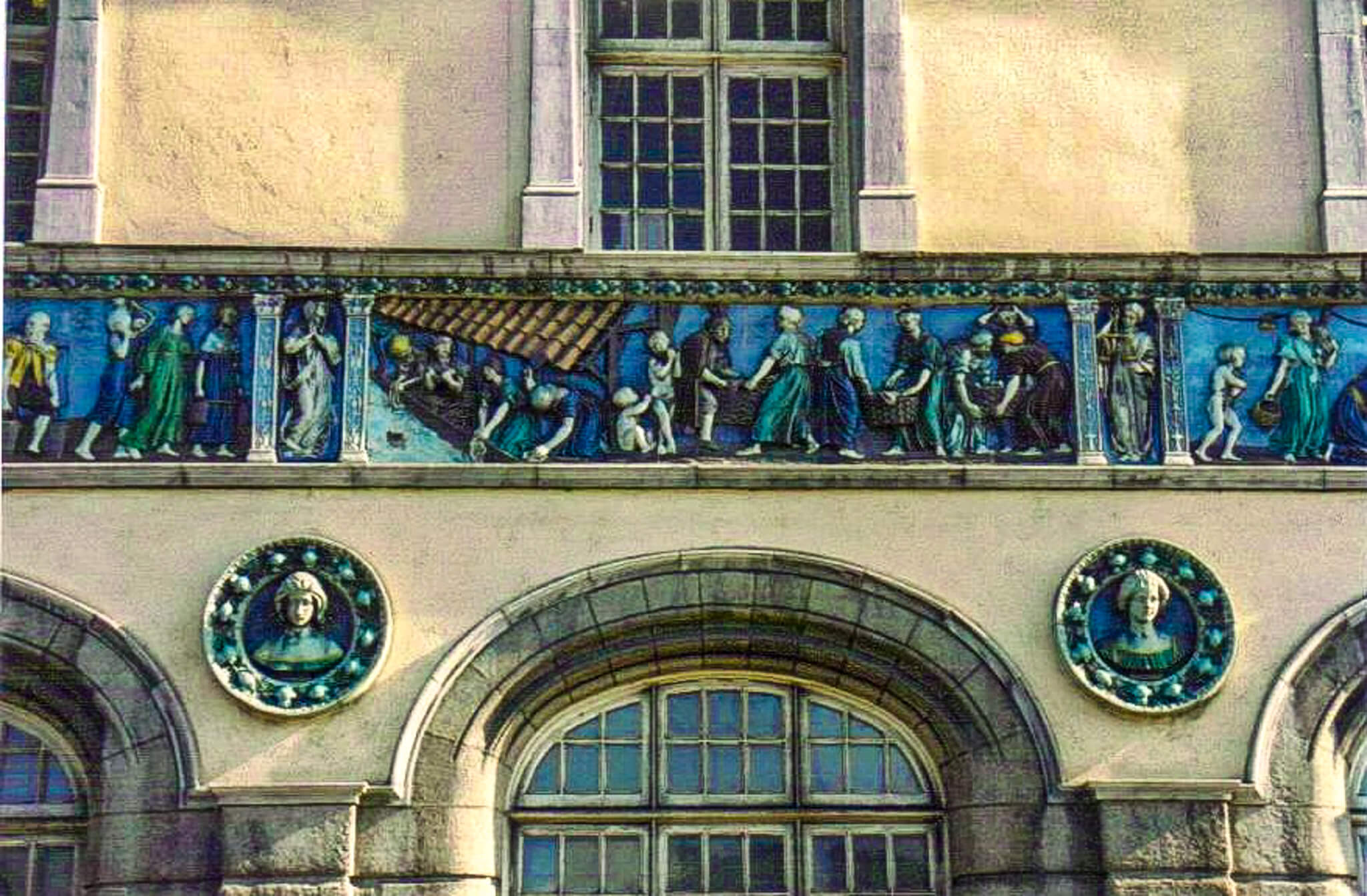 This corner building along the River Liffey in Dublin was completed in 1910 in the Italianate style, an anomaly among its Georgian and Victorian neighbors. The commercial office was constructed as the Irish headquarters for Lever Brothers, a British manufacturing company that teamed up with a chemist to create a soap that used glycerin and vegetable oils instead of tallow, the result of which was a soap that was free-lathering. Christened “Sunlight Soap,” it leant its name to this structure. The peach façade features arched windows, elaborate wooden carvings depicting the elements sheltered under overhanging eaves, and a red terracotta roof. But the real delight for me is the ornate frieze that belts around the building’s three sides. Set in 12 panels above the first and second stories, intricately molded glazed terracotta figures in white, yellow, blue, and green depict the history of hygiene and soap—men making clothes dirty while they’re at work in agriculture and industry (extracting and producing the ingredients for Lever Brothers products), and women washing them in streams, carefully placing them in baskets and trunks. While this wonderful ornamentation served as a terrific 20th-century advertisement for Lever Brothers, today the frieze is a treat for anyone who looks up at this bit of whimsy in Dublin’s popular Temple Bar neighborhood.
#4 Angels on Ladders in Bath Abbey (Bath, England)
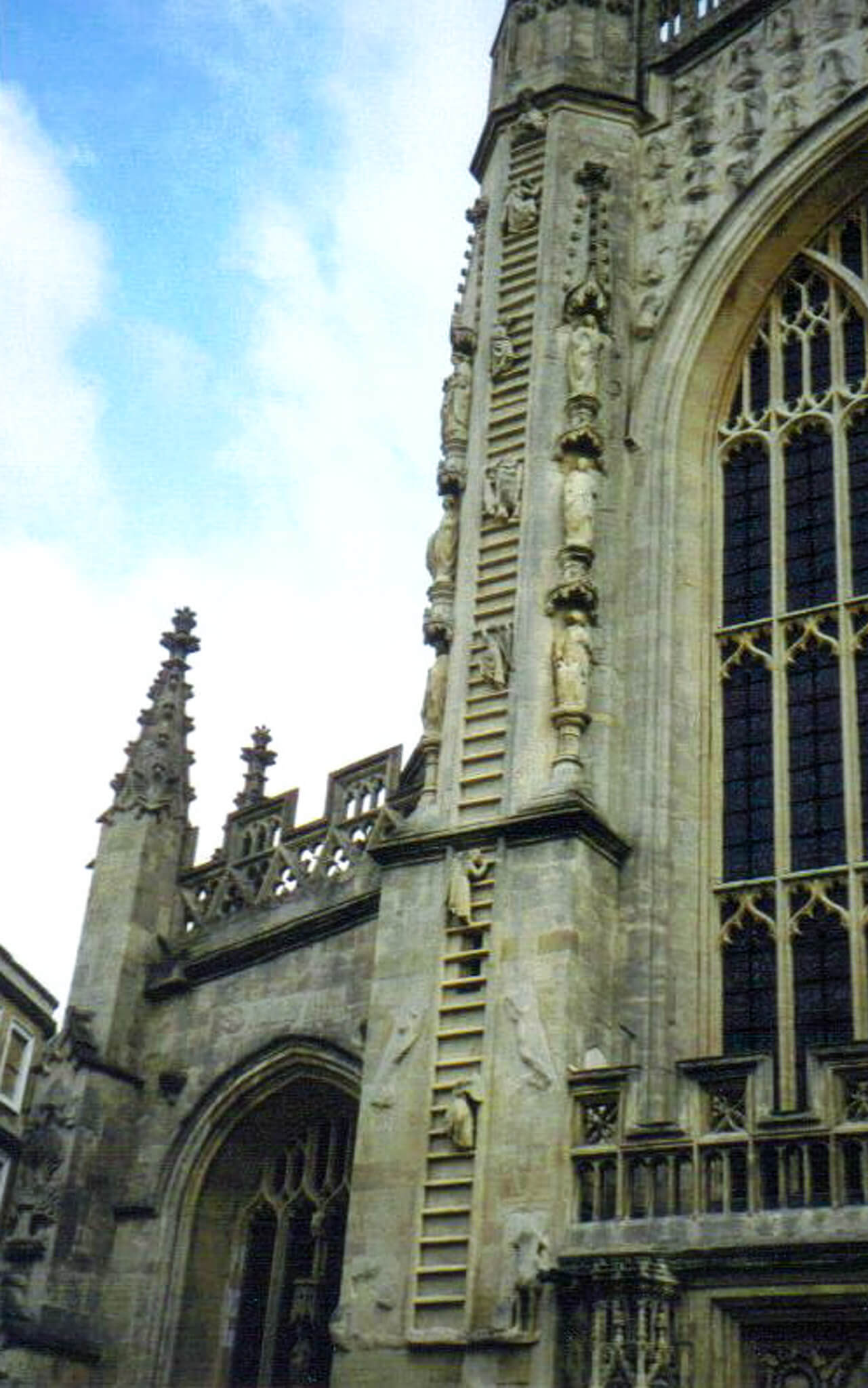 In addition to its ancient Roman-built baths, the other thing I really needed to see in Bath was its famous abbey. Edgar was crowned the first effective king of all England in 973 in an earlier building on the same spot. The current abbey, built between 1499 and 1611, is far more spectacular. Inside, for instance, I was completely awed by the ceiling, a masterpiece of stone fan vaulting and one of the most beautiful ceilings in the world. Outside, on the West Front, I found the abbey’s delightful curiosity. Flanking the sides of the soaring stained-glass window, two carved stone ladders rise up toward a haloed figure. On each ladder, five angels climb upward in their heavenly ascent (although, with their wings, I wondered why they were expending all that energy when they could just fly). But the real question is why one additional angel on each side is climbing down and head-first. The story of including the ladder dates back to the late 1400s, when Oliver King, bishop of Bath, inspected the sorry condition of the original and deteriorating abbey. He sought divine assistance in solving his dilemma: repair or rebuild? He had a dream, pretty much the same dream that Jacob had in the Book of Genesis, in which he saw angels scrambling on a ladder. King interpreted it as a sign he must preserve this holy place and ordered a new church to be built. That explains the ladder and angels, but not the mystery of those two outliers, and that’s where things get interesting—and unresolved. No one knows why they’re reversing direction, or why they’re doing it in such a counter-intuitive position. Fast-forward 400 years, when centuries of weather had worn away the angels’ forms. A sculptor was brought it to restore them. During his work, he chose to depict these two heading south in their unconventional orientation, maybe because that’s how he read the original worn-away figures, or maybe because that’s just how he thought angels descend a ladder. I like my own idea: The two serve as a warning for all those who enter the church—they’re fallen angels, heading back down to the daily tortures of a human existence, or even farther, into the eternal tortures of Hell.
#5 Rector’s Palace Handrail (Dubrovnik, Croatia)
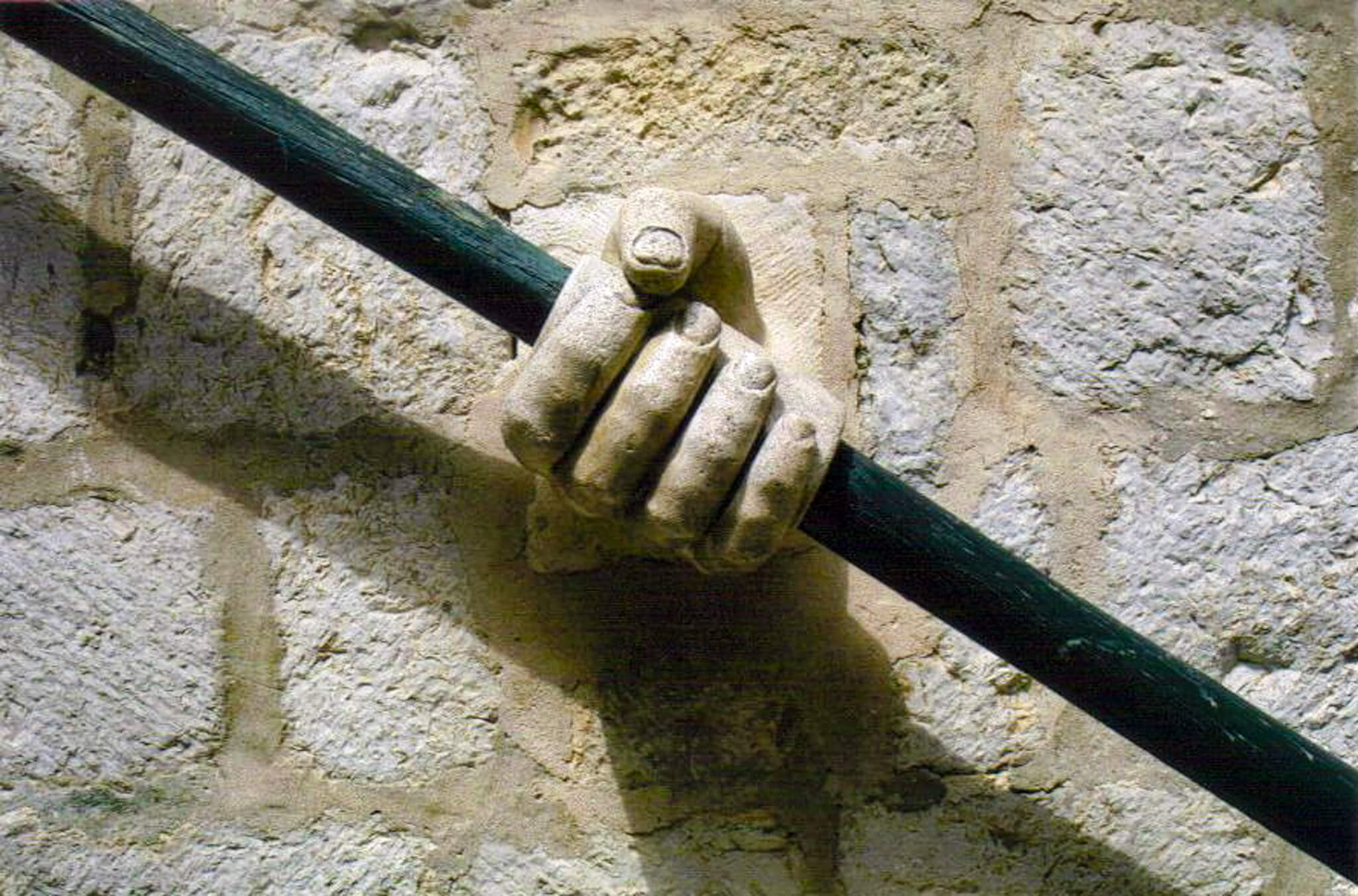 Only a block or so off of Old Dubrovnik’s main street, I headed to the Rector’s Place, the former seat of the rector of the Republic of Ragusa between 1358 and 1808. Today, it houses the Cultural History Museum, where I found antique furniture, portraits, paintings by local and Italian artists, and a collection of coins from the former republic. Just as interesting is the building itself. An impressive arcade with columns with finely carved capitals fronts the structure, granting access inside and into the internal courtyard. Two staircases with gorgeous carved stone newel posts and balusters lead up to the second-floor loggia. Along the less grand of the two, I found this delightful handrail, attached to the wall. Whoever thought of using stone hands to attach a handrail to a wall, at the top and the bottom of the staircase, was, clearly, stricken by a bolt of genius.
Five Runners-Up
- Stone mosaic sidewalk signs (Freiburg, Germany)
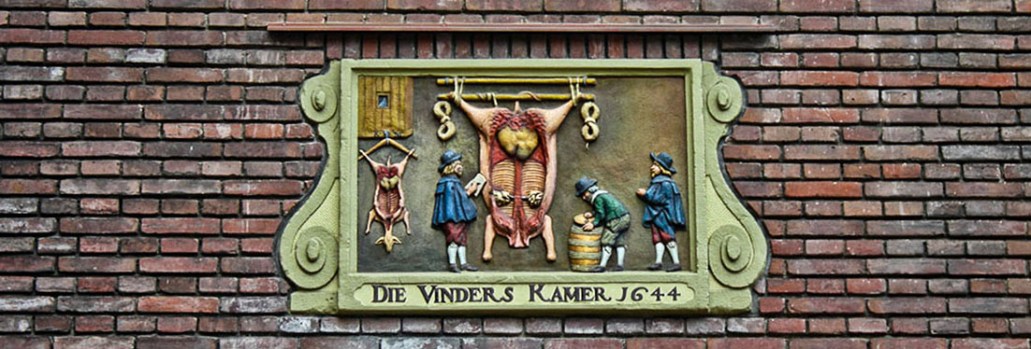
- Wall tablets (Amsterdam, the Netherlands)
- Dropped Cone (New Market, Cologne, Germany)
- Doocot (Urquhart Castle, Scotland)
- Corn Palace (Mitchell, South Dakota)
Leave a Comment
Have you been here? Have I inspired you to go? Let me know!


 Stephen Travels