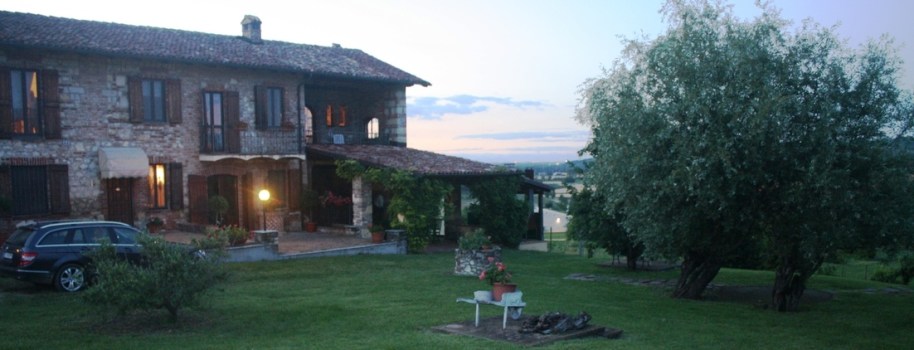
When my family and I were discussing renting a couple of villas in Italy to celebrate my parents’ 50th wedding anniversary, we all quickly agreed that our selections should be located in smaller towns. At various points in our lives, we had all been to Italy—Rome, Florence, Venice, and so on. But none of us had spent time in smaller towns, where tourists are few and English is scarcely spoken. We wanted to see the real Italy—the Italy of our ancestors, none of whom came from particularly large, or wealthy, urban areas. My grandfather, for instance, immigrated to the United States in the 1910s from Genzano di Lucania, a municipality in Southern Italy with a population that has been collapsing for decades and now hovers at about 5,100.
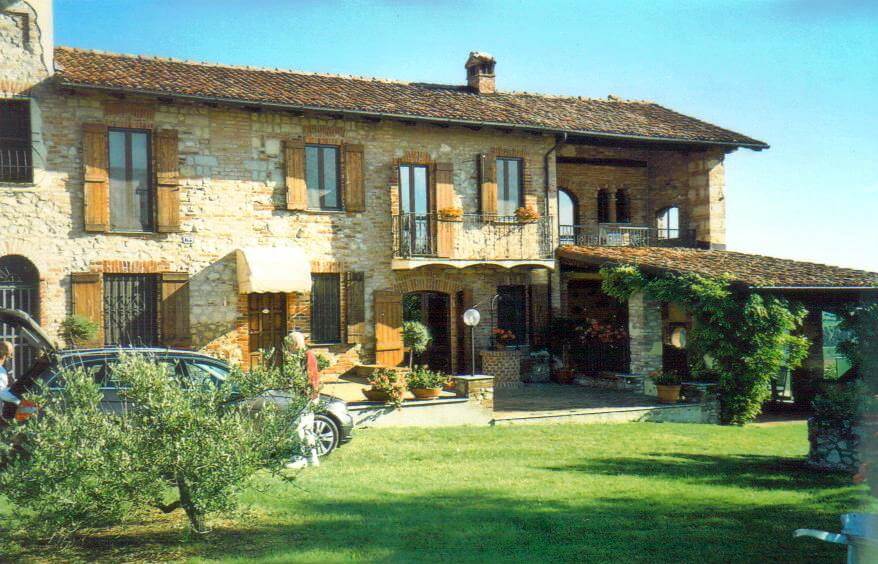
With Parker Villas as our renting agent, we chose the villas that appealed to all of us, and within a few months I was driving a rented Mercedes-Benz—packed with my parents, an aunt and an uncle, and far too much luggage that almost completely obliterated my rear view—south from Milano Malpensa Airport to the municipality of Cereseto, with a population of 431, down a full 1,000 from its peak in 1901.
Just off the main road and onto a narrower gravel one, I pulled through the private gate and onto the grounds of Villa Cascina Martinenga. We tumbled out of the car, limbs a little nonresponsive after the cramped 90-minute drive that had now bloated into more than two hours, thanks to some wrong turns and curiously misleading road signs (when they did exist at all).
Before we had even a moment to look around, a downpour struck. We hurried inside and met the owner, whose residence took up the left half of the villa, while the right half was his rental property. He greeted us warmly, provided the necessary information we would need for our stay, and presented us with a basket of wine, bread, and the most succulent Tuscan cantaloupes imaginable—the kind that make cantaloupes in the States taste like raw potatoes. Once you’ve had one of them, you will never look at this melon the same way again.
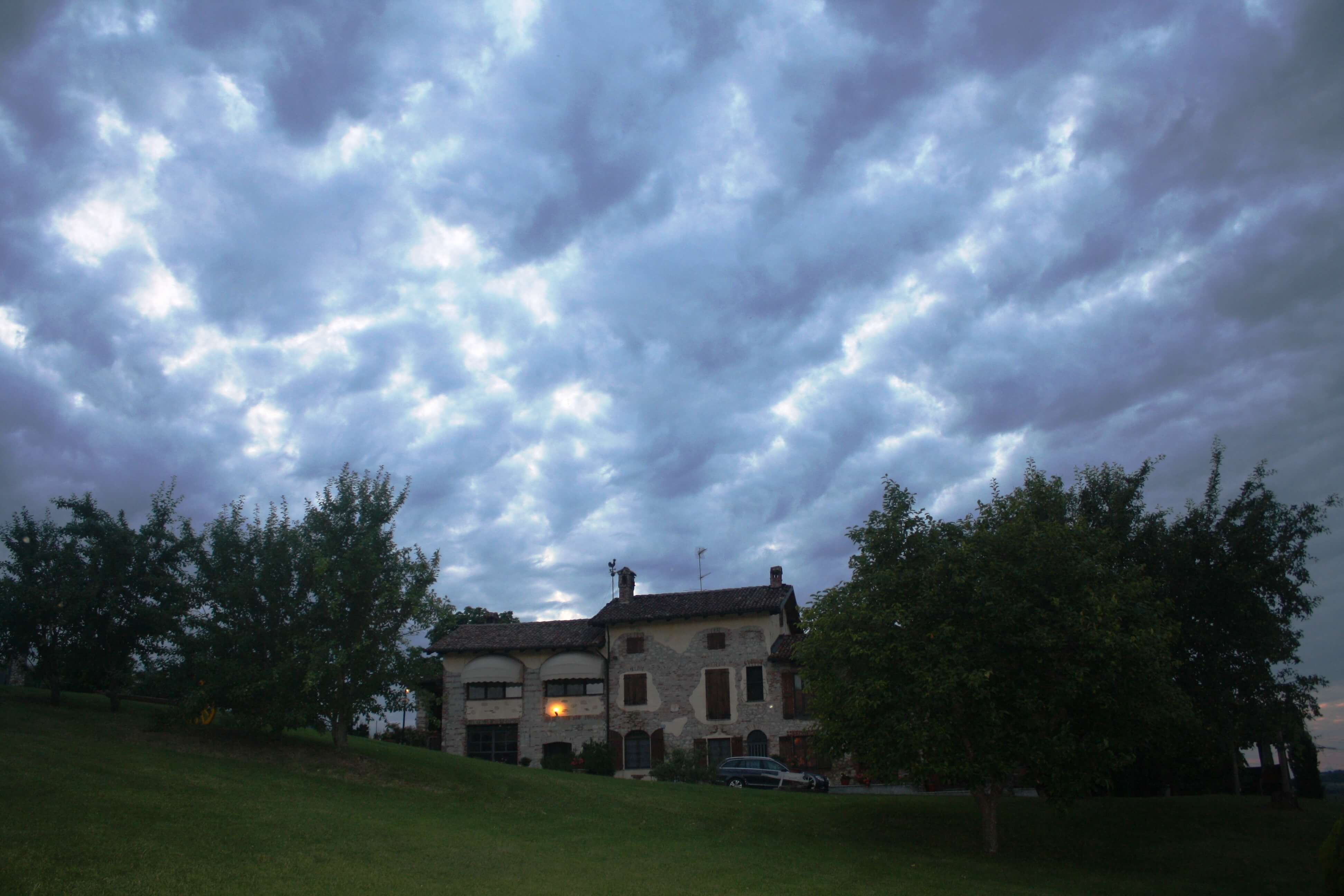
After the microburst ended, we emerged onto the villa’s property to explore, and we immediately knew that this was a very wise choice. Surrounded by grape vines, olive trees, and fields of wheat, Cascina Martinenga lies outside the small core of Cereseto. The sprawling brick and stone structure shows enchanting signs of age, a warm edifice exuding a romanticized version of small-town Italy. Four chimneys sprout up from the clay tile roof, and the rooster weathervane cemented the notion that we were in farm country.
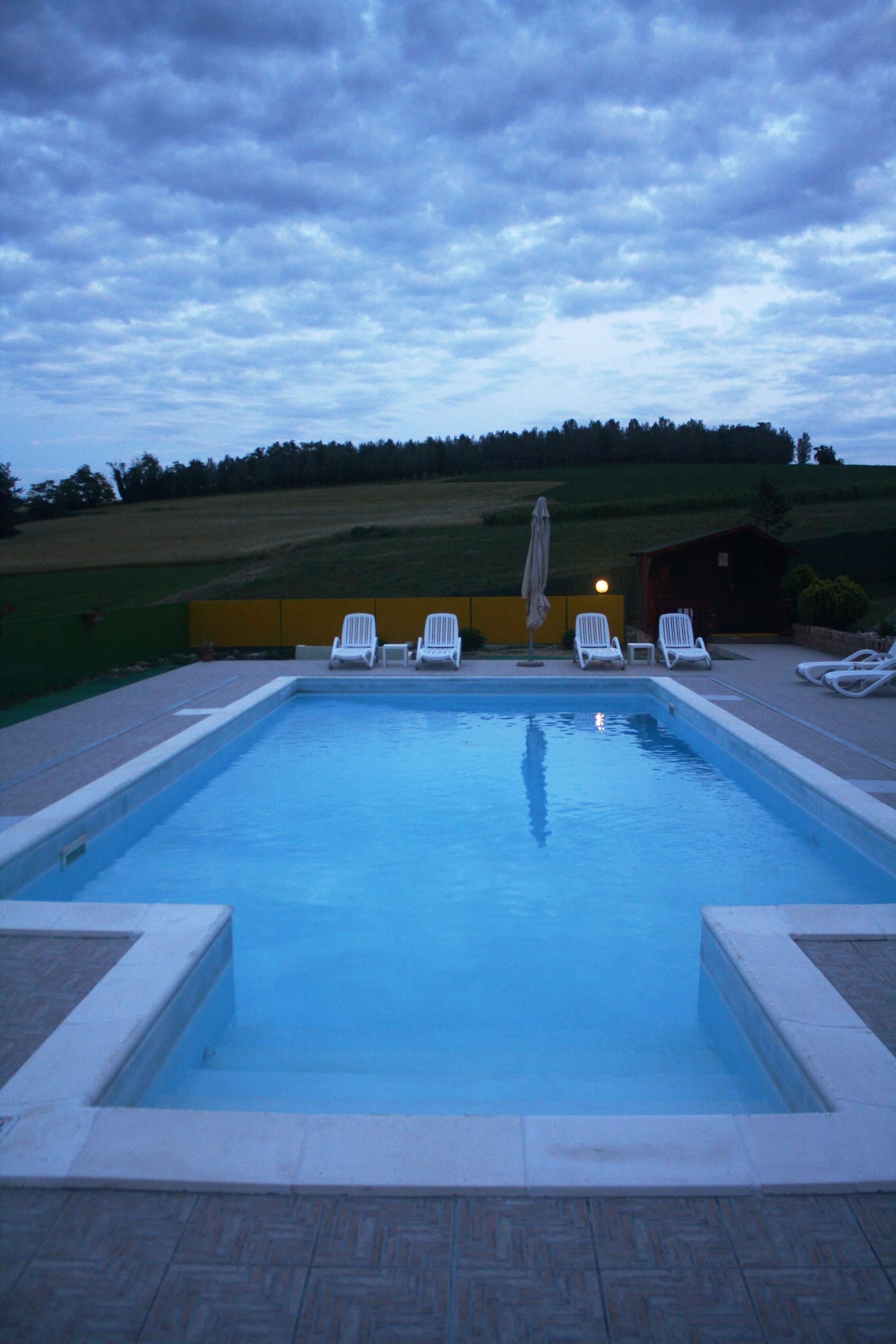
Wood shutters flank erratically placed windows of nonuniform sizes. Balconies on the second floor provide easily accessible outdoor space from the bedrooms. The covered patio with a barbecue encourages you to start cooking and dining al fresco so that you can enjoy your environs: the undulating green hills, the agricultural fields, the hilltop towns—mini-Italys, each with a unique story to tell—and, farther afield, the snowy Italian Alps. A few steps away, green benches entice you to relish the best gelato you will ever have, under friendly shade trees. A stone path along the grass leads to a gentle brick staircase down to the inviting and crystal-clear inground swimming pool, with comfortable chaise seating, tempting you do a few laps and submit to total relaxation.
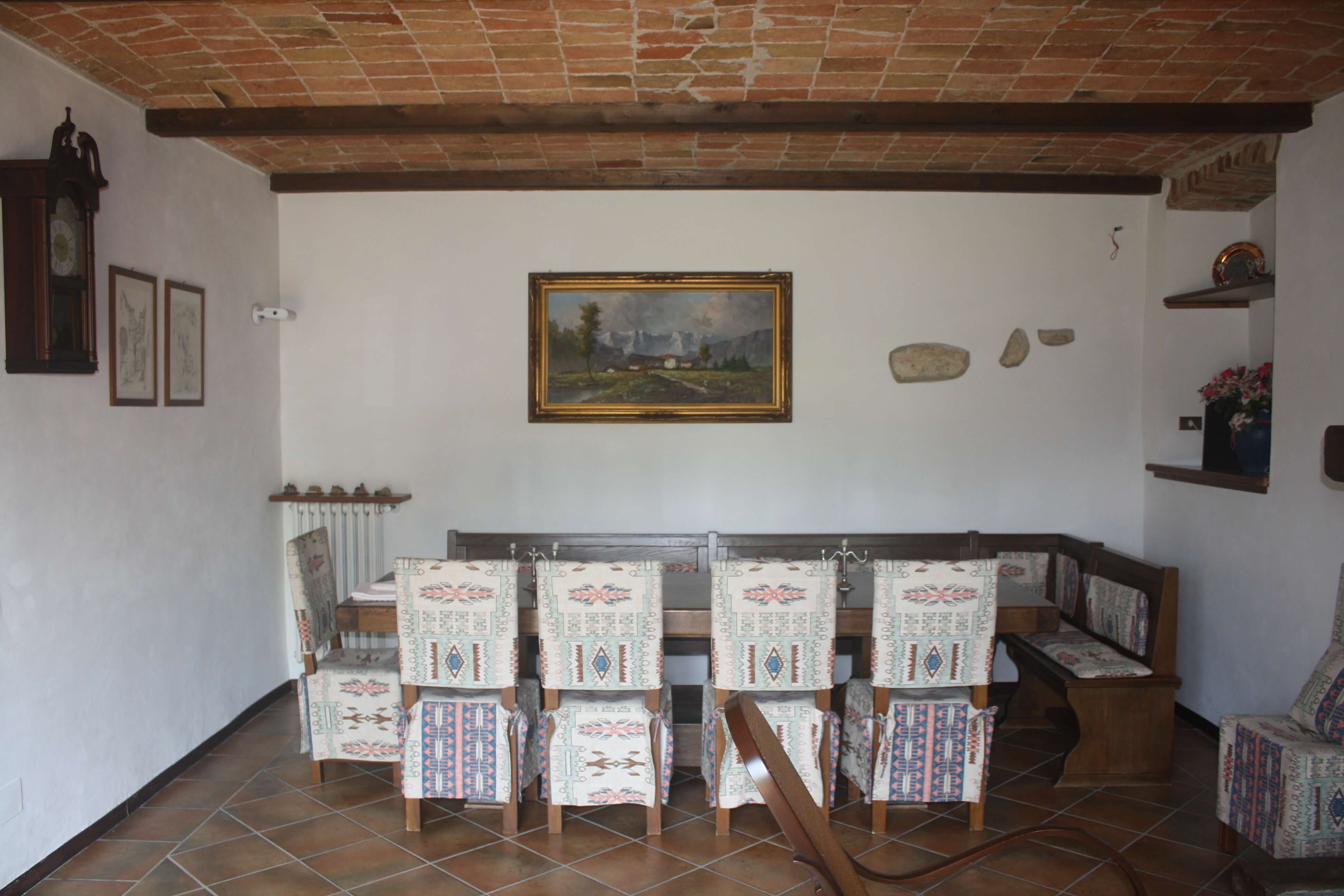
We entered the villa via the brick patio with terracotta flowerpots filled with geraniums. The spacious interior is divided into very distinct rooms, long before the notion of open concept became trendy. The split-level living room has an upper part ideal for conversation, a game of chess, or perusing the books on the shelves, while the lower part, down a few steps, is a little more for relaxing on the sofa while contemplating the old-fashioned sewing machine.
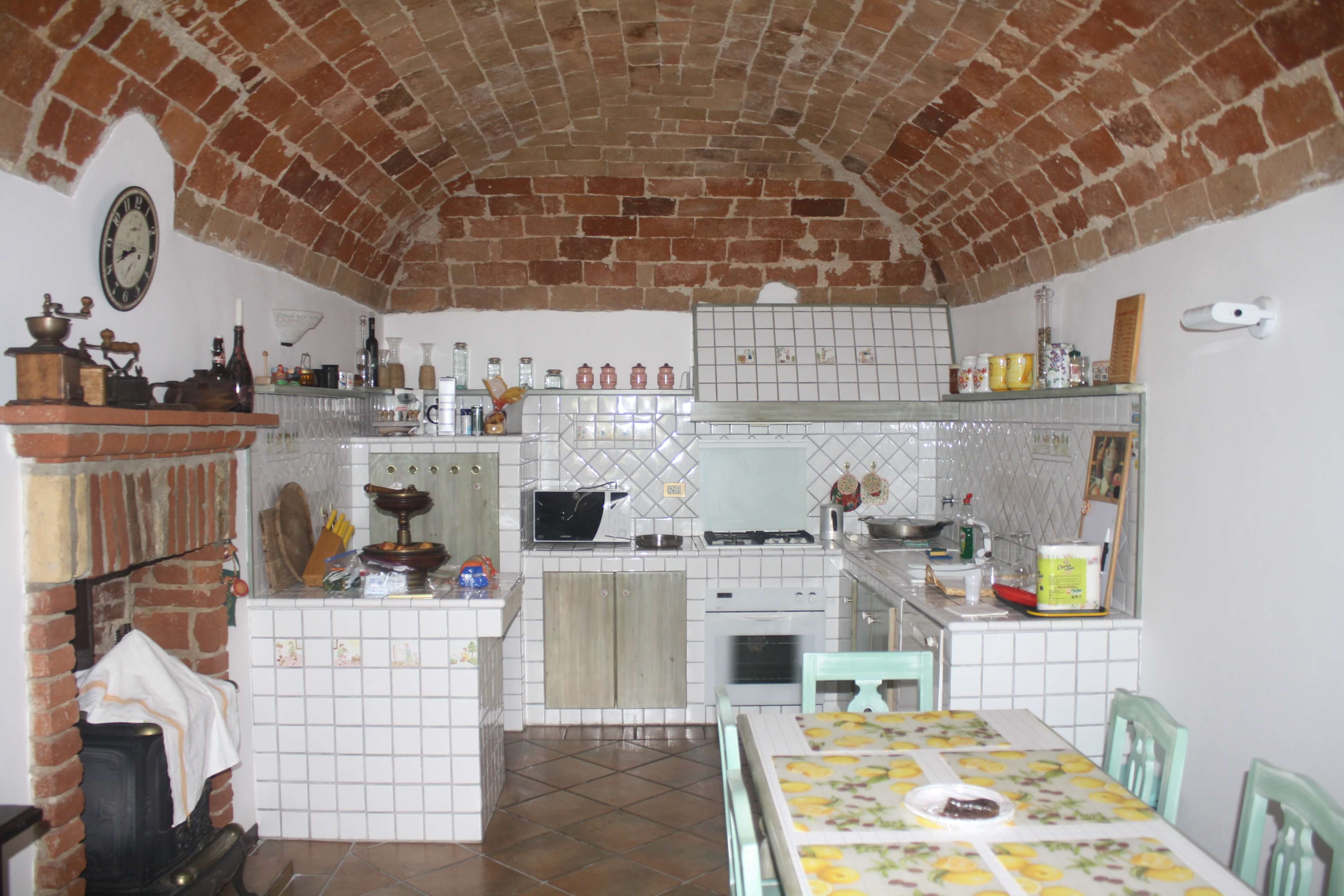
The dining room, with its wood-beam and brick ceiling and archway, easily accommodates nearly a dozen people around the large table next to the brick fireplace. But, of course, the heart of any home, especially an Italian home, is the kitchen, and that’s where we would gather for our meals when we weren’t sampling the most astounding food in local restaurants, such as a pizza with pears and gorgonzola cheese that can practically make you cry with joy. The brick barrel ceiling runs the entire length of the kitchen, over the table for six and the cooking and prep areas covered in glossy white tiles. This is where you’ll bring in the sausages you’ve just grilled outside, where you’ll boil your rigatoni and top it with tomato sauce and fresh basil and parmesan cheese that you just purchased at the local supermercato, and where you can start popping open some of the wine that you’ll be consuming all week to multiple rounds of “Salute!”
You won’t want your evenings to end, even after you’ve finished feasting and night has fallen. You’ll step outside to enjoy a perfect evening, the warmth of the day morphing into a gloriously cool evening in early June. A full moon will have risen above those hilltop towns, twinkling with their lights, reminding you that they’re still significant, even if they were built centuries ago for defensive purposes that no longer exist against their neighbors, and that they still retain a spirit of independence. The most adorable brown rabbits will hop past you, and fireflies will blink all around you in one of nature’s most curious electrical shows.
You’ll want to linger, even though common sense is nagging at you to go to bed, because you have a big day ahead of you tomorrow, whether it’s driving to La Mandria Park, visiting the Visconti Castle or Pavia Monastery in Pavia, wine tasting at Ceretto Wineries in Alba, being beguiled by the churches in Vercelli, or exploring the mysterious streets of Moncalvo—all of which are in easy reach of the villa.
Ultimately, you decide to go inside and head to the bedrooms on the second floor, but then you’ll choose to extend your evening in the billiards room by challenging any and all of your relatives to a game of eight-ball. The unmistakable crack of the cue ball colliding into stripes and solids will echo against the exposed brick walls for hours, and before you know it, it’s well past midnight, and the silence of the night will finally entice you to retire.
Toward the end of the week, on a leisurely day, I strolled farther up the gravel road from our villa, past an idle tractor, and soon found myself at the entrance of the well-maintained, walled Cereseto Cemetery, with its neatly trimmed hedges and its fantastic mausoleums, topped with crosses or angels, that look like miniature chapels. Fresh flowers had recently been placed in urns and pots—gifts for the ghosts of the Ferrero, Illengo, Carzino, Cozzano family members.
On my way back to the villa, as I began to fantasize about rusticating right here—hardly a practicable notion—dragonflies zipped by me when I stopped to fully appreciate the expansive 360-degree views of rural Italy. Air scented with only the aromas of the earth and what it can produce filled my lungs. My eyes were intrigued by, above the nearby tree line, the towers and belvederes of the beautiful, and abandoned, 156-room Cereseto Castle—built in 1913; confiscated in 1931 by the fascist regime from the owner, who was shipped off to one of the Aeolian Islands on charges of fraudulent bankruptcy; underwent various changes of ownership; hosted one of Europe’s most notorious illegal drug refineries and laboratories; became the property of a financier who went bankrupt; and remains unoccupied to this day.
This was the antithesis of my two previous trips to Italy—the madness of Rome’s traffic and countless Vespas, the tourist-soaked Venice, the crowds at Pompeii, the buzzing cafés in Capri, the mobbed museums in Florence. This was Italy dialed down. This was the Italy where you savor every bite of every course of every meal, where you have time to chat with the restaurant owner or with a docent in a church, where birdsong is the most prevalent sound you hear, where you revel in languorous hours of pleasant conversation, where you cherish each new memory as a distinct event rather than a blurry montage.
This is the Italy you’ll be missing if you don’t stay at a villa like Cascina Martinenga.
Coming next week: Our second villa, in Castellina in Chianti, Tuscany.
I’d Love to Hear From You!
Have you been here? Have I inspired you to go? Let me know!


 Stephen Travels