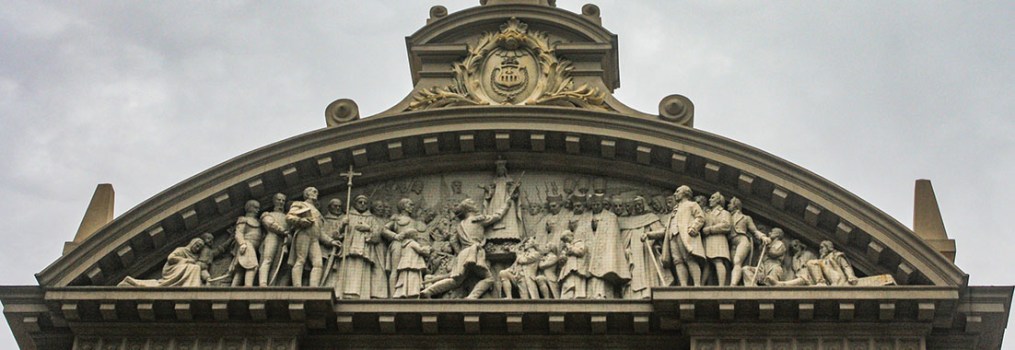
In its glory years starting in the 1880s, Buenos Aires displayed bald ambitions to become not only the glittering national capital it already was, but a regional, indeed, global capital. In many ways, it succeeded, until it all fell apart with the start of World War I in 1914. Before that, the city displayed its colossal newfound wealth and prosperity by constructing European-style masterpieces that survive into today as the city’s most beautiful buildings. These are my favorites.
#1 Columbus Theatre (Teatro Colón)
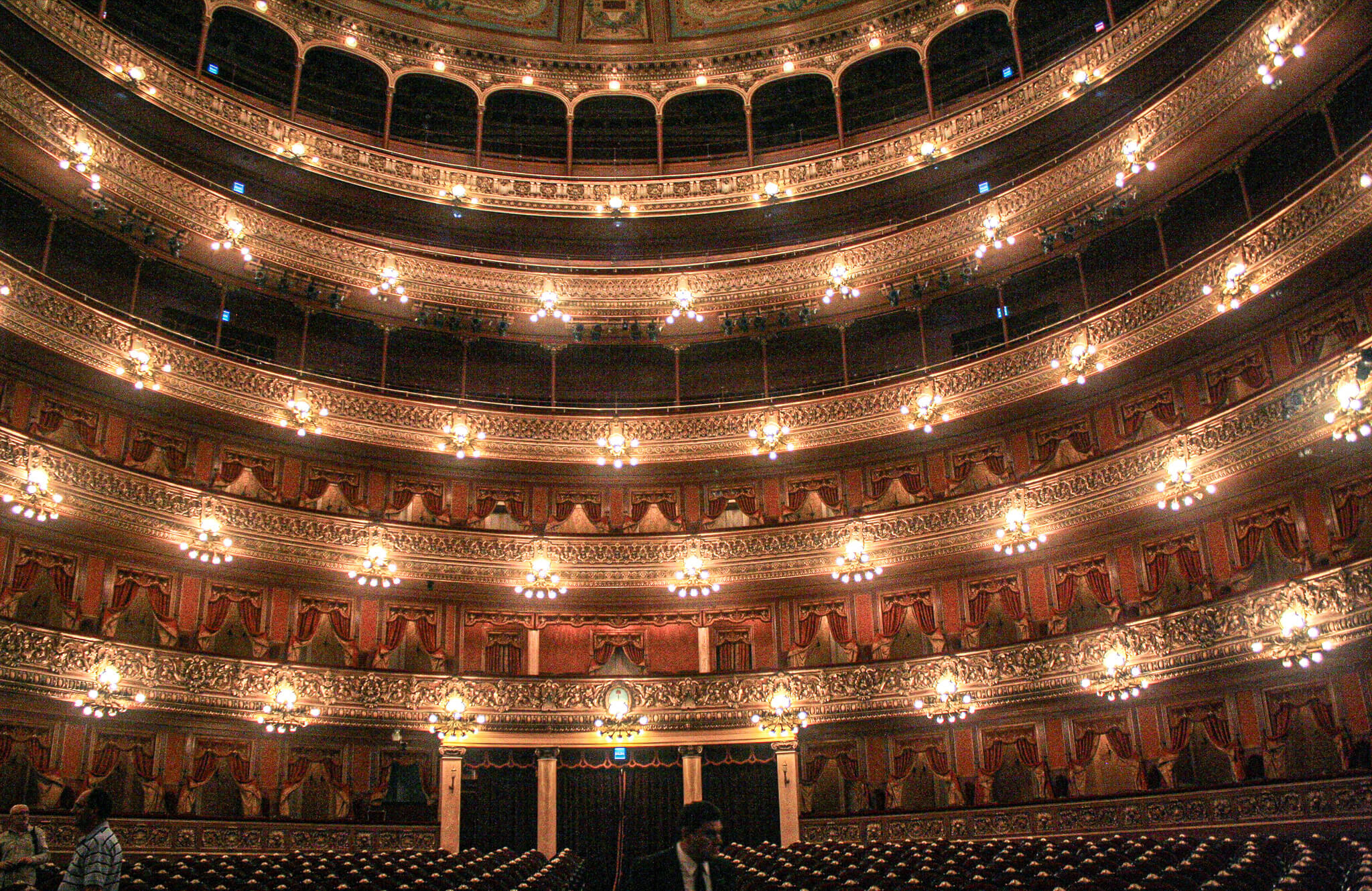 The first major theater I saw in Buenos Aires is now one of the world’s most beautiful bookstores, El Ateneo Grand Splendid. I popped in to buy an English-language book about the city but ended up spending more time gaping at the preserved beauty of this former theater. The second theater I saw is still a functioning performance space, and it’s one of the 10 most important opera houses in the world. Columbus Theatre was completed in 1908 after 20 years of construction—and one heck of a highly dramatic story that could easily turn itself into an opera: The original architect died only a couple of years into the project, his pupil and replacement architect was murdered 13 years later, and the businessman financing the whole thing died shortly after. When it finally opened with its inaugural production of Aida, it quickly established itself as one of the best opera houses in the world, attracting the globe’s top opera conductors and singers, among them Toscanini, Stravinsky, Maria Callas, Anna Pavlova, Enrico Caruso, and Placido Domingo. Even if you don’t have tickets for a performance here, you need to see this building itself. Start outside and marvel at its massive size. A broad glass canopy spreads across the main entrance of the building, adorned with columns and pediments with dentils, caryatids, urns, busts, mascarons, and bas-relief panels with putti in dramatic action. I headed inside and joined the tour through what could easily double as a French imperial palace. Sculptures, three types of Italian marble, French stained glass, gold, Venetian mosaic columns and mosaic floors, and grand staircases fill the lobbies and entry areas. Our guide then led us into the utterly jaw-dropping seven-level auditorium. It’s a complete spectacle, awash in ornate boxes; fancy lighting, including a central chandelier with 700 lights that weighs more than a ton; and a dome, painted with instruments and figures in costume against a pale blue sky, that hides a secret: There’s a space that accommodates up to 15 musicians to generate different sound effects. With seating for nearly 2,500 people—and standing room for at least 500 more—the auditorium measures 107’ at its widest point and has a height of just under 92’. The stage itself is 50’ high, with a width and depth of more than 65’ each. Columbus Theatre’s exceptional acoustics stem from the horseshoe shape of the auditorium, which causes a proper reflection of sound, turning it into an echo chamber of sorts. Combined with the dimensions of the room and the placement and quality of the materials (wood, tapestries, curtains, and carpets), the space prompted Luciano Pavarotti to say the acoustics are so good that every mistake can be heard.
#2 Basilica of the Holy Sacrament (Basilica del Santisimo Sacramento)
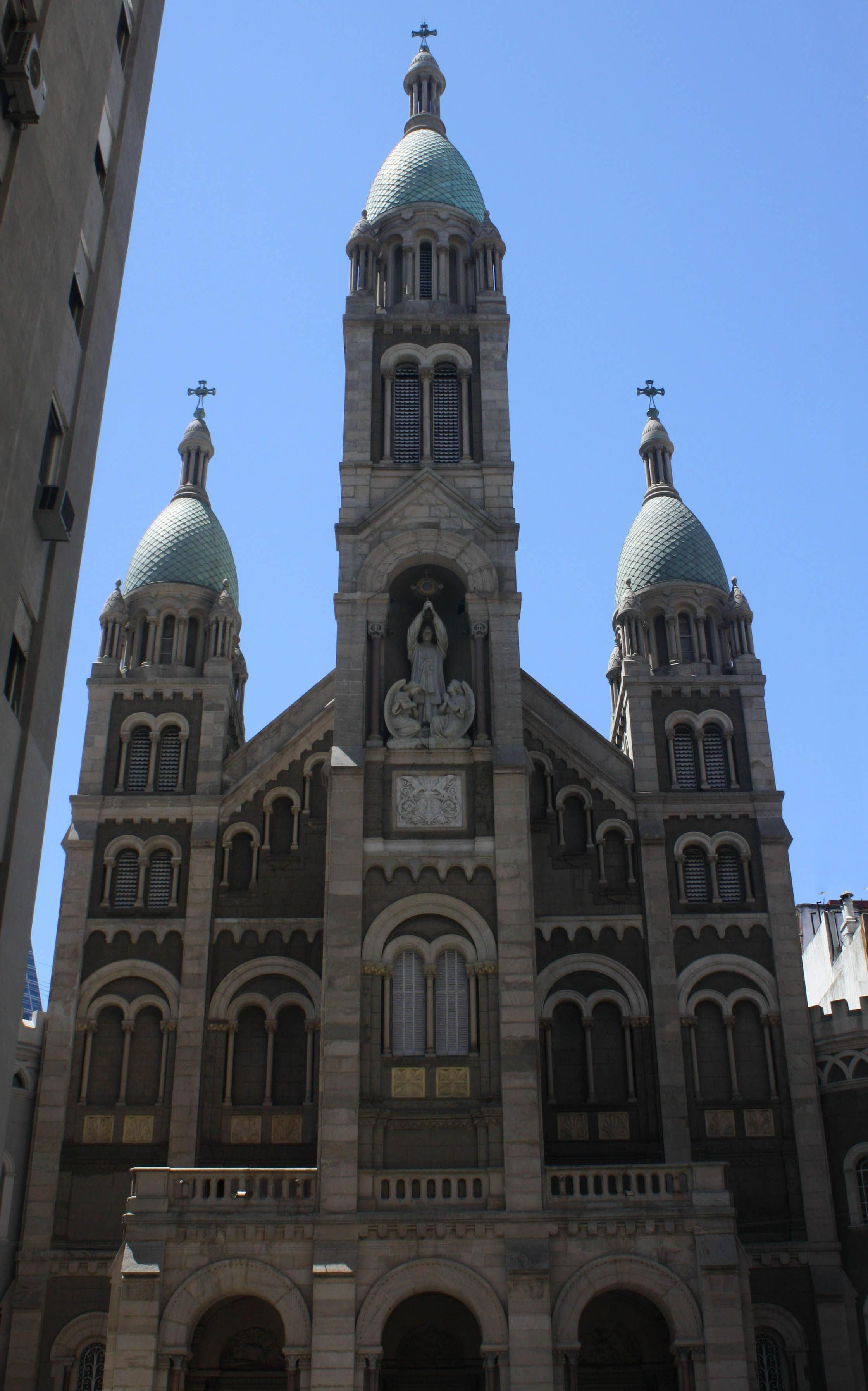 I almost missed the most beautiful church in Buenos Aires. I was in the Retiro neighborhood to check out the iconic art deco Kavanagh Building and the General San Martín Plaza with its monument to the Argentina–United Kingdom war in the Islas Malvinas (or, as the Brits refer to them, the Falkland Islands). I was ready to leave the area when a fortuitous glance down a narrow side street rewarded me with a view of this gorgeous building, and I was quick to see it up close. In the early 1900s, the aristocratic Mercedes Castellanos de Anchorena, who owned the nearby San Martín Palace, commissioned the construction of the church on her land, which she donated to the Congregation of the Blessed Sacrament, because, she said, if she lived in a palace, so should God. Consecrated in 1916, the Basilica of the Holy Sacrament presents an eye-catching façade. I stared up at the central tower that soars 164’, noting the statue halfway up of St. Peter Julian Eymard (founder of this congregation) and two angels kneeling in front of him. Shorter towers flank either side of it, and all three feature arches and a verdigris beehive dome, which are capped by cupolas topped with a cross. Walking between the entrances to two crypts, I entered the basilica, designed in an eclectic style that mixes Romanesque, Gothic, and Byzantine. The lavish interior made a lasting impression on me, with its employment of bronze, gold, silver, blue granite, white and red marbles, precious wood carved by Flemish masters, and Venetian mosaics—materials selected by the superior brother of the congregation who was overseeing the work of the architects. Brilliant stained-glass windows line the clerestory above the arched galleries and the walls of the semi-circular apse above the elaborate altar. The groin ceiling, tile floors, and stone columns contribute to the basilica’s opulence. The original organ, made in 1912, contains nearly 5,000 pipes and remains in full working order, and, as the largest church organ in Argentina, adds to this gorgeous basilica’s renown.
#3 Palace of Running Waters (Palacio de Aguas Corrientes)
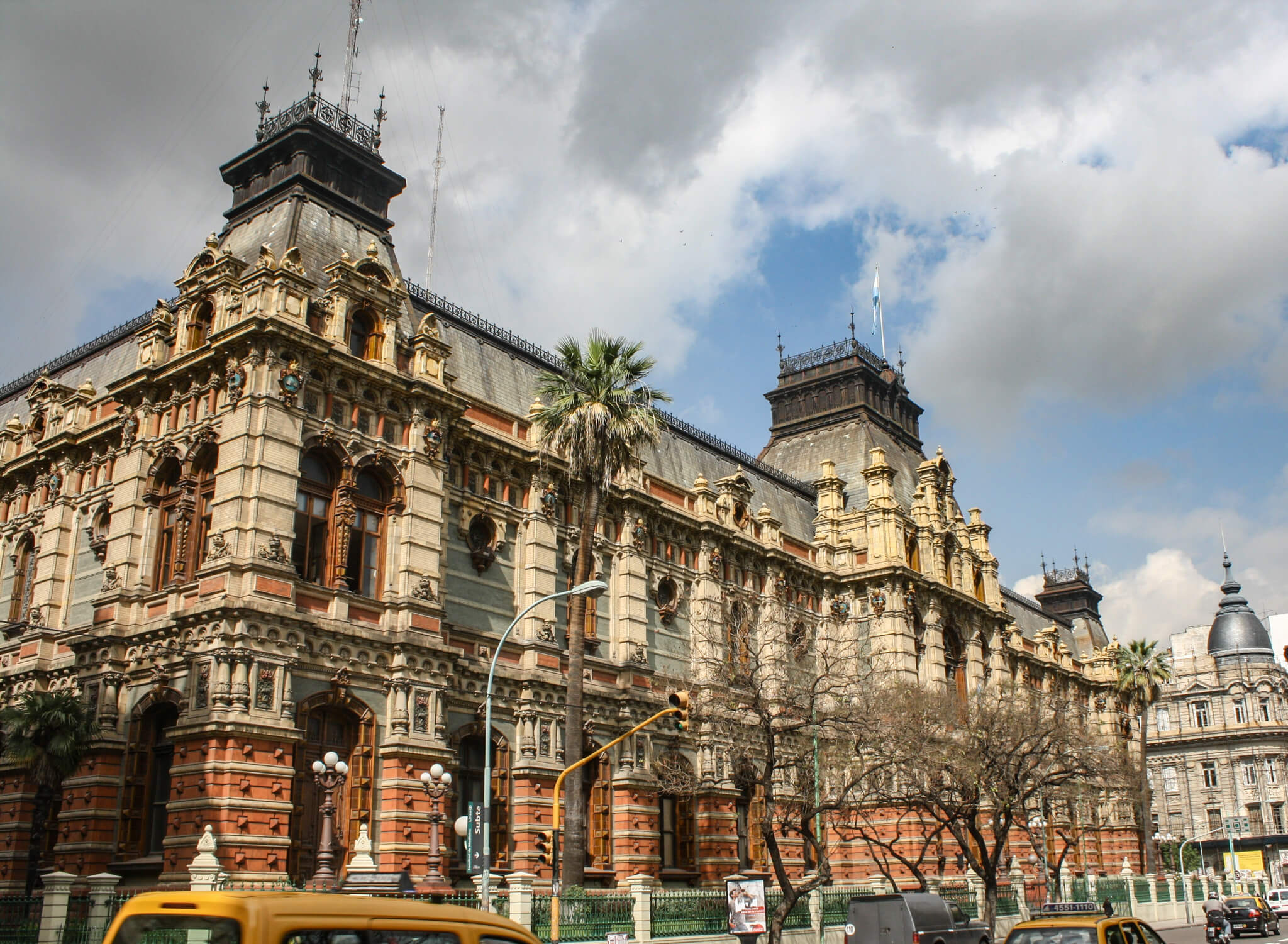 Ordinarily, I wouldn’t even think of going out of my way to visit a water pumping station. But when it looks like this, it becomes a must-see. The huge Palace of Running Waters was designed by a Swedish-Argentinian architect in 1877 and completed in 1894, and it still serves as a water pumping station. You’d never know it from its looks—a French Renaissance palace in more than 170,000 glazed, multicolored terra cotta tiles, 130,000 enameled bricks, a tin mansard roof with lovely iron cresting, cedar window frames, bas-relief florals, and escutcheons representing Argentina and its 14 provinces at the time of construction, all topped by a smiling golden sun. Built for a completely utilitarian purpose—to provide an adequate water storage and distribution system that would increase sanitation and hygiene and eliminate the catastrophic death tolls from yellow fever—it achieved its purpose almost immediately: Only one year after opening, the death rate in Buenos Aires fell by 90%. And it did it in the most beautiful way imaginable.
#4 Basilica of Our Lady of Piety (Basilica de Nuestra Señora de la Piedad)
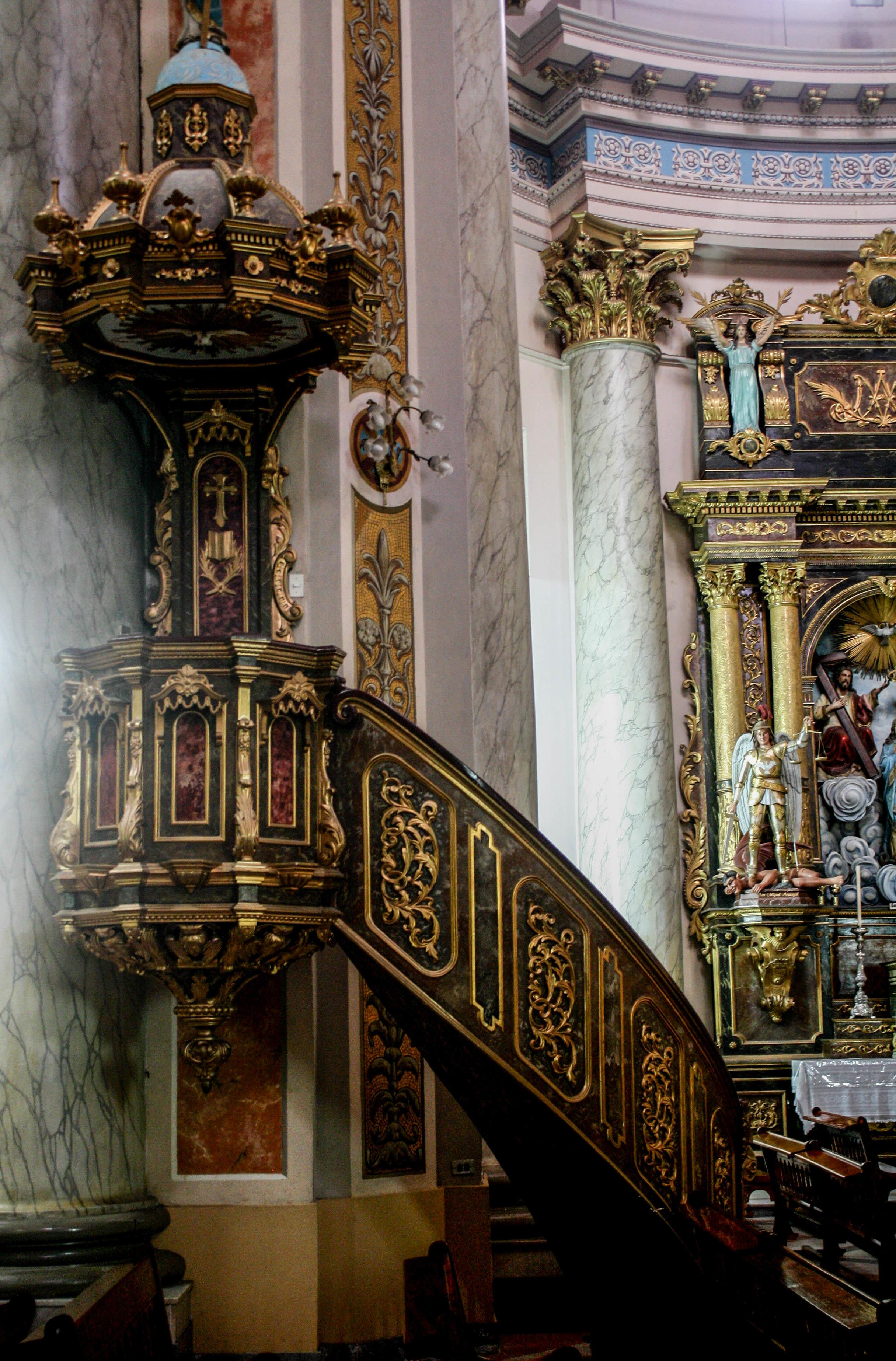 The Basilica of Our Lady of Piety, one of the most beautiful churches in the city, is a far cry from the original church that was erected here. In 1762, Manuel Gómez, who owned much of the land in this area, and his wife, blessed with great wealth but no children, sought permission to build a church to thank God for the former. With permission granted, a brick church with tile roof was erected and lasted for about a century. In a severe state of disrepair, the church was demolished, and in 1895 this new church opened. Created by father-and-son architects Nicolas and José Canale, the basilica’s grandiosity is somewhat stunted by both its position on the corner of two fairly narrow streets and its sober neo-classical façade, with two corner towers and 10 Corinthian columns supporting a sculpted pediment of a Pietà. Inside, however, it’s simply striking—a mélange of color, gold-topped Corinthian columns, broad arches with rows of sculpted roses on their soffits, altars, and stained-glass windows. Four side aisles flank the main nave on which I trod. On my way to the altar, past the lovely pulpit, I looked up at the intrados of the dome that’s virtually invisible from the street. A ring of stained-glass windows between pairs of Corinthian pilasters circles the dome below the coffers, and a chandelier hangs from a long chain attached to the oculus. On top of the marble altar, an unusual Pietà places Jesus on the ground, rather than in Mary’s lap, and a striking mural above it on the dome of the apse adds another splash of color, heavy on the blues and pinks. In 2017, this minor basilica was declared a national historical monument—a definite highlight of your visit to Buenos Aires.
#5 Metropolitan Cathedral of Buenos Aires (Catedral Metropolitana de Buenos Aires)
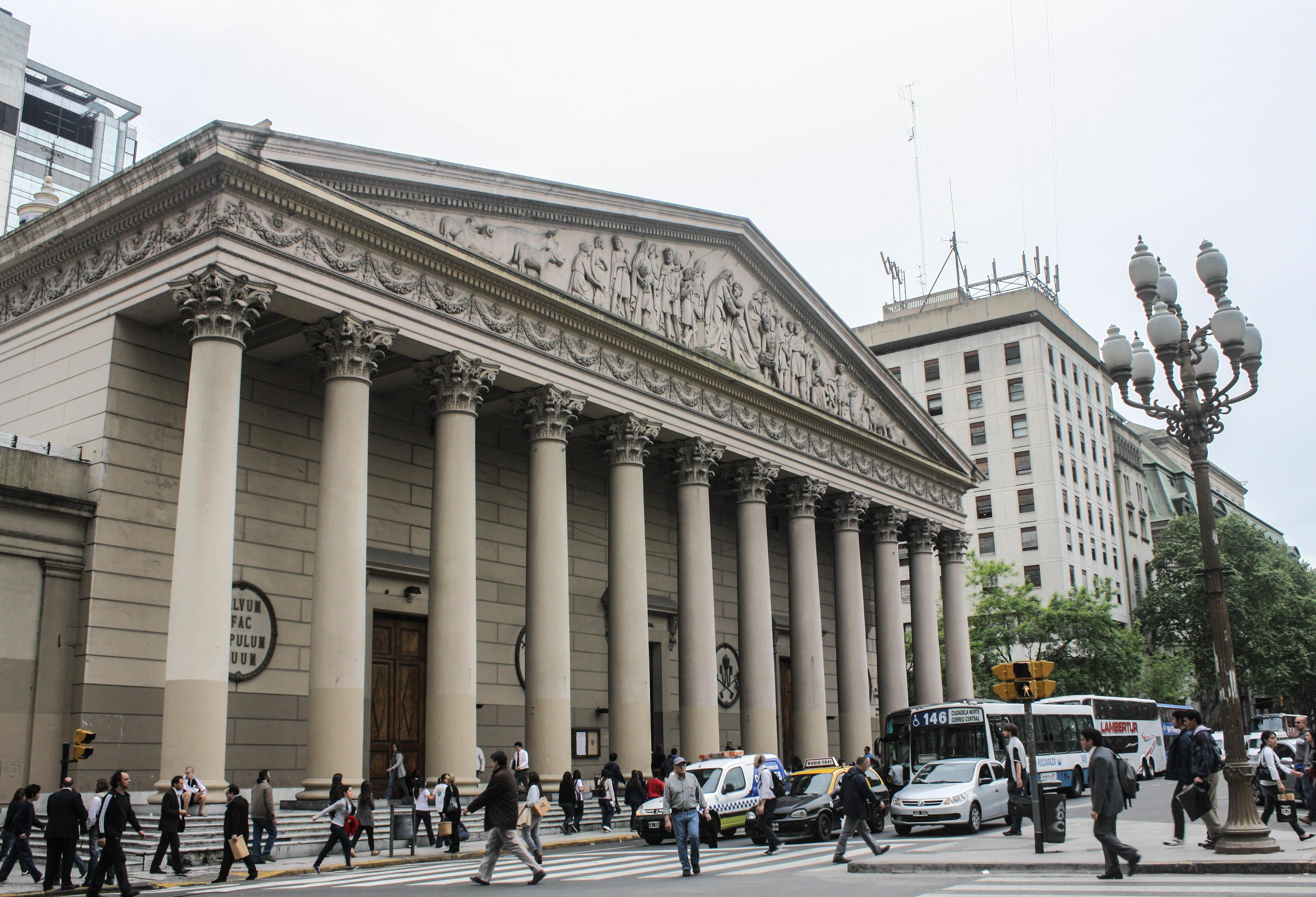 Hugging the northwest corner of Plaza de Mayo in the heart of the city, the Metropolitan Cathedral of Buenos Aires holds a special place in the hearts of all Argentineans. The very wide entrance of the city’s main Catholic church, and another of its most beautiful churches, was built to impress, even though it was late to the game. The cathedral was consecrated in 1791, but the Neoclassical façade wasn’t completed until 1863 and looks more like an ancient temple or a courthouse than a Catholic church. One dozen Corinthian columns (representing the Twelve Apostles) support the pediment over the portico. A frieze of dentils, garlands, and cherub heads with wings runs across the entire width and wraps around to the sides of the building. Above it, the sculpted relief represents Joseph’s reunion with his brothers and father, Jacob, in Egypt—a nod toward Argentinian unity after a series of civil wars. I passed under this wonderful work of art and entered the cathedral, walking down the central aisle on a mosaic tile floor under a barrel ceiling. Halfway down, a singular mosaic of three nails used to crucify Christ reminds you of His fate; the mosaic-tile floors on the side aisles feature runners of lilies. Two identical pulpits are suspended on the walls leading to the altar. Among the side altars, wall frescoes measuring nearly five feet by more than three feet, stained-glass windows, and muscular arches, I found elements of the colonial past: The gilt wood altarpiece, created in the Rococo style, dates from 1785, and the oldest item in the cathedral—a sculpture of the crucified Christ—was made in 1671. Of utmost importance to the Argentinians is the mausoleum of General José de San Martín. Resting on a base of marble of various colors, the black sarcophagus contains the remains of the man who liberated Argentina, as well as Chile and Peru, from Spain. Lighted by an eternal flame and guarded by Soldiers of the Grenadier Regiment, it’s surrounded by three life-size female figures representing those three countries. But the cathedral doesn’t rest solely on its history—not that long ago, Pope Francis led Mass here as archbishop of Buenos Aires from 1998 to 2013.
Five Runners-Up
- Palace of the Argentine National Congress (Palacio del Congreso de la Nación Argentina, 1906)
- Barolo Palace (Palacio Barolo, 1923)
- Pink House (Casa Rosada, 1898)
- Former Grand Splendid Theater (Teatro Gran Splendid, 1919)
- Basilica of Our Lady of Mercy (Basilica de Nuestra Señora de La Merced, 1900)
Leave a Comment
Have you been here? Have I inspired you to go? Let me know!


 Stephen Travels